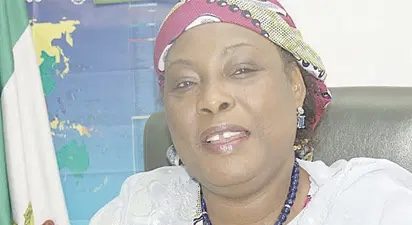
Maryam Ciroma, former women’s affairs minister, has urged Nigerian authors to use their works to promote awareness, advocate equal opportunities, and challenge stereotypes against women.
She made the call in an interview at the 2025 End-of-Year Dinner and Awards of the Abuja chapter of the Association of Nigerian Authors over the weekend.
The event was held at the Mamman Vatsa Writers Village in Abuja.
It brought together seasoned and young authors, scholars, as well as literary enthusiasts and students of different institutions in the Federal Capital Territory.
According to the former minister, writing is a veritable instrument to challenge patriarchal norms and advocate equal opportunities for all citizens, especially in governance at all levels.
She urged Nigerian writers to leverage the power of writing to raise awareness of issues affecting women and to build an egalitarian society.
Ms Ciroma lamented that female representation in government was abysmally low, falling short of the 35 affirmative action targets outlined in the National Gender Policy.
According to her, there is a need for a just society where the needs of all genders are equitably considered, to build a nation where everyone, regardless of gender, can thrive.
She therefore called for support for the passage of the Reserved Seats Bill, which seeks to create legislative seats exclusively for women at both the national and state levels.
“In fact, Nigeria signed the Beijing conference during Obasanjo’s period, that is, the 35 per cent affirmative action, and since that time, we have not been able to implement it.
“We are appealing to Nigerian men that women should be considered because we need the space also in the governance of this country. When you talk about the legislative part of governance, they make laws for Nigerians, and these laws also affect women, so we need more women in the National Assembly.
“In some state assemblies, you hardly get a single woman, so we are not getting enough when it comes to female participation in governance and legislation,” she said.
(NAN)