
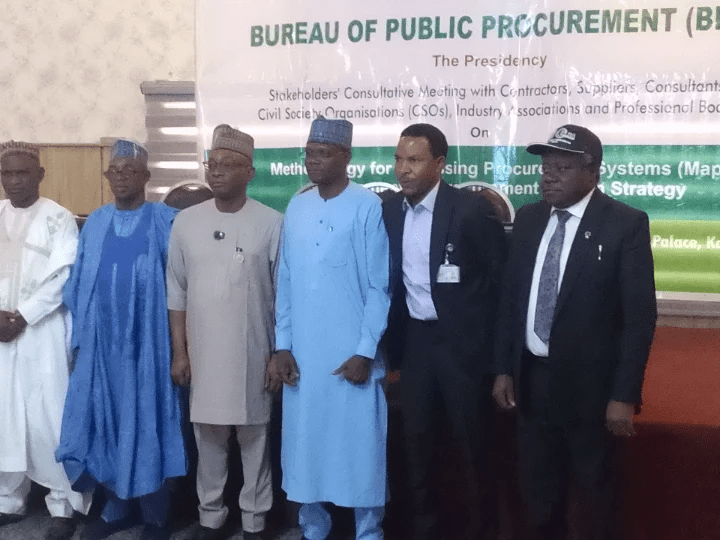
The Bureau of Public Procurement has unveiled a transformative strategy to strengthen trust and transparency in Nigeria’s public procurement system.
BPP’s director-general, Adebowale Adedokun, said this during the stakeholders’ consultative meeting on Tuesday in Kano.
He said that the meeting aimed to discuss the Methodology for Assessing Procurement Systems framework and its role in strengthening public procurement processes in the country.
According to him, the participants included professional bodies, civil society organisations, development partners, contractors, consultants, and suppliers, among others.
He explained that the strategy focuses on transitioning government agencies to submit procurement requests electronically, thereby enhancing traceability and minimising the risk of discrepancies.
“By shifting to an electronic system, we can track discrepancies more effectively, whether they occur with contractors or government agencies,” Mr Adedokun stated.
He also lauded Nigeria’s Public Procurement Act, which mirrors the United Nations framework, but noted the need for refinements in its implementation.
“We have learned from past experiences, and now it’s time to amend the act to improve its impact and attract foreign investments,” he added.
The BPP director-general also outlined updates to the procurement framework to provide greater representation for women, youth, and people with disabilities in the process.
He restated the importance of the MAPS assessment as a tool for benchmarking Nigeria’s procurement system against international best practices.
The BPP boss also highlighted key reforms aimed at strengthening the procurement process, ensuring equal access to opportunities, and optimising value-for-money in government spending.
“Over the years, BPP has worked closely with the World Bank and other development partners to introduce pivotal initiatives, including the Country Procurement Assessment Report (CPAR) and the Public Expenditure and Financial Accountability (PEFA) assessments,” he explained.
These efforts, he said, had laid the groundwork for Nigeria’s ongoing procurement reforms.
Mr Adedokun further encouraged active stakeholder participation, stressing that their feedback is essential to refining the national procurement strategy.
He reiterated that the BPP’s reforms were focused on inclusivity, sustainability, and ensuring value-for-money in procurement practices.
(NAN)



