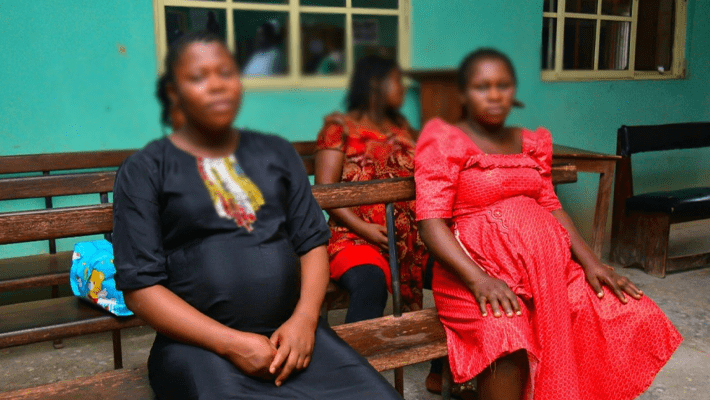
The National Health Insurance Authority (NHIA) says no woman should lose her life because she cannot afford treatment during pregnancy-related emergencies.
Kelechi Ohiri, NHIA’s director-general, said this in an interview with journalists on Friday in Abuja, noting that financial barriers should never delay life-saving maternal healthcare.
Mr Ohiri spoke on a federal government intervention programme designed to provide financial protection for women facing life-threatening complications during pregnancy or childbirth.
According to him, the initiative ensures that women who arrive at hospitals with pregnancy complications receive immediate treatment without being required to make upfront payments before care begins.
“What we are essentially saying is that when a woman has a complication in pregnancy and goes to the hospital, money should not be the problem,” he said.
He explained that under the programme, accredited health facilities treat such patients free at the point of service, while the NHIA reimburses hospitals for the cost of care.
Mr Ohiri said the intervention formed part of broader reforms under the Nigeria Health Sector Renewal Investment Initiative (NHSRII) to strengthen governance, financing, and quality across the country’s health system.
He explained that the authority was shifting from passive reimbursement to strategic purchasing, in which payments to healthcare providers are tied to quality standards and accreditation.
“As part of these reforms, provider participation is now linked to accreditation, compliance is being strengthened in high-volume hospitals, and accreditation and quality assessments are being digitised using the SafeCare platform.
“We have also deployed compliance officers and introduced a one-hour pre-authorisation timeline to ensure timely care for patients,” he said.
He noted that linking payments to standards encouraged hospitals to invest in better infrastructure, skilled personnel, improved data systems, and stronger emergency obstetric care services.
“When payment is tied to standards, providers invest more in quality. Insurance then becomes a driver of quality, not just a payer of bills,” he said.
Mr Ohiri said that by linking accreditation to reimbursement for comprehensive emergency obstetric and newborn care services, the authority was enforcing minimum standards and directing demand toward capable hospitals.
He revealed that since the emergency maternal care programme began in October 2024, nearly 40,000 women across the country had benefited from the scheme.
“These are women who come with complications such as severe bleeding or cases requiring emergency caesarean section.
“When they arrive at the hospital, they are treated free of charge, and the NHIA reimburses the hospital for the services provided,” he said.
The NHIA DG also highlighted progress in expanding health insurance coverage nationwide.
He disclosed that between the fourth quarter of 2023 and the fourth quarter of 2025, enrolment under NHIA programmes increased by 34 per cent to about 21.7 million Nigerians.
According to him, five NHIA programmes targeted at vulnerable populations are also reaching millions of underserved beneficiaries, helping to ensure financial protection and quality improvement progress simultaneously.
“In spite of the progress made, the reforms remain complex and require sustained political commitment, technical coordination and time to deliver their full impact,” he said.
Mr Ohiri emphasised that the ongoing reforms were aimed at strengthening equity, improving the quality of care, and expanding access to health services across Nigeria.
(NAN)