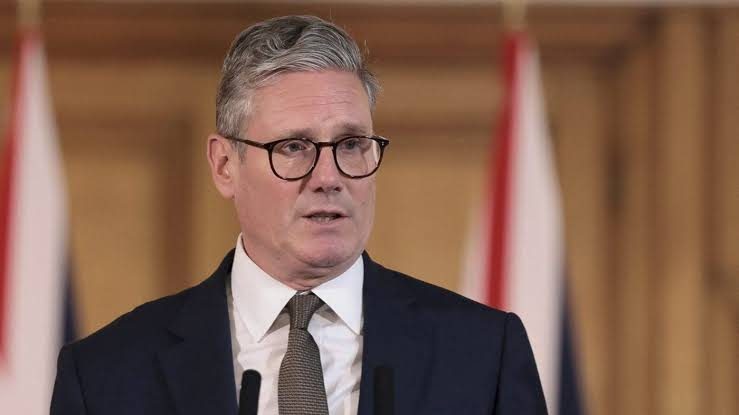
Bosses from energy, shipping, and banking firms will meet Prime Minister Keir Starmer as U.S. President Donald Trump indicated the Iran war could escalate.
Oil prices spiked after Mr Trump said he was considering a military operation to seize Iran’s Kharg Island, a crucial part of the country’s export infrastructure.
The discussions at Mr Starmer’s 10 Downing Street office are expected to focus on Iran’s ongoing blockade of the Strait of Hormuz, which has disrupted a vital shipping route for the oil and gas industry, along with supplies of other products such as fertiliser.
The meeting will involve representatives from energy firms Shell and BP, shipping giant Maersk, maritime insurance specialist Lloyd’s of London, and banks HSBC and Goldman Sachs.
The meeting will also hear an update on the situation in the region from Major General Richard Cantrill, the UK’s maritime operations commander.
It comes after the Royal Navy announced it was fitting the transport ship RFA Lyme Bay with minehunting drones, understood to be a move intended to provide ministers with options for securing the strait once the situation stabilises.
Downing Street said the meeting aims to hear directly from businesses and to discuss how the government and the private sector can work together to respond to the conflict.
The gathering comes after Mr Trump said he could “take the oil in Iran” or consider seizing control of Kharg Island, the country’s primary oil export hub.
“To be honest with you, my favourite thing is to take the oil in Iran, but some stupid people back in the US say: ‘Why are you doing that?’ But they’re stupid people,” he told the Financial Times.
He added, “Maybe we take Kharg Island, maybe we don’t. We have a lot of options.”
However, Mr Trump acknowledged that doing so would require the United States to remain in Iran “for a while.”
The conflict has left Britain facing the risk of higher inflation and lower growth.
Petrol prices have already risen sharply, while disruptions to global oil supply have led some developing countries to impose restrictions on fuel use and sparked concern that shortages could spread to the United Kingdom.
The cost of oil benchmark Brent crude lifted more than three per cent to $117 a barrel at one stage in Monday morning trading, reaching levels not seen since 2022.
The impact of the ongoing Strait of Hormuz blockade was compounded by Iran-backed Houthis in Yemen launching strikes against Israel, raising the possibility of attacks on Red Sea shipping.
But London’s FTSE 100 Index opened the week on a firmer footing, edging 0.2 per cent higher, up just over 22 points at 9989.56.
Most domestic energy users are protected by the price cap until the end of June, but motorists are already being hit by high costs.
The average price difference between diesel and petrol at UK forecourts reached a record high, with a 26 pence ($0.34) per litre gap, according to RAC Foundation analysis.
UK oil refineries are more geared towards producing petrol than diesel, so the country’s supply of the latter is more reliant on imports.
Finance Minister Rachel Reeves is expected to join a virtual meeting of the Group of Seven (G7) finance and energy ministers and central bank governors, along with Energy Secretary Ed Miliband.
The G7—the UK, the U.S., Germany, France, Italy, Canada, and Japan, along with the European Union—will discuss ways to respond to the economic impacts of the war.
(PA Media/dpa/NAN)