LONDON / BRUSSELS
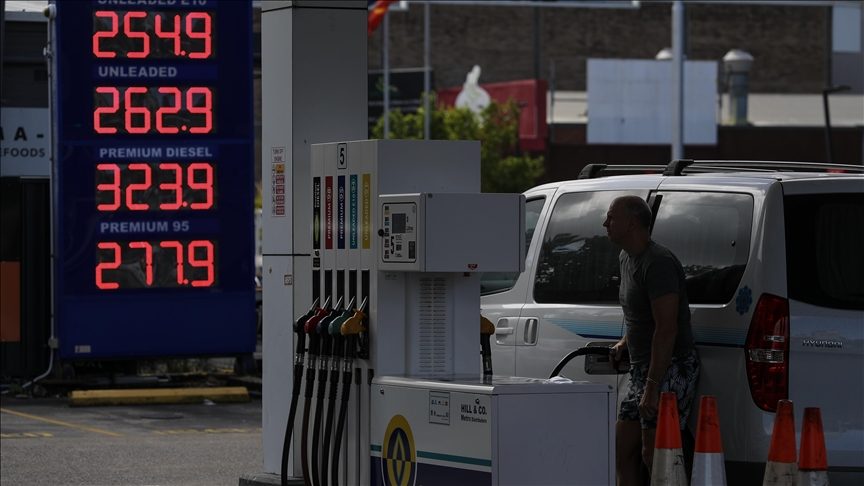
Countries worldwide are tightening energy-saving measures to reduce consumption and limit the impact of rising costs as supply shortages deepen following the energy crisis triggered by the conflict in the Middle East.
Governments are introducing conservation policies to reduce demand while attempting to shield households through tax cuts, subsidies and price controls, according to the International Energy Agency’s (IEA) 2026 Energy Crisis Policy Response Tracker.
Supply disruptions in the Strait of Hormuz following joint US and Israeli strikes on Iran pushed Brent crude prices nearly 50% above pre-war levels, as the vital waterway — which carries about 20% of global oil shipments — remained largely restricted before recently reopening to selected vessels.
Natural gas prices also surged globally, prompting many governments to introduce demand-reduction measures.
Asian countries, heavily dependent on Middle Eastern liquefied natural gas (LNG) and oil supplies, have led early conservation efforts.
China imposed temporary price caps on refined petroleum products as the country relies heavily on crude imports from the Gulf region and Iran.
Bangladesh capped air-conditioning temperatures in public buildings at 25C (77F), temporarily closed universities and introduced measures to reduce lighting use while expanding public transport access.
Indonesia introduced a scheme allowing public-sector employees to work remotely one day per week while restricting official travel and expanding conservation measures in public buildings alongside efforts to accelerate its biofuel program.
India restricted industrial natural gas use and promoted pipeline gas as an alternative to liquefied petroleum gas while imposing limits on commercial LPG consumption. The country previously sourced more than half of its oil needs from the Middle East.
South Korea introduced weekly vehicle-use limits for public institutions and launched conservation campaigns targeting energy-intensive sectors. Additional restrictions on private vehicle use are planned if oil prices reach $120–130 per barrel.
Laos implemented remote-work and shift systems for public-sector workers while reducing school days from five to three.
The Philippines declared a national state of emergency, introduced a four-day workweek for public employees, restricted non-essential government travel and provided free public transport in some cities for students and workers.
Myanmar introduced mandatory remote work for public officials one day per week alongside rotational vehicle-use rules and fuel-quota systems.
Sri Lanka ordered selected public institutions to close on specific days while expanding remote-work arrangements. Authorities also introduced a QR-code fuel distribution system, vehicle fuel quotas and nighttime restrictions on billboard lighting.
Thailand encouraged remote work and online meetings, restricted overseas travel by public officials and promoted carpooling. Office workers nationwide were also urged to reduce electricity use, including switching off unused equipment.
Vietnam expanded remote-work arrangements while promoting reduced private-vehicle use and incentives for public transport.
Singapore advised residents to use energy-efficient appliances to conserve electricity.
In Africa, Nigeria urged industrial facilities to improve energy efficiency, while Ethiopia encouraged remote work and online meetings across public and private sectors and expanded fuel subsidies.
Egypt introduced remote-work arrangements for public-sector employees one day per week, restricted electronic-device use in government buildings and shortened working hours for public institutions in Cairo.
Senegal urged residents to reduce energy consumption.
In Europe, Germany introduced measures to limit fuel price increases at the pump, while France announced financial support for transportation, fishing and agriculture sectors.
Spain issued tax breaks for energy-efficiency investments and renewable-energy installations alongside fuel tax reductions.
Sweden temporarily reduced fuel taxes, while Poland and Croatia imposed price caps on gas and diesel.
Slovenia temporarily restricted fuel purchases and Serbia introduced price caps and tax cuts on fuels.
The UK announced fuel support for low-income households, while Ireland reduced fuel taxes and introduced targeted assistance for retirees and people with disabilities.
Italy reduced fuel consumption taxes and Portugal introduced temporary fuel-tax restrictions.
The EU Commission urged member states to encourage reduced driving and flying and promote remote-work arrangements.
Since the start of the conflict, gas prices in the EU have risen about 70% and oil prices about 60%, increasing the bloc’s fossil-fuel import bill by €14 billion ($16.12 billion).
Türkiye activated an indexation clause in early March to limit the impact of rising fuel prices on consumers.
In Latin America, Brazil expanded support for fuel producers and importers while reducing diesel taxes.
Chile froze kerosene prices and suspended fuel credits, Mexico introduced price caps and Barbados temporarily fixed fuel prices while increasing electricity subsidies.
Argentina postponed fuel-tax increases and implemented alternative solutions like increasing the biofuel blend ratios.
Australia temporarily halved gas taxes to ease rising costs and capped gas-station profit margins.