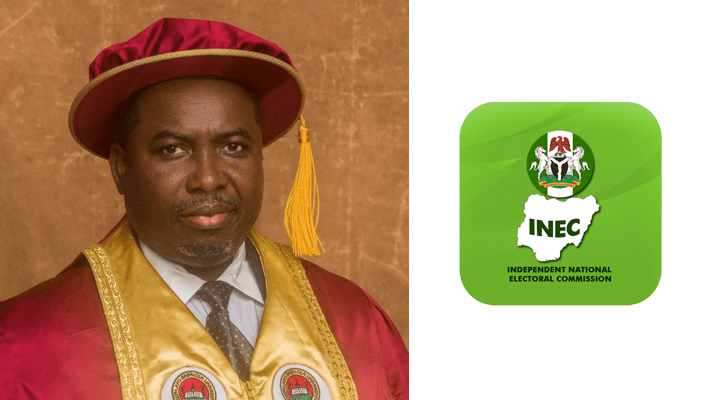
INEC’S ACTIONS AND THE DANGEROUS SHRINKING OF NIGERIA’S DEMOCRATIC SPACE
The Conference of Nigeria Political Parties (CNPP) expresses deep concern and unequivocal condemnation of recent actions by the Independent National Electoral Commission (INEC), which have further exacerbated the already fragile state of Nigeria’s multiparty democracy.
At a time when opposition political parties are grappling with internal crises, leadership disputes, and systemic pressures, INEC’s controversial interventions—particularly the removal and withdrawal of recognition of certain party officials amid ongoing legal disputes—raise serious questions about the Commission’s neutrality, judgment, and commitment to democratic consolidation.
INEC, as the constitutional umpire, is expected to act with utmost restraint, impartiality, and fidelity to due process. However, its recent conduct suggests a troubling pattern of actions that risk being interpreted as contributory to the destabilization of opposition parties and the shrinking of the political space in Nigeria.
A Shrinking Democratic Space
Nigeria’s democracy thrives on pluralism, competition, and the existence of viable alternatives. The weakening of opposition parties—whether through internal contradictions or external pressures—poses a direct threat to these foundational principles.
Rather than serving as a stabilizing force, INEC’s actions appear to be compounding the crisis. The practical effect of such interventions is the narrowing of democratic participation, where fewer political platforms are able to effectively organize, mobilize, and present credible alternatives to the electorate.
This trend is dangerous.
A political environment where opposition parties are persistently embroiled in disputes, and where institutional actions deepen rather than resolve such crises, inevitably leads to a contraction of democratic space. Citizens are left with limited choices, and elections risk becoming mere formalities rather than genuine contests of ideas and leadership.
Drift Towards One-Party Dominance
The CNPP warns that Nigeria is fast drifting toward a one-party dominant system—not necessarily by design, but by default.
When opposition parties are weakened, fragmented, or delegitimized, the ruling party gains disproportionate advantage. This undermines electoral competitiveness and erodes the very essence of democracy. A dominant party system in a fragile democratic context such as Nigeria’s creates conditions where:
1. Electoral outcomes become predictable rather than competitive.
2. Accountability mechanisms are severely weakened.
3. State institutions risk being perceived as partisan instruments.
4. Political power becomes concentrated, with little effective resistance.
Such a trajectory does not strengthen governance; rather, it breeds complacency, inefficiency, and, ultimately, public distrust in democratic institutions.
Implications for Governance and National Stability
The consequences of a shrinking political space extend beyond elections. They strike at the core of governance and national stability.
Without strong opposition:
1. The legislature loses its capacity for robust oversight.
2. Policy debates become shallow, lacking ideological diversity.
3. Citizens grow increasingly disillusioned, leading to voter apathy.
4. Political tensions may escalate outside institutional frameworks, posing risks to national cohesion.
Democracy is not merely about periodic elections; it is about continuous engagement, accountability, and the protection of political freedoms. Any action that undermines these principles must be critically examined and firmly resisted.
Call for Institutional Responsibility
The CNPP calls on INEC to immediately reassess its recent actions and recommit itself to its constitutional mandate as an impartial arbiter. The Commission must avoid actions that may be construed as interference in the internal affairs of political parties, especially where matters are sub judice.
We further call on all political stakeholders, civil society organizations, and the international community to remain vigilant and to speak out against any developments that threaten Nigeria’s democratic integrity.
Conclusion
Nigeria’s democracy was hard-earned and must not be allowed to erode through institutional missteps or political complacency. The path toward one-party dominance—whether deliberate or accidental—is incompatible with the aspirations of a free, fair, and inclusive society.
The CNPP reiterates that the survival of Nigeria’s democracy depends on the protection of political plurality, the strengthening of opposition platforms, and the unwavering neutrality of electoral institutions.
Anything short of this is a betrayal of the democratic ideals for which countless Nigerians have sacrificed.
Signed:
Comrade James Ezema
Deputy National Publicity Secretary
Conference of Nigeria Political Parties (CNPP)