
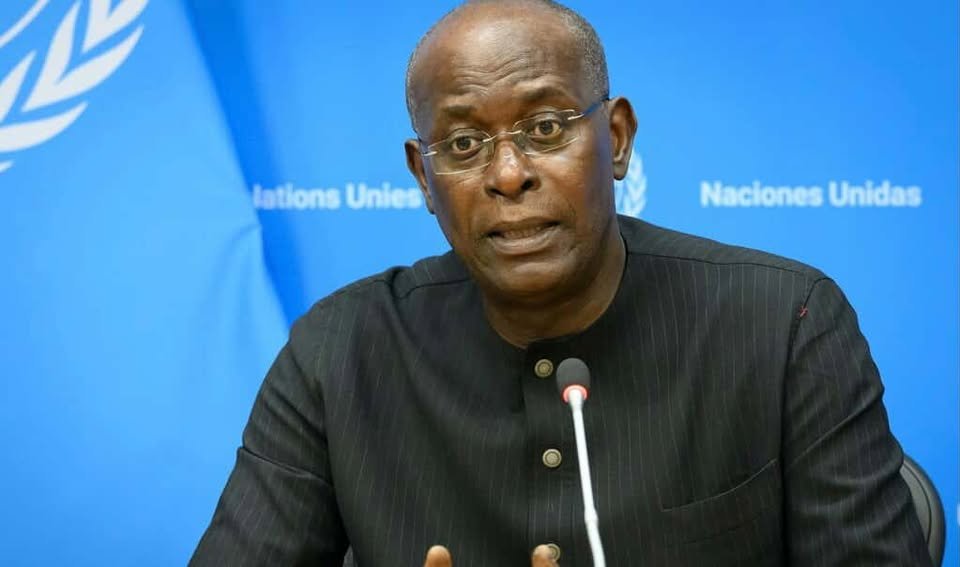
The UN Resident and Humanitarian Coordinator in Nigeria, Mohammed Fall, has stressed the need to strengthen the UN-Nigeria cooperation framework to bolster national growth.
Mr Fall made the call in his opening remarks as the co-chair of the Joint United Nations Sustainable Development Cooperation Framework (UNSDCF) 2023–2027 Steering Committee Meeting on Monday in Abuja.
According to him, once the cooperation framework is aligned with national priorities, the country programme documents that follow will align with the exercise.
“Today, we hardly reach 240 million people, which clearly indicates where we are in terms of international solidarity and where we are in terms of multilateralism.
“We should look at it also as a wake-up call for our host government to change their modality of tackling development, to look for domestic resource mobilisation and innovative finances.
“To bring in the private sector, mobilise and trigger all mechanisms that can adapt to this new paradigm and landscape of resource availability; such is a wake-up call for the UN and for us too,” Mr Fall said.
He further stressed the need to adhere to the steering committee’s recommendation to ensure a sustainable solution to ongoing climate-related shocks and conflicts, both internal and inter-country, globally.
Atiku Bagudu, the Minister of Budget and Economic Planning and co-chair of the steering committee meeting, described the event as a platform to bring together UN agencies in support of Nigeria’s development priorities.
“Our role speaks to the central place of planning, budgeting, and resource-based coordination in ensuring that the cooperation framework translates into real and measurable impact for our people.
“Our shared responsibility on this committee is to provide strategic direction to monitor progress and to hold ourselves accountable for the delivery of the outcomes we are jointly committed to,” Mr Bagudu said.
On his part, Bernard Doro, Minister of Humanitarian Affairs and Poverty Reduction, said the ministry would continue to implement policies that reduce poverty, strengthen social protection and build resilience among vulnerable Nigerians.
“Central to this effort is our flagship national coordination framework, the One Humanitarian Poverty Response System (OHOPRS), which harmonises humanitarian action, social protection, and poverty reduction under a single-window architecture,” Mr Doro said.
The OHPRS breaks institutional silos and brings together federal and state governments, development partners, UN agencies, civil society organisations, and the private sector to deliver coordinated, accountable support.
The event provided an opportunity for various stakeholders to highlight achievements and progress made under the framework, a master document built on government priorities.
The event featured goodwill messages by the minister of state for budget and economic planning, Doris Anite, and the senior special assistant to the President on SDGs (SSAP-SDGs), Adejoke Orelope-Adefulire.
(NAN)



