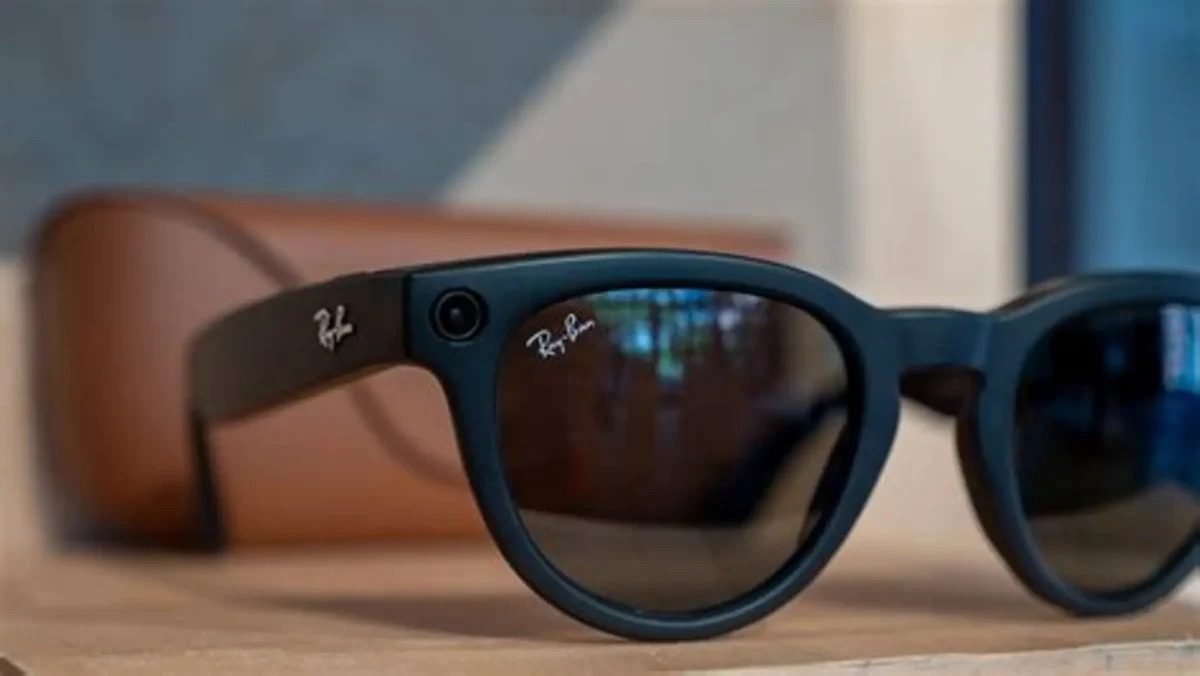
A study has raised the alarm over trend of women harrassed and secretly recorded by men wearing smart glasses.
It noted that the rise of wearable cameras could create new forms of gendered harm, including non-consensual recording and privacy violations.
The University of Sydney, in a statement on Sunday, stated that a study by its researchers “draws on analysis of 350 publicly available Instagram videos from around the world during 2023 to 2026, showing a shift to discreet, point-of-view recording that is difficult for bystanders to detect. Unlike smartphones, smart glasses often provide no clear signal– apart from a discreet flashing light that can easily be concealed – that recording is taking place, limiting a woman’s ability to consent or opt out.”
Funded by the Australian Government through the Australian Research Council (ARC), the study stated that “Researchers at the University of Sydney have analysed a growing practice of ‘ambient capture,’ in which smart glasses are being used by men to secretly record women in everyday settings and circulate the footage online.”
According to the research, around 60 percent of covert point-of-view Instagram videos analysed showed behaviour classified as potential harassment and many women showed discomfort or refusal, yet filming and interaction often continued in 43 per cent of videos, individuals were further exposed to derogatory commentary, some being identified and doxxed.
“Filming is taking place in gyms, workplaces, retail settings and campuses, with smart glasses offering these men more access to spaces usually considered private or semi-private,” the study stated.
The research team called for clearer consent standards, stronger platform accountability and new design requirements for wearable devices to ensure people know when recording is taking place.
“We already know the kinds of harms these technologies can enable – and so do the companies developing them,” Associate Professor Joanne Gray said. “That means governments have a critical opportunity to act early, before these risks become normalised and widespread.”
A postdoctoral research associate, in the Governing Immersive Technologies team at the University of Sydney, Milica Stilinovic, said, “Tech is running at breakneck speed and regulators, a pace behind, cannot regulate harms once they’ve already manifested in the wild. It’s time for Big Tech to come to the table and slow down the release of more smart glasses so that regulation gets a better scope of what they’re dealing with.”
She added, “Manosphere identity Andrew Tate often tells his army of pickup artists to ask for a social media handle because it appears less pushy. But unlike your phone number, a handle is global. You may block someone on your phone, but if they’ve shared footage starring you, someone in the comments might be able to sleuth and find out your handle, name, and location.”
The Chief Executive Officer and Founder of Teach Us Consent, Chanel Contos, said addressing privacy is a matter of urgency, adding smart glasses aren’t just a foreseeable risk for women and children, stating that they’re already creating harm in markets where they exist, like the United States and now available in Australia for under $100.
“We all deserve privacy, even in public spaces – it’s not just a right forfeited every time we leave the house,” Ms Contos said. “At best, smart glasses normalise filming and sharing people without their consent, feeding algorithms designed to reward voyeuristic, rage-baiting content. At worst, they are used as a tool for the sexual exploitation of children, women and other vulnerable groups.”