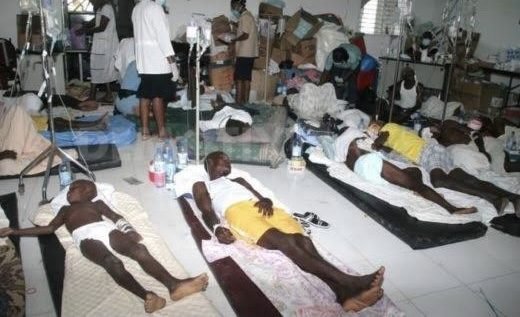
The European Commission has allocated €2.3 million in emergency humanitarian funding to Nigeria, Cameroon, the Central African Republic and Chad to help contain cholera outbreaks across West and Central Africa.
The EU announced the funding in a statement signed by Modestus Chukwulaka, Press and Information Officer at the EU Delegation to Nigeria and ECOWAS, on Tuesday in Abuja.
According to the statement, the World Health Organisation reported more than 61,000 cholera cases in the African Region in the first five months of 2026.
It says Nigeria receives the largest share of €1.5 million, which will be used to increase intervention teams, provide essential cholera kits, and strengthen water, sanitation and hygiene (WASH) interventions.
The funding also supports the treatment of public water points and household water supplies, as well as epidemiological surveillance in hard-to-reach areas.
It further strengthens case management, risk communication and community sensitisation.
The statement says Cameroon will receive €100,000 to support outbreak containment and case management through additional humanitarian staff, essential medicines, cholera treatment units, and oral rehydration points in the worst-affected villages.
The CAR receives €500,000 to scale up case management and vaccination, alongside water, sanitation and hygiene interventions.
It says the funds also strengthen risk communication, surveillance and case detection, while supporting dignified and safe burials.
Chad receives €200,000 to help break the chain of transmission through improved access to water, sanitation and hygiene, as well as community support for surveillance and case management.
The EU commissioner for Preparedness and Crisis Management, Hadja Lahbib, said the funding was critical as humanitarian needs continue to rise.
“Cholera is preventable and treatable. Yet it still threatens lives when people lack something as basic as safe water and healthcare.
“At a time when humanitarian needs are growing, and resources are shrinking, Europe is not looking away. This emergency funding will help our partners act quickly, contain the outbreaks and protect the communities most at risk,” Lahbib said.
(NAN)