
BERLIN
- While the bankruptcies of large corporations regularly make headlines, thousands of small and medium-sized enterprises often disappear from the market almost unnoticed
- ‘The crisis is now eating its way through the entire economy,’ expert warns
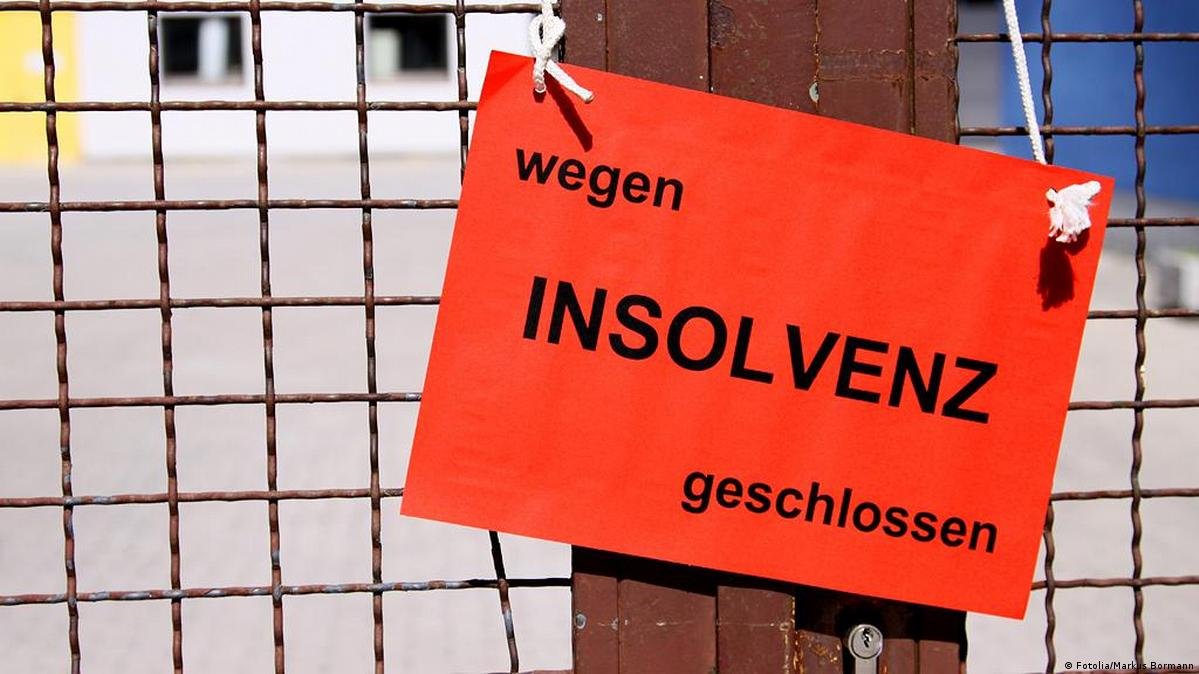
- Germany’s economy is in the throes of a deep crisis as approximately 188,000 companies ceased operations in 2025 which is 10% more than the previous year and the highest number in nearly 20 years.
The wave of bankruptcies in Germany continues at a historically high level and shows no signs of abating so far. According to the Federal Statistical Office (Destatis), German local courts registered a total of 2,276 corporate insolvency filings in April 2026. This represents a 7.1% increase compared with the same month last year. For the first quarter as a whole, the year-over-year increase was 6.5 percent.
While politicians talk about the need to promote economic growth, hundreds of businesses are disappearing from the market every day. For many entrepreneurs, the burden of costs, competitive pressure, and labor shortages has simply become too great.
What’s particularly alarming is that it’s no longer just struggling businesses that are affected. According to the credit reporting agency Creditreform, even companies with good or at least average creditworthiness are now being forced to shut down.
“The crisis is now eating its way through the entire economy,” warns Creditreform spokesperson Patrick-Ludwig Hantzsch.
While the bankruptcies of large corporations regularly make headlines, thousands of small and medium-sized enterprises often disappear from the market almost unnoticed.
Reasons behind wave of business closures
Experts identify several causes for this dramatic trend. Companies are simultaneously grappling with rapid technological change, growing competitive pressure, and the ongoing shortage of skilled workers.
Added to this is a problem that has been escalating for years. Many company executives are retiring but cannot find a successor. “Nearly a third of all voluntary closures are now due to retirement,” said Sandra Gottschalk, a researcher at the Leibniz Center for European Economic Research (ZEW) in Mannheim.
Surprisingly, at 13%, only a comparatively small proportion of companies actually filed for bankruptcy in 2025. The vast majority of businesses voluntarily ceased operations.
Traditional industries hit particularly hard
Traditional economic sectors, in particular, are losing more and more companies as this affects manufacturing, construction and hospitality with respectively 11,000 (+10%), 24,000 (+12%) and 15,000 closures (+15%).
While policymakers debate economic growth, hundreds of businesses are disappearing from the market every day. For many entrepreneurs, the burden of costs, competitive pressure, and labor shortages has simply become too great.
Expert warns of ‘all-encompassing crisis’
One insolvency expert, Hans Joachim-Berner, warned of a major insolvency crisis.
“I almost see this as an all-encompassing crisis,” the insolvency administrator said in an interview with media outlet Table.Briefings.
“Everyone is suffering from the difficult market environment, high energy prices, inflation—which is leading to consumer reluctance—and interest rates that have taken a turn,” Berner added.
He pointed out that small businesses are facing increasing problems. He noted that in the past, he had virtually no cases from this sector on his desk.
There isn’t a single trigger for the current wave of insolvencies.
Instead, Berner speaks of a “cumulative crisis” that has led to this situation: “First COVID-19, then supply chain difficulties, then emerging from the pandemic. Ukraine, the energy crisis, now Iran, and on top of that, customs issues. All of this has placed a heavy strain on—or even depleted—the financial resources of many companies.”
And then there’s AI. Many companies find themselves facing “major transformation challenges. Business models are changing fundamentally and at a dramatic pace—driven by AI,” Berner said.
Business community laments high costs
Germany’s business community cite high taxation, labor costs and red tape as the main reasons for the ongoing bankruptcy wave in the country.
“The high taxes in Germany are really killing my small business. I am seriously thinking about filing for bankruptcy. It does not matter how much I work. I am literally getting flooded with tax letters every day and I don’t know what to do. I am struggling so hard to keep my business afloat,” Berlin-based concert promoter Karsten Schmidt told Anadolu.
“I am seriously contemplating to relocate my business to another European country with lower taxation and labor costs as I am essentially working for the tax office,” he added.
Schmidt stressed that Germany needs to create what he called “a business-friendly atmosphere” like for example in the US.
Bankruptcy wave hits credit supply
Meanwhile, the wave of bankruptcies is hitting the real economy – and now the supply of credit as well. Banks are responding to rising bankruptcies with stricter lending standards: more collateral, tougher terms, and more rigorous scrutiny.
For companies already struggling with a lack of orders and structural change, this comes at an inopportune time.
Two key sectors of the German economy are particularly affected: automotive suppliers and energy companies. In banking circles, there is currently no explicit talk of a crisis, but there is talk of a noticeable shift.
When risks in the system rise, lending terms must change because they reflect that risk.
For small and medium-sized enterprises (SMEs), which traditionally rely heavily on bank loans, this narrows their room to maneuver precisely when investments in restructuring their business models are most urgently needed.



