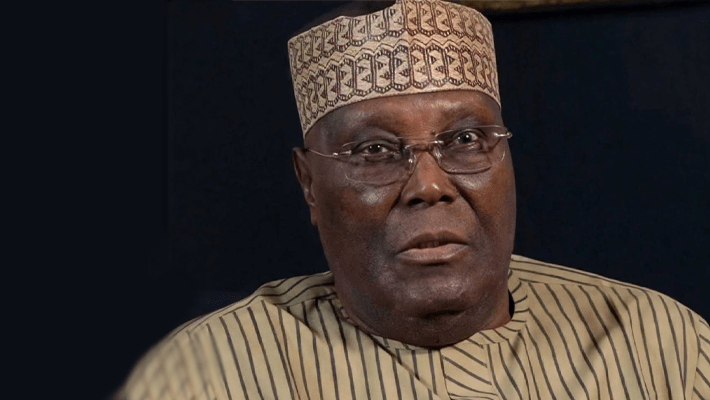
The Presidential candidate of African Democratic Congress (ADC), Atiku Abubakar, has said his administration will prioritise critical infrastructures to grow the Nigerian economy if he is elected as president in 2027.
Mr Abubakar, said on Wednesday, that as a farmer, he watched the country’ s transport infrastructure deterioration for decades.
He stated, “I am a farmer myself, so this is personal to me too. I also developed an interest in mass transportation early in life, and over the decades I have watched our transport infrastructure deteriorate significantly.”
He stated that he understood what bad roads do to businesses, farmers, transporters, and families, adding that the driver, trader and farmer paid for it ultimately.
“Transport infrastructure is not merely about concrete and asphalt. It determines whether produce gets to market before it spoils, whether a businessman makes a profit or a loss, how much it costs to move food and raw materials, and how safely people can travel.
“Every economy depends on the efficient movement of people, goods and services. When that movement becomes slow, expensive and dangerous, the consequences eventually show up in the prices ordinary people pay,” Mr Abubakar added.
He stated that his commitment if elected president would be on rehabilitation and maintenance of Nigeria’s critical economic corridors that would be treated as a national economic priority, not as an afterthought.
“I have travelled these roads. I know what it means when a farmer cannot get his produce to market in time, when a transporter spends his earnings repairing damage caused by failed infrastructure, and when a mother pays more for food because the cost of moving it has become unbearable,” the ADC presidential candidate said.
The former vice president said he thought of a former public servant in Calabar whose retirement home collapsed a few weeks ago following flooding worsened by a dilapidated road and blocked drainage channels, noting that the individual moved into the home exactly five months ago to mark his 70th birthday.
“He had barely settled into the place where he hoped to spend his retirement before it was gone. (The) APC-led governments must answer for the neglect of existing roads and drainage systems under their care. Announcing new projects cannot excuse failing to maintain the infrastructure that protects people’s homes and livelihoods,” he said.
He noted that across Nigeria, families were losing homes to flooding, sometimes the only substantial asset they had built through a lifetime of work and sacrifice.
He added that maintaining the infrastructure was a basic responsibility of the government.
He stated, “My administration will identify the routes that carry the greatest volumes of agricultural produce, manufactured goods, raw materials and passengers, and direct investment first to those whose restoration can most quickly reduce travel time, lower transport costs and strengthen economic activity.”
The presidential candidate promised to reconnect farms to markets, factories to consumers, communities to opportunity and Nigerians to one another.
“That will be the governing principle of my infrastructure policy: build where necessary, rehabilitate where urgent, maintain what we have, and invest where Nigerians will feel the difference most,” he said.
He noted that he didn’t even know want Nigeria reduced to Fulani versus Yoruba, North versus South, Muslim versus Christian, or one tribe against another.