
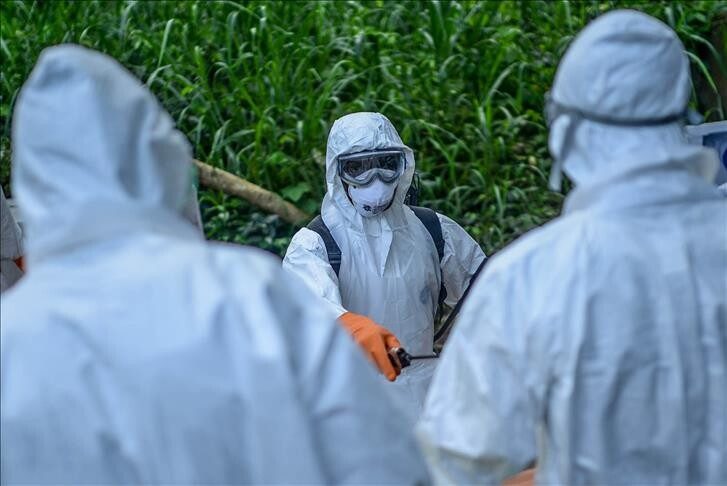
KIGALI, Rwanda
The Ebola outbreak in the Democratic Republic of Congo continues to evolve, expanding geographically and in terms of infections and fatalities, the World Health Organization (WHO) Africa regional bureau said Wednesday as the virus spread to a new health zone.
The number of confirmed cases in Congo has reached 9,066, including 4,381 deaths, since the outbreak declaration in May, according to the latest WHO situation report.
The epidemic has affected seven provinces — Haut-Uele, Ituri, North Kivu, South Kivu, Bas-Uele, Tshopo and South-Ubangi.
The WHO said the Dakwa health zone in Bas-Uele province has become the latest health zone affected by the Bundibugyo virus strain, bringing the number of affected health zones to 65 since the start of the outbreak.
The report indicated that transmission remains highly heterogeneous in the affected regions.
Ituri remains the principal focus of the outbreak, while substantial transmission persists in North Kivu and Haut-Uele.
Catherine Swallwood, incident manager at the WHO in the country, said there is still concern about the high number of deaths in communities, which stands at about 60%.
She said in recent weeks, about one-third of all new cases have still been community deaths, meaning health authorities are not detecting cases before the patients die.
The outbreak has become the largest and deadliest-ever recorded in Congo and the second-largest Ebola outbreak globally, after the 2014-2016 epidemic in West Africa.
The Africa Centers for Disease Control and Prevention (Africa CDC) has urged enhanced regional preparedness to avert additional spread of Ebola after Kenya reported its first imported case from Congo last week.
Kenyan authorities on Wednesday confirmed a second case of Ebola of the Bundibugyo strain, involving a 39-year-old man who is a close family member of the country’s first confirmed case.



