CAIRO
An Egyptian villager’s discovery of an inscribed stone outside his home led archaeologists to a colossal statue head of Pharaoh Ramses II and other ancient artifacts, authorities said Wednesday.
Khaled el-Shahat Khalil found the stone while working on his land in Behbeit el-Hagar village in northern Gharbia province and alerted local antiquities officials, according to the Tourism and Antiquities Ministry.
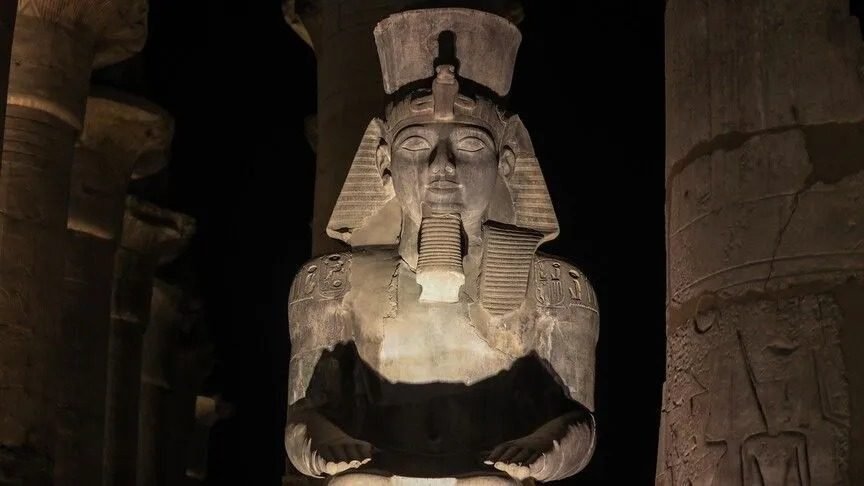
Excavations at the site uncovered a massive head of a Ramses II statue measuring 1.6 meters (5.25 feet) tall and depicting the pharaoh wearing the double crown symbolizing the unification of Upper and Lower Egypt.
Archaeologists also found much of a second royal statue measuring 2.4 meters (7.87 feet) and believed to depict Ramses II. Its head retains well-preserved facial features beneath a traditional royal headdress.
Nearby, a 1.3-meter (4.26-foot) block of pink granite was discovered bearing hieroglyphic inscriptions, including two royal titles of Ramses II.
Tourism and Antiquities Minister Sherif Fathy and Gharbia Governor Alaa Abdel Moaty visited Khalil in his village Wednesday to honor him for reporting the discovery.
Khalil and his wife were awarded a certificate of appreciation and an Umrah pilgrimage to Mecca in recognition of his honesty and initiative.
Fathy said the villager’s decision to alert authorities enabled archaeologists to conduct excavations and preserve the artifacts.
Behbeit el-Hagar, in Egypt’s Nile Delta, is also home to the remains of an ancient temple dedicated to the goddess Isis.