Residents and business owners in the Federal Capital Territory (FCT) say extreme heat is harming their health, raising household expenses and disrupting businesses and livelihoods.
The residents, who spoke with journalists, said the intense heat had increased their dependence on electricity, water and other cooling measures, while inconsistent power supply made coping more difficult.
They said the situation had resulted in food spoilage, increased operating costs, changes in working hours and health-related discomfort, particularly among households and people whose occupations exposed them to direct sunlight.
The Nigerian Meteorological Agency (NiMet), in an October 23 advisory, warned Nigerians to prepare for hotter days, increased heat discomfort, dust and possible water scarcity as the country transitions from the rainy to the dry season.
The agency identified dehydration, heat exhaustion and heatstroke among the health risks associated with excessive heat, warning that prolonged exposure could affect people’s health and productivity.
To reduce heat-related risks, NiMet advised Nigerians to drink water regularly, wear lightweight and breathable clothing, and limit prolonged exposure to direct sunlight, particularly during the hottest hours of the day.
It also recommended scheduling strenuous outdoor activities for cooler periods.
In Sokale community, Bwari Area Council, Patient Ndidi said coping with the heat had become an additional financial burden, particularly as a mother trying to keep her children comfortable while managing household expenses.
“The sun was so intense that it felt as though it was draining my blood.
“Even when the children returned from school, I had to tell them to go and take their baths because the heat was so much,” she said.
Ns Ndidi said the situation had increased her household’s electricity consumption because the family needed to run its fans for longer periods whenever power was available.
“We use more units now because whenever there is electricity, we tend to leave the fan on throughout the day.
“As a result, we are constantly recharging our prepaid meter,” she said.
She explained that inconsistent electricity supply had also made food preservation difficult, as cooked meals could easily spoil during prolonged power outages.
According to her, foods such as egusi and groundnut soup, beans and other cooked meals were particularly difficult to preserve, forcing her to prepare smaller quantities that could be consumed at once.
She said the adjustment had increased the frequency of cooking and sometimes resulted in food wastage, additional expenses and stress.
Ms Ndidi added that when electricity was unavailable, members of her household sometimes poured water on their bodies for temporary relief.
“Actually, it has not helped us at all because once there is no electricity, you return to square one,” she said.
She called on the government to improve electricity supply and consider reducing electricity tariffs to ease the financial burden on households.
Similarly, John Anthony, a resident of Kubwa, said coping with the heat was more challenging at home than in his workplace, where air-conditioning provided a comfortable environment.
“Office is not a problem at all; there is AC, so everywhere is always cool until we go home,” he said.
Mr Anthony said his family sometimes opened their windows and doors to improve ventilation while drinking sufficient water to cope with the heat.
He, however, urged the government to ensure a stable electricity supply to enable residents to use cooling appliances.
“Government should please help us to ensure there is stable light so that we will be able to cope and it will reduce it,” he said.
Another Kubwa resident, Ignatius Ikechukwu, a Point of Sale (POS) operator who works under the sun, described coping with the heat as challenging.
He said drinking sufficient water was his major strategy for managing the situation while carrying out his daily activities.
“I do not joke with water at all,” he said.
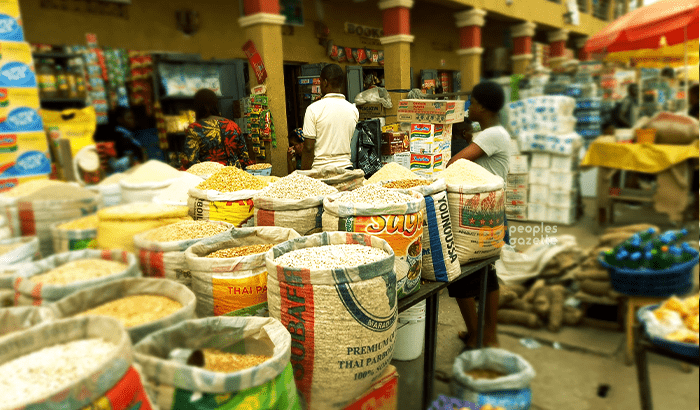
The effects of the extreme heat have also extended to traders and other business owners, particularly those dealing in perishable goods and products requiring refrigeration.
In Jikwoyi, Lovina Obiyi, a trader dealing in provisions, foodstuffs and poultry, said the excessive heat had resulted in the loss of considerable quantities of poultry.
“We specialise in provisions, foodstuffs and poultry.
“Due to the heat, we have lost quite a good amount of chickens and turkeys to the point that we need to open the place for ventilation,” she said.
Ms Obiyi stated that the heat had also influenced consumer preferences, increasing demand for cold drinks and frozen food products.
“There is a rise in the purchase of cold things. Nobody buys normal temperature water; it has to be cold water.
“When it comes to foodstuffs, people prefer frozen food rather than smoked ones,” she said.
She explained that while perishable products were preserved in freezers, tomatoes and peppers were kept in open spaces to allow ventilation, adding that goods that could no longer be salvaged were discarded.
According to her, the heat had reduced profit margins because some food items ripened faster than expected, resulting in losses.
“The heat affects a lot of things. Profit margin is low because things get spoilt a lot.
“When you keep plantain, they all get ripe at once. There is a lot of loss and risks now due to the heat and also the death of livestock,” she said.
Ms Obiyi added that the heat had also affected her personal comfort, causing heat rashes and making it difficult to sleep without a fan.
Chimezie Samuel, a business owner in Dutse, said the increased demand for cold drinks and other chilled products had created additional pressure on his business because of unreliable electricity supply.
He said customers seeking relief from the heat sometimes could not find cold drinks when power was unavailable.
Although he had not recorded significant losses from spoiled goods because most of his products were not highly perishable, Samuel said maintaining adequate cooling remained a challenge.
He disclosed that he had invested more than N1.7 million in a solar power system to keep his business running despite electricity challenges.
He urged the government to improve electricity supply, noting that the effects of extreme heat extended beyond business operations to residents’ ability to rest comfortably after work.
He also highlighted the importance of adequate water supply, saying electricity challenges could affect access to water and make coping with the heat more difficult.
For Henry Chinonso, a welder and fabricator, the heat had forced changes in working hours to reduce exposure to direct sunlight.
“I come out in the morning. I rest immediately it is 12 o’clock during the hot weather. When the heat reduces, then I will start again,” he said.
Mr Chinonso said he and his workers now suspended activities during the afternoon and resumed in the evening when temperatures became more bearable.
He expressed concern that prolonged periods of extreme heat could affect work schedules, reduce customer patronage and slow productivity.
He identified adequate shade as one of the measures that could help outdoor workers cope with the situation.
Beyond its economic consequences, extreme heat has also raised concerns among residents and healthcare workers over its possible effects on health.
Jeffrey Onu, a nurse at Olohi Gocho Pharmacy, Sokale, said some people visiting the facility had complained about the hot weather.
He advised residents to drink sufficient water regularly, get adequate rest and maintain good personal hygiene to reduce the risk of heat-related health problems.
Mr Onu also urged people to avoid prolonged exposure to direct sunlight during the hottest hours of the day and to seek shade or remain in cool, well-ventilated places whenever possible.
He further advised residents experiencing skin irritation to avoid scratching affected areas and using harsh creams or skincare products that could worsen the condition.
“My advice is that in this hot weather, people should drink enough water and take their rest.
“Excessive heat causes a lot of sicknesses in the human system, some of which may not even be detected on time,” he said.
Tope Ayoola, another FCT resident, said the intense heat had left her exhausted, caused excessive sweating and made it difficult to sleep comfortably at night.
“The heat is too much. It makes me feel tired and weak. I sweat a lot and I can’t sleep well at night,” she said.
Ms Ayoola said she coped by drinking more water, staying indoors during the afternoon and taking cold baths.
She added that she had experienced headaches and heat rashes, which she attributed to the excessive heat.
Similarly, Tolu Idayat said the hot weather had affected her concentration and productivity, sometimes leaving her with headaches and tiredness.
She said she coped by drinking plenty of water, wearing light clothing and bathing regularly.
Ms Idayat appealed to the government to improve electricity supply and access to clean water while creating public awareness of measures residents could adopt to protect themselves from excessive heat.
Israel Bulus, a resident of Apo, described the hot weather as a seasonal experience to which residents had continued to adapt.
He said he sometimes took baths up to three times at night to obtain relief from the heat, adding that he remained concerned about its possible health implications.
Across the communities, residents called for improved electricity and water supply, saying reliable access to both services would reduce the financial pressure on households and businesses while making it easier to cope with extreme temperatures.
They also urged relevant authorities to intensify public awareness of heat-related health risks and practical measures to reduce exposure to excessive heat.
(NAN)