
GREATER LONDON
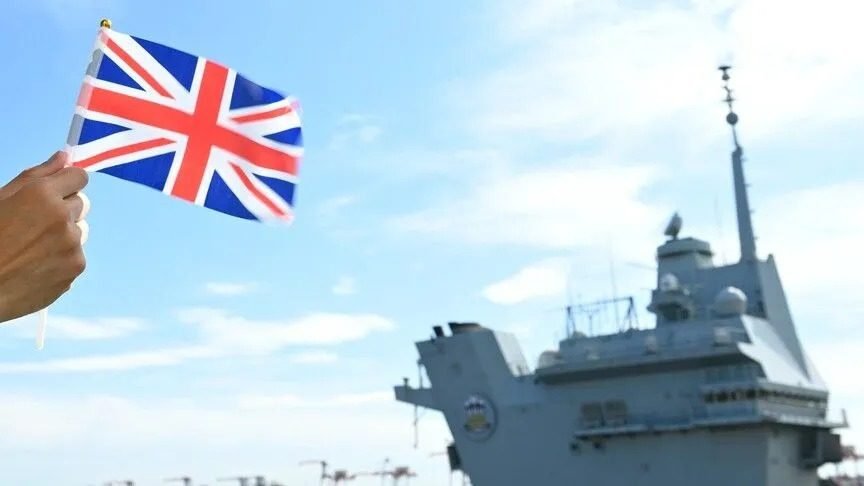
UK Defense Secretary Wes Streeting on Monday accused Iran of “bare-faced cheek” after Tehran branded the Royal Navy and Royal Air Force “terrorist organizations.”
The Iranian move, which also included labeling MI6 a “hostile group,” came in response to the British decision to outlaw support for the Islamic Revolutionary Guard Corps (IRGC).
Responding to Tehran’s move during a joint news conference in Berlin with German Defense Minister Boris Pistorius, Streeting said Iran had a record of “state-sponsored terrorism.”
“The charge levelled at the Royal Navy and the Royal Air Force by Iran doesn’t really dignify a response,” he said, adding that he was minded to put press clippings of the accusations in his downstairs toilet “as a trophy.”
He said Britain remained mindful of the incident at RAF Fairford and the threats coming from Tehran but stressed that diplomacy should remain the priority.
“At this stage, what we should be working towards is de-escalation and diplomacy for all of the challenges that we have with Iran,” he said.
The news conference also addressed wider European security concerns, with Streeting warning that the threat facing Europe was growing.
“We face a level of threat that we haven’t seen since the end of the Cold War, and unfortunately, that level of threat is growing,” he said.
He reiterated Britain’s support for Ukraine and called on NATO allies to strengthen their defense capabilities and industrial cooperation.
“We stand with Ukraine. We stand with Ukraine unequivocally. We stand with Ukraine for as long as it takes,” he said.
- UK open to German participation in next-generation fighter programme
The discussions also addressed the future of Europe’s defense industry, including Germany’s potential participation in the Global Combat Air Programme (GCAP), the joint UK-Italy-Japan project to develop a next-generation combat aircraft.
Streeting said Britain was open to German involvement but stressed that any decision would have to be taken jointly by the three existing partners.
“We’d certainly be open to German participation in that program, but this is a decision that is taken jointly by the United Kingdom with Italy and Japan,” he said.
He said discussions should take place in a “three plus one format,” adding that Britain wanted to understand Germany’s military requirements and establish whether there was sufficient alignment of interests.



