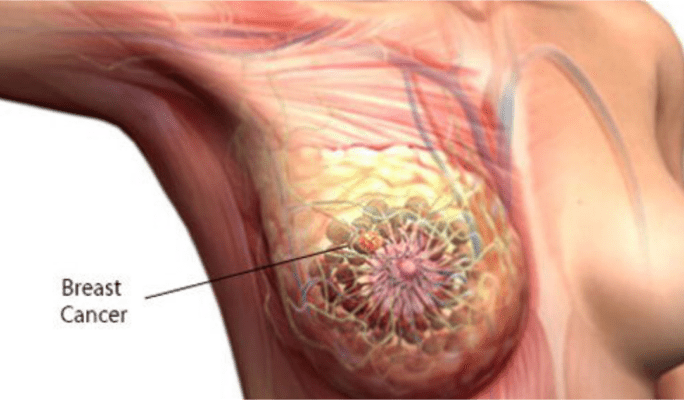
African countries top the global table of countries recording new breast cancer cases, with Equatorial Guinea accounting for the highest increase at 312 per cent, according to a report from a Global Burden of Disease Study.
The study published by The Lancet medical journal website on Monday used data from population-based cancer registries, vital registration systems and interviews with family members or caregivers of women who have died from breast cancer.
The new analysis provides updated global, regional and national estimates of the female breast cancer burden and associated risk factors from 1990 to 2023 across 204 countries and territories, with projections extending to 2050.
According to the report, between 1990 and 2023, Equatorial Guinea recorded the largest increase in new cases and the second-largest rise in deaths, at 212 per cent.
The surge in new cases was followed by Ethiopia at 207 per cent, Egypt at 189 per cent, the Democratic Republic of the Congo at 160 per cent, and Mauritania at 141 per cent.
Also, Uganda recorded 135 per cent, Mali 133 per cent and Liberia 129 per cent.
In Nigeria, the study revealed a substantial rise in both incidence and mortality, underscoring the growing public health burden of breast cancer and the need for strengthened prevention, early detection and treatment strategies.
It was stated in 2023 that Nigeria recorded 53, 500 new cases of breast cancer, representing a 542.9 per cent increase in cases since 1990.
The age-standardised incidence rate in 2023 was 72.1 per 100,000, a 108.8 per cent increase from 1990.
According to the report, breast cancer deaths in 2023 in Nigeria stood at 26, 200, marking a 408.3 per cent increase since 1990.
It said Nigeria’s age-standardised death rate was 38.7 per 100,000 in 2023, a 73.5 per cent rise from 1990. It also projected that the annual global breast cancer death toll will increase by 44 per cent from 764,000 in 2023 to nearly 1.4 million in 2050, occurring in low- and lower-middle-income countries.
“The number of new breast cancer cases worldwide is predicted to rise by a third from 2.3 million in 2023 to over 3.5 million in 2050,” it stated
The study highlighted that breast cancer remained the most common cancer among women worldwide, with an estimated 2.3 million new cases diagnosed in 2023. Of these, 73 per cent occurred in high- and upper-middle-income countries.
It said that globally, three times as many new breast cancer cases were diagnosed in women aged 55 or older in 2023 compared to women aged 20 to 54 years.
However, rates of new cases have risen among women aged 20 to 54 years since 1990, while rates among older women have not changed substantially.
These differences, it noted, might reflect changing age patterns as well as changes in risk factors that vary between pre- and post-menopausal women.
The study linked 28 per cent of the global breast cancer to six modifiable risk factors, including smoking, high blood sugar and obesity.
The findings indicate that maintaining a healthy lifestyle, including avoiding smoking, engaging in sufficient physical activity, reducing red meat consumption, and maintaining a healthy weight, could have significant health benefits.
It said high red meat consumption had the greatest impact, linked to nearly 11 per cent of all healthy life lost.
According to the study, high alcohol use and low physical activity each contributed to two per cent of healthy life lost, and it is recommended to maintain a healthy lifestyle.
Also, the study’s lead author, Lisa Force, restated the need for collaborative efforts to ensure functional health systems capable of early diagnosis and comprehensive treatment of breast cancer in all countries.
Ms Force said reducing the cost of breast cancer therapies and ensuring that universal health coverage includes breast cancer care essentials would also be valuable in protecting patients from catastrophic costs and improving outcomes.
(NAN)