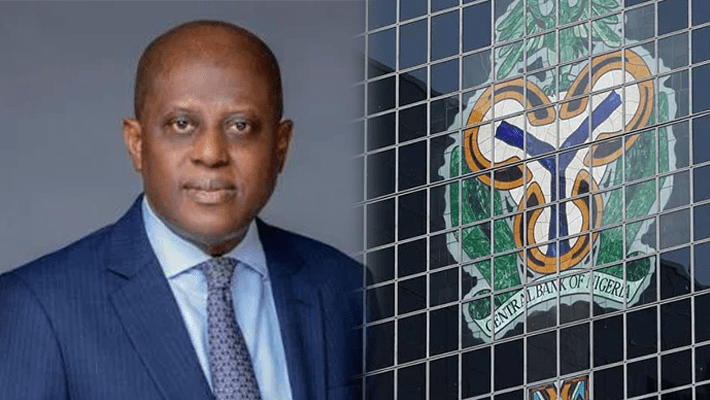
The Central Bank of Nigeria stressed its commitment to transitioning Nigeria to a full inflation-targeting monetary policy regime, engaging academia and researchers to support this shift.
A statement by the CBN on Monday said its deputy governor in charge of economic policy, Muhammad Abdullahi, made the remark during a strategic session with the Nigerian Economic Society and the academic community in Abuja.
Mr Abdullahi described the dialogue as timely and essential to Nigeria’s ongoing economic reform programme. He addressed a gathering of scholars, directors, and policy experts as part of a sensitisation programme.
Mr Abdullahi reiterated that transitioning to inflation targeting represents a pivotal move toward a transparent, rules-based framework designed for long-term price stability.
He said that inflation targeting would serve as a crucial nominal anchor for the Nigerian economy.
The CBN official said the framework guides market expectations and reduces supply-side shocks, improving transparency, accountability, and credibility of monetary policy.
Mr Abdullahi added that stabilising inflation expectations will lower risk premia, support investments, and help policymakers focus beyond short-term issues.
With global uncertainties hurting emerging economies, a credible monetary anchor is vital to strengthen Nigeria’s resilience, he said. Mr Abdullahi highlighted several reforms already put in place to support the transition.
According to him, these include returning to orthodox monetary policy tools, withdrawing from quasi-fiscal activities, and strengthening institutional independence.
Mr Abdullahi said reforms in the foreign exchange market, such as rate unification and e-trading, reduced volatility and improved price discovery.
The CBN deputy governor noted that bank recapitalisation and stricter oversight stabilised the financial sector.
Mr Abdullahi said that better coordination with fiscal authorities and clearer communication had improved the consistency of monetary operations. He said the reforms are showing results, with headline inflation dropping from 34.8 per cent in late 2024 to 15.1 per cent by early 2026.
He said that the outcomes were driven by sustained monetary tightening and improved policy discipline.
Mr Abdullahi reiterated that Nigeria is committed to achieving sustained low and stable inflation through these reforms.
“The medium-term target is to steer inflation into a single-digit range of 6–9 per cent, barring major external shocks. Achieving this will require sustained policy discipline, anchored expectations, and a credible institutional framework trusted by markets,” he said.
Victor Oboh, the director of the monetary policy department at the CBN, reaffirmed CBN’s commitment to strengthening collaboration with the NES..
Mr Oboh said that it was part of efforts to enhance the effectiveness of monetary policy and deepen macroeconomic stability.
He said that the success of any monetary framework, especially inflation targeting, depended on technical capacity, and also on public trust and effective communication.
According to him, academics, researchers, and thought leaders play a vital role in shaping narratives, influencing expectations, and building the evidence base for sound policy decisions.
Mr Oboh acknowledged potential challenges, including short-term trade-offs and the need to reinforce institutional credibility.
He expressed confidence that the combined expertise of the CBN and NES would significantly advance Nigeria’s monetary policy goals, building sound, evidence-based policy decisions.
The president and chairman of the NES council, Baba Musa, praised the CBN for what he described as a bold, reform-minded approach to monetary and financial sector management.
Mr Musa commended the apex bank for its openness, policy direction, and willingness to collaborate with the academic community.
He reaffirmed NES’s commitment to supporting the CBN’s stabilisation efforts.
“Nigeria needs a credible Central Bank, and the Nigerian Economic Society needs a Central Bank worth standing with,” Mr Musa said.
(NAN)