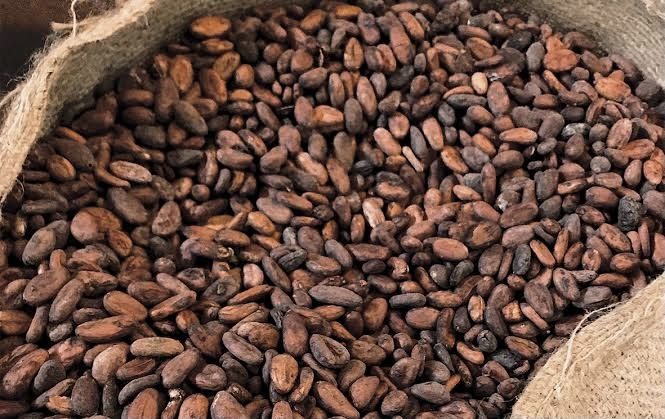
– Falling global cocoa prices are also exposing financial pressures at Ghana’s cocoa regulator
– ‘Inputs are expensive, labor is not easy to get, and now what we earn has reduced,’ says cocoa farmer Agya Kwabena
ACCRA, Ghana
For decades, Ghana’s tightly managed cocoa system has helped stabilize prices, protect farmers and safeguard the country’s reputation as one of the world’s most reliable suppliers.
But as global cocoa prices fall sharply after record surges, the system is being tested – exposing financial strains at the regulator, sparking protests among farmers, and triggering political debate over how the sector should be managed.
Cocoa remains one of Ghana’s most important exports, supporting more than 800,000 farming households and millions more across transport, warehousing, input supply and processing. In many rural areas, the crop forms the backbone of local economies, funding education, health care and household livelihoods.
At the center of the sector is the Ghana Cocoa Board (COCOBOD), the state agency that oversees marketing and exports.
In February, the board reduced the producer price for the remainder of the 2025/26 season to 41,392 Ghanaian cedi ($3,839) per metric ton, down 28.6% from the 58,000 Ghanaian cedi ($5,380) per ton announced at the start of the season.
The mid-season reduction – unusual in Ghana’s cocoa sector – has unsettled farmers who typically expect prices to remain fixed throughout the crop year.
Some growers have protested, saying the decision disrupted financial plans already made for the season.
“Give us the previous price … I take care of myself. We don’t want the new price,” said Madam Akosua, a widow and cocoa farmer in the central Wenchi region.
Agya Kwabena, another farmer, said the physical demands of cocoa farming remain unchanged even as prices fall.
“Going to the farms is very difficult, so the government should empathize with us and give us back the old price,” he told Anadolu. “Inputs are expensive, labor is not easy to get, and now what we earn has reduced.”
Why the price was cut
Ghana’s challenges mirror similar pressures in neighboring Ivory Coast, the world’s largest cocoa producer. Together, the two countries supply the majority of the world’s cocoa, meaning developments in their sectors are closely watched by global traders and chocolate manufacturers.
Ghanaian Finance Minister Cassiel Ato Forson said the decision to cut prices reflects a sharp correction in global cocoa markets after prices surged beyond $10,000 per ton in 2024.
As supply prospects improved and demand softened, prices dropped significantly, forcing producing countries to adjust their pricing policies.
“The world market price has dropped significantly … making Ghana’s cocoa beans uncompetitive and creating liquidity challenges,” he said while outlining reforms aimed at stabilizing the sector.
According to the minister, Ghana’s earlier producer price had become misaligned with international markets, creating financial strain for COCOBOD.
The industry is also grappling with other structural challenges, including production shortfalls, inherited debt obligations and the collapse of the syndicated loan system that historically financed cocoa purchases.
Officials say that even after the adjustment, farmers are still receiving roughly 90% of the free-on-board export value – above the statutory minimum guaranteed under Ghana’s pricing system.
President John Dramani Mahama acknowledged the pressure on producers and said policymakers must remain mindful of farmers’ realities.
“I was given 50 acres of land, and I planted cocoa on it, so I am a cocoa farmer,” he said at an event last month. “When the government reduces the price of cocoa, it affects me too. I want to empathize with farmers so that when we make policy decisions, we understand their impact on families.”
Mahama said reforms aim to protect the long-term sustainability of the industry while ensuring farmers continue to benefit from cocoa cultivation.
COCOBOD tightens spending
The financial strain has also reached the regulator itself.
COCOBOD executives have taken a 20% salary cut, while senior staff have accepted a 10% reduction for the remainder of the crop year as part of broader cost-containment measures.
Stephenson Anane Boateng, president of the Ghana National Association of Cocoa Farmers, said the move shows management is sharing the burden faced by farmers.
“We were expecting even deeper cuts. Now that they have come up with 20%, we are okay,” he said.
COCOBOD has also announced procurement reforms and operational restructuring aimed at improving efficiency and addressing liquidity pressures.
Authorities have also been addressing payment delays that had added to frustrations in the sector.
COCOBOD has disbursed about 4.2 billion Ghanaian cedi (over $386 million) to Licensed Buying Companies for onward payments to cocoa farmers who had been owed money since November last year. Officials say the payments are part of broader efforts to clear arrears and restore confidence among farmers and traders.
Political debate intensifies
The price cut has sparked criticism from opposition figures who argue the decision worsens the financial challenges facing farmers.
Dennis Miracles Aboagye, a former presidential staffer, said the reduction significantly lowers expected earnings at a time when production costs are rising.
“The Ghanaian cocoa farmer is poorer today than he has been in recent years,” he told local media. “Farmers are spending more on inputs and labor, yet the income they receive from their produce has gone down.”
He warned that lower returns could undermine productivity if farmers cannot reinvest in their farms.
“When returns fall this sharply, it affects maintenance, replanting and the ability of farmers to keep their farms productive,” he said. “That ultimately has consequences for the entire cocoa value chain.”