The Independent National Electoral Commission says its goal of conducting free, fair and credible elections that will serve as a reference point in Africa must be actualised in 2027.
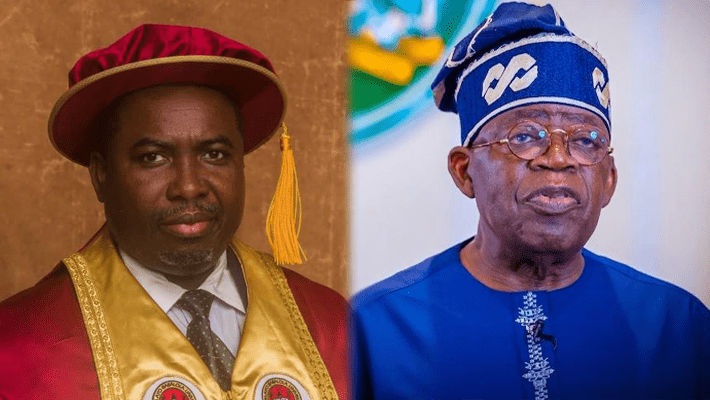
INEC chairman Joash Amupitan said this on Friday in Lagos, while delivering his opening address at the commission’s ‘2026 Induction and Strategic Retreat’ organised for its leadership and senior officials.
The programme was attended by commissioners, resident electoral commissioners, as well as administrative secretaries, directors and top management staff across the 36 states and the Federal Capital Territory.
According to him, the commission has a historic opportunity to rewrite the history of elections in Nigeria and set a new benchmark for election management in Africa.
Mr Amupitan said, “The eyes of over 200 million Nigerians and indeed the entire continent are upon us. I charge you today to brace yourselves. The work ahead is demanding, the hours will be long, and the scrutiny will be intense.
“We have a golden opportunity to rewrite the history of elections in Nigeria. Our goal is clear. The 2027 general election must be free and fair and be a watershed moment in Nigeria’s election history.”
The INEC chief added, “But we must aim even higher. I want us to build an institution that is recognised globally. Let it be said that under our watch, INEC became the best election management body in Africa —a beacon of integrity, a model of technological efficiency, and a fortress of democratic values.”
He noted that the 2027 elections must be of continental standard, “a proof-of-concept that demonstrates that INEC can indeed conduct a world-class, technologically-driven, and transparent election that is beyond reproach”.
“Our mandate, which we should pursue rigorously, is built on five non-negotiable pillars,” stated Mr Amupitan. “We are here to organise elections that are free from any form of interference; fair to all contestants and political parties; credible in the eyes of the global community; transparent in every process, from polling units to result collation; and inclusive of every Nigerian, regardless of physical ability or location.”
He added that, in pursuing this mandate, INEC must recognise that 2027 will be defined by a new demographic of Nigerians — millions of young citizens who will be approaching the ballot box for the very first time.
Mr Amupitan said that these young citizens are digital natives who demand real-time transparency and have little patience for opacity.
Mr Amupitan said, “It is our duty to prove to these tech-savvy, and often sceptical, young voters that INEC can be trusted. By ensuring our systems are inclusive, and our technology is beyond reproach, we are not just conducting an election; we are securing the lifelong loyalty of Nigeria’s future to the ideals of the ballot.”
Mr Amupitan reassured that he was particularly committed to the legal framework of elections.
The INEC chairman noted that before the 2027 elections, the commission would conduct several critical polls, including the FCT council elections in February 2026 and the off-cycle governorship elections in Ekiti and Osun, describing them as testing grounds for the commission’s preparedness.
(NAN)