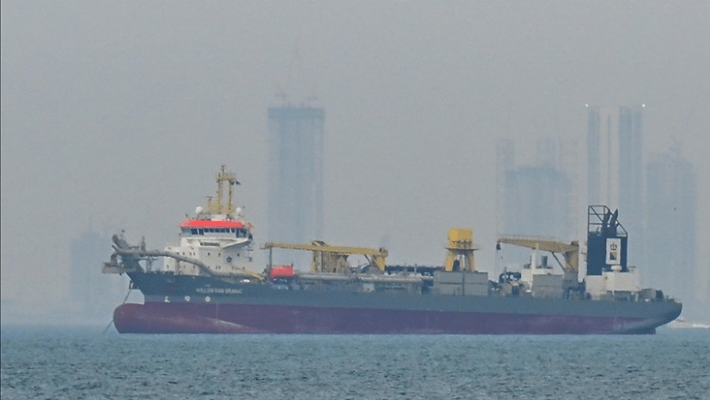
Malaysia’s Prime Minister, Anwar Ibrahim, has disclosed that Iran will allow Malaysian vessels to pass through the Strait of Hormuz.
He announced the development on Thursday, easing concerns over the disruption of energy supplies caused by the U.S.-Israeli war on Iran.
However, it is unclear how many Malaysian vessels will be allowed to pass through the strait.
Iran’s government has yet to confirm the development. Previously, Iran had said ships with no ties to Israel or the United States would be allowed to pass through the Strait of Hormuz, the narrow passageway through which a fifth of the world’s oil and gas travels in normal times.
Despite being an oil producer, Malaysia imports more than it exports, leaving nearly half of its supply dependent on the strait.
Mr Ibrahim said in a televised address on Thursday that Malaysia will take pre-emptive energy-saving steps as tensions between Iran and the United States persist.
He called for work-from-home arrangements across the public and private sectors, in a return to policies reminiscent of the COVID-19 era.
“Can we simply allow the situation to continue without taking any action, and assume that we are spared from all these problems?” he said.
He added, “Civil servants will, in phases and selectively, be allowed to work from home, and I believe that beyond the public sector, we will also urge the private sector to implement similar arrangements.”
Facing higher global oil prices linked to the Iran conflict, Malaysia’s fuel subsidy spending has surged more than fourfold in less than a week, reaching the hundreds of millions of dollars.
The Malaysian government announced on Thursday that it would trim subsidy allocations for its most widely used petrol starting next month, while keeping the retail price fixed at about 50 cents per litre.
“There are countries that are much more severely affected than us. But this does not mean we have missed out on everything,” Mr Ibrahim stated.