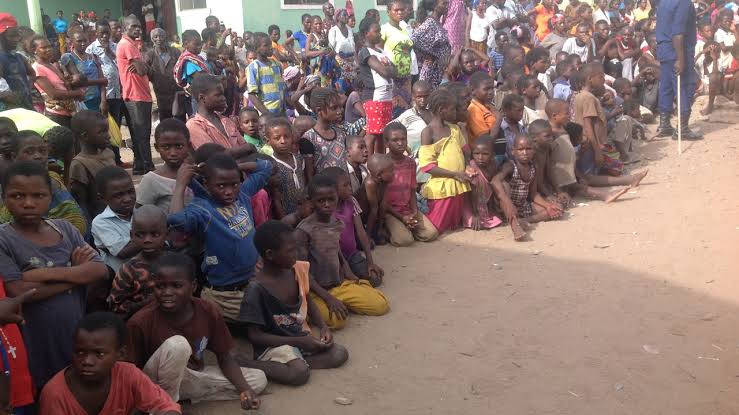
The Kaduna State government says it is targeting zero out-of-school children in the state within one year through a partnership with the Street to Scholars Foundation.
The Commissioner for Finance, Ibrahim Mohammed, disclosed this on Tuesday in Kaduna at the official flag-off of the foundation’s programme to support vulnerable children to access education and acquire skills for self-reliance.
Mr Mohammed said the state government was committed to ensuring that children excluded from formal education returned to school.
“Kaduna State currently has 187,000 children out of school, and the governor is doing everything possible to return them to the classroom as soon as possible. In the next one year, we want to see zero out-of-school children,” he said.
The commissioner said the partnership was part of efforts to address the challenge of out-of-school children and expand access to education across the state.
Earlier, the founder of the Street to Scholars Foundation, Sara Adeniyi, said the initiative was inspired by her encounter with street-connected children in Kaduna in 2008.
Ms Adeniyi, who is based in the United Kingdom, said the experience motivated her to establish the foundation to help vulnerable children return to school and acquire skills to become self-reliant.
She said the foundation planned to support about 135 children in its first year, with beneficiaries aged between five and 24 years.
According to her, the programme will provide support for primary and secondary education, further education and vocational skills acquisition.
“Once they enter into our database, they will not leave until they get a skill, and that will be at the age of 24,” she said.
Ms Adeniyi said the foundation would also facilitate the reunification of children with their families where appropriate, while ensuring continued access to education and skills development.
She explained that Kaduna State was selected for the pilot programme because it was the state where she first encountered street-connected children and conceived the idea behind the initiative.
The founder emphasised the importance of government collaboration in achieving the programme’s objectives, adding that the organisation was registered in both Nigeria and the UK.
Also speaking, the Commissioner for Planning and Budget, Mukhtar Monrovia, said the partnership demonstrated the state government’s commitment to inclusive development and the protection of vulnerable children.
Mr Monrovia said the signing of a memorandum of understanding (MoU) between the government and the foundation on September 8 established a framework for supporting street-connected and out-of-school children.
He identified poverty, inadequate support systems and limited access to educational opportunities as some of the factors preventing vulnerable children from accessing education.
The commissioner called for stronger collaboration among government ministries, development partners, civil society organisations, traditional rulers and communities to ensure the success of the initiative.
He also stressed the need for proper needs assessments to identify children requiring assistance and ensure that available resources were directed towards the most disadvantaged children and schools.
In his remarks on behalf of local government chairmen, the Chairman of Kajuru Local Government, Dauda Madaki, pledged support for the initiative, describing it as a welcome development that could make a lasting impact on access to education.
Mr Madaki emphasised the need to prioritise children from disadvantaged backgrounds, noting that financial constraints should not deny them educational opportunities.
Similarly, the District Head of Doka in Kaduna, Bala Tijjani, pledged the support of traditional institutions towards efforts to identify out-of-school children and improve school enrolment.
Mr Tijjani said traditional councils possessed relevant data and information that could help identify communities with high numbers of out-of-school children.
He stated, “At the traditional council level, we have sufficient data and information, and we are ready to share such information with the organisers of this programme.”
(NAN)