
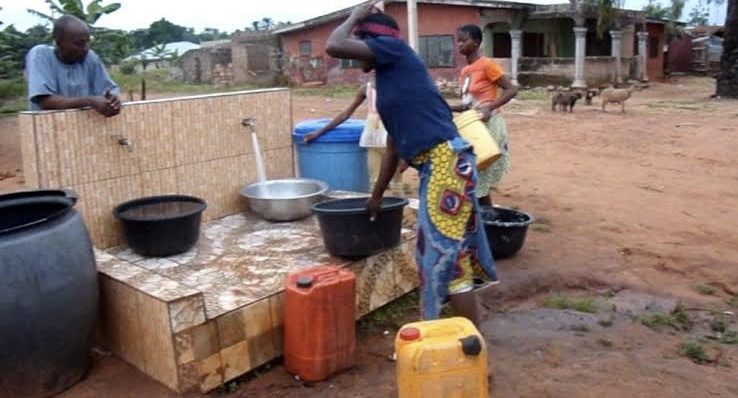
Residents of Ikorodu and Alapere in Lagos are grappling with inconsistent water supply and poor water quality, forcing many to rely on costly private sources for daily needs.
Findings show that electricity reliability directly affects water access in these communities, while concerns over quality continue to drive dependence on sachet and bottled water.
The challenges persist despite the Lagos government’s huge investment to ensure a potable water supply. The residents, however, urged the Lagos government to come to their aid by providing a public water supply in the areas.
John Taiwo, a cinematographer living in Ikorodu, described water as the “myth of life” and noted that its availability at his home depends entirely on electricity.
“The only threat to my water supply is when the electricity distributing company doesn’t bring light and my tank finishes,” Mr Taiwo stated.
Mr Taiwo said he relied on electric pumps for all household water use. He added that he treated his drinking water, even though he used the same source for bathing.
Iya Ibeji, a market woman in Ikorodu who uses water for grinding pepper and washing, said she pays a fee to access water in the market. She, however, noted that scarcity is common during power outages or when the community’s borehole dries up. The resident added that she did not treat the water she uses; instead, she buys sachet water for drinking.
A teacher, Idris Ayeni, also in Ikorodu, told NAN that the borehole he installed in his home solved his water challenges. He said he previously relied on a well that dried up during the dry season.
“Making a borehole has been the best decision I made for my water supply. The water is good to drink and has saved me a lot of money. I no longer buy sachet water because my borehole water is suitable for drinking,” he said.
In Alapere, residents reported more serious quality concerns.
Olaoti Omowunmi, a banker, described the water in her compound as “very bad,” saying she only uses it for toilet purposes.
“I buy 10 gallons of 25-litre water from a community borehole for ₦2,500, and it lasts for three to four days,” she said.
Ms Omowunmi said she treated the water she used for bathing, but relied on sachet water for drinking.
Another resident, Femi Ogungbe, a businessman in Alapere, said he buys water because the supply in his compound is of poor quality. Mr Ogungbe said the water is often mixed with soil, making purchased water a safer option for household use.
Some residents, however, reported better conditions.
Janet Adeola said the borehole water in her compound is reliable and tastes clean, and that she uses it for all household needs, although she has never tested its quality. In the Alapere market, a trader said she buys two 25-litre kegs of water daily from sellers at ₦250 per keg for her business activities.
Overall findings show that water scarcity remains a significant challenge in both Ikorodu and Alapere, worsened by power outages and dry-season depletion of wells.
While some households depend on boreholes, many others rely on purchased water, with sachet water remaining the preferred drinking option across both communities.
(NAN)



