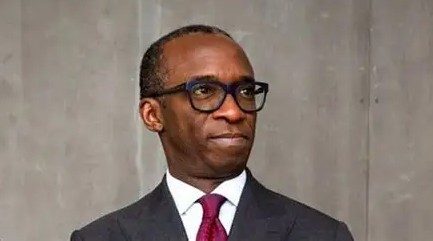
Nigeria’s candidate for the International Court of Justice at The Hague, Olufemi Elias, says he is the most qualified to contest for the seat.
Mr Elias said in New York that his profile stood out from among all the candidates. According to him, my profile ticks all the boxes.
The ICJ is one of the six principal organs of the United Nations, established in 1945 after World War II, to settle disputes between states in accordance with international law.
The election will fill the vacant seat left by Judge Abulqawi Yusuf for the rest of his term, which will expire in February 2027.
“I started as an academic, spent 20 years at the UN, and rose to the level of Assistant Secretary-General. Right now, I serve in various judicial capacities, including as Judge Ad Hoc of the ICJ itself.
“My distinguished competitors are professors of international law. So they have that academic heft, but we all have that. I’m saying my candidature has that (as an academic) but also a knowledge of the workings of the multilateral system in which the court operates and the actual judicial experience,” Mr Elias said.
According to him, his competitors lack both knowledge of the workings of the multilateral system and actual judicial experience.
Candidates nominated for the vacant seat include Mr Elias, Charles Jalloh, and Phoebe Okowa. The election will take place simultaneously in the UN General Assembly and the Security Council.
The Nigerian government has been canvassing delegates’ support for Mr Elias, and several events have been organised to promote his candidacy.
The World Court has a panel of 15 judges elected by the UN General Assembly and Security Council for nine-year terms. An election for a seat at the Court is expected to be held in 2026.
His father, Taslim Elias, who helped draft Nigeria’s first constitution, was President and Judge at the ICJ, chief justice and attorney general of Nigeria, who in 1949, became the first African to earn a Ph.D in law from the University of London, and in 1982, rose to become the first African to be the president of the ICJ.
If elected, Mr Elias, who is also the secretary-general of the African Association of International Law, will be the fourth Nigerian to sit at the ICJ, after Charles Onyeama, Bola Ajibola, and Taslim Elias, and since 1994, when Nigeria last had a presence at the Court.
(NAN)