
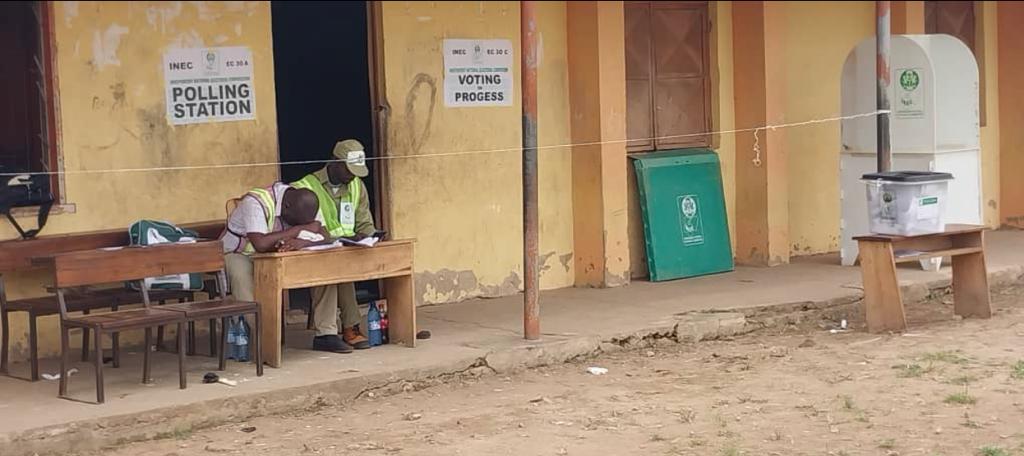
The National Peace Committee at The Kukah Centre has inaugurated an Election Security Information hub, ahead of the 2027 polls.
Atta Barkindo, the executive director and head of the NPC secretariat, stated at a news conference in Abuja that the initiative aimed to strengthen the safety, credibility, and integrity of Nigeria’s electoral process.
The ESI hub is established under the auspices of the committee with technical assistance from the European Union to support the democratic governance programmes in Nigeria.
Mr Barkindo said that the strength of every democracy rested on the credibility of its elections and the confidence of its citizens in the process.
He, however, said that in Nigeria, insecurity remained one of the greatest threats to electoral integrity, public trust, and peaceful participation.
According to him, each election cycle exposes familiar vulnerabilities, weak coordination, delayed responses, and limited access to credible information.
“Recent elections, including the 2023 general elections and the 2024 off-cycle polls, revealed the magnitude of these threats,” he said.
Mr Barkindo said that in spite of significant efforts by security agencies and electoral institutions, these incidents continued to escalate.
He explained that this underscored the need to collate and deploy credible data to assess and address election-related threats and any threats that could impinge on electoral outcomes. Mr Barkindo said that over the years, various institutions and stakeholders have made commendable efforts to assess and respond to security risks surrounding elections.
He added that the Election Security Information Hub sought to complement ongoing initiatives by providing a platform that would enhance information sharing, foster collaboration, and promote a more coordinated data-driven approach to election security management.
Mr Barkindo said that the hub would serve as a repository for gathering, analysing, and sharing verified data on insecurity and its impact on elections, including the tracking of electoral offences nationwide.
“The work intends to translate every warning into early, coordinated, and lawful responses, ensuring that emerging threats are addressed proactively rather than actively by relevant stakeholders. These outputs are central to enhancing election security and promoting a peaceful democratic process. This includes quarterly threat analysis, providing in-depth assessments of evolving risks to election peace and integrity,” he said.
Mr Barkindo said that others included monthly security reports tracking insecurity, emerging threats, and their implications for election management. He said that he would track state-specific security reports, starting with several states’ off-cycle election security reports, to support targeted preventive action.
Mr Barkindo explained that since its creation in 2014, the peace committee has contributed to peaceful elections through the signing of peace efforts and the promotion of political tolerance.
He said the ESI, therefore, represented that evolution, moving from commitment to capacity, from goodwill to credible information, and from prejudice to prevention.
He hoped that the integration of the election security information hub would affirm the national peace committee’s mission to advance peace, justice, and credible governance in Nigeria.
(NAN)



