SAN FRANCISCO
Professor Lisa Levin, a faculty member at the Scripps Institution of Oceanography at the University of California San Diego, highlighted that rising ocean temperatures due to global warming are forcing marine species to migrate toward colder regions, significantly altering ocean ecosystems.
According to the US National Oceanic and Atmospheric Administration (NOAA), the global average temperature for the first 10 months of 2024 was 1.94 degrees Celsius above the average of the past 175 years, while the global average sea surface temperature was 0.99 degrees Celsius higher than usual. These months have been recorded as the hottest January-October period in terms of both land and sea surface temperatures.
Levin shared her insights on the effects of ocean warming during a conversation with Anadolu at the United Nations Climate Summit (COP29) in Baku, Azerbaijan.
She pointed out that global warming is nearing the critical 1.5 degrees Celsius mark, and stressed that humanity has the responsibility to change its course. Levin explained that during El Niño years, global warming’s effects intensify, including heightened ocean warming. However, despite expectations that these effects would lessen with the transition to the La Niña phase, this reduction has not yet occurred in many regions.
Levin explained that increasing heat waves on both land and sea will have significant consequences for marine ecosystems. She said: “Ocean warming causes expansion of the water and rising sea level, and rising sea levels are actually going to cause loss of coastal habitats. So, loss of wetlands where they can’t retreat inland, loss of rocky intertidal shores, and, of course, flooding for people along the coastline.”
She also noted that many marine species are unable to adapt to the warming oceans, and if this trend continues, these creatures will either perish or need to migrate to other areas.
Loss of fish leads to loss of income
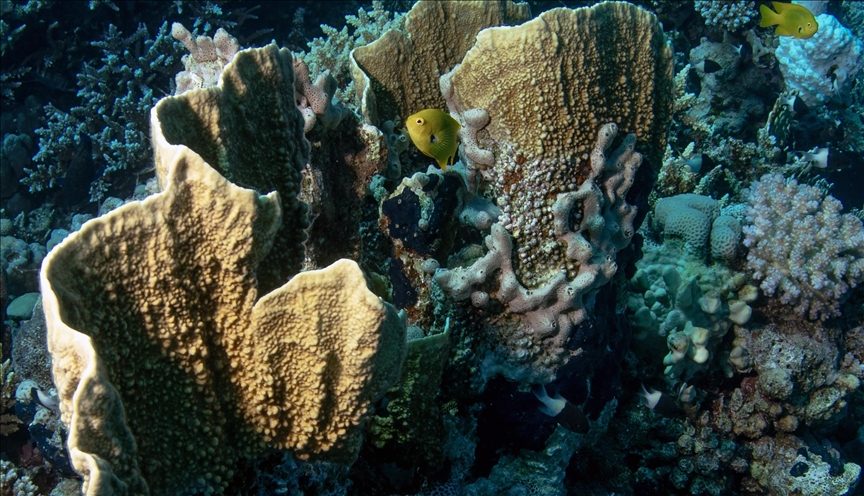
Levin discussed how this phenomenon is already evident in coral reefs, with corals that lack mobility darkening as they stay in warmer waters. While coral reefs have been severely damaged, she stated that it’s unlikely the entire ecosystem will vanish, citing the existence of coral reefs in the Red Sea that can survive in higher temperatures.
She mentioned that migratory species are moving northward, and some species are shifting from west to east across the Pacific. “For example, tuna migrations are definitely happening because of warming. And some countries are losing their tuna. It’s not just a matter of food, but for some Pacific island nations and others, a huge part of their gross national income comes from selling fishing rights for tuna to other countries.”
Levin also noted that warming oceans are contributing to a reduction in oxygen levels, which results in habitat loss for many species, forcing them to migrate to shallower waters.
She warned that the consequences of these migrations in the ocean ecosystem could be dire, explaining:
“The migration of ocean creatures affects other species around them, and so we are seeing a reshaped ecosystem. We have new groups of ecosystems forming. There was a study showing crabs have moved into Antarctica. It used to be too cold, and now it’s warmer. And they are creating massive changes on the seafloor ecosystems. Warmer water holds less oxygen and warmer water also has less vertical mixing because of stratification. And so the interior of the ocean is losing oxygen, and that is effectively habitat loss for many animals. They can’t live there, so they migrate into shallower water or somewhere else. We call that ocean deoxygenation and it’s directly linked to loss of biodiversity. Animals that live in environments that are not variable normally aren’t going to be able to adapt easily. There are some animals that live in highly variable ecosystems that may have a bigger range of tolerances and maybe can adapt.”
Levin criticized the lack of emphasis on ocean warming at COP29, where the primary focus was financing. She expressed hope that COP30, which will be held in Brazil, will place greater attention on this pressing issue.