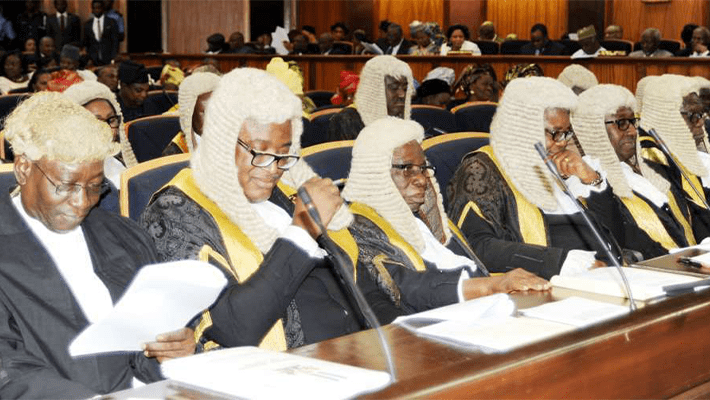
Magistrates and judicial workers in Bauchi, Gombe and Jigawa have advocated proactive measures to address welfare challenges that impede the effective administration of justice.
They said urgent actions are necessary to improve welfare and working conditions, as well as to protect magistrates and judicial officers.
The stakeholders, including legal experts and activists, said this on Monday in separate interviews in Bauchi, Dutse and Gombe.
Magistrates and judicial workers in many states across the country have been demanding improved welfare packages, better working conditions, and financial autonomy to enhance their operations.
Idris Aminu, a Bauchi-based legal expert who advocated improved welfare for magistrates, said good remuneration and working conditions are imperative given the heavy workload, security risks, and lower earnings compared to their counterparts in higher courts.
Mr Aminu said the remuneration of high court judges was commensurate with the demands of their offices, as they handle complex cases, deliver numerous judgments and work under intense pressure.
“Their salary reflects the energy and responsibility involved. In fact, any further improvement to enhance their comforts and address health risks associated with the job will be welcome. Judicial officers are being restricted from engaging in business or social activities and expected to give full commitment to their duties,” he said.
Mr Aminu decried the poor salaries and welfare of magistrates in the state, adding that they were underpaid despite handling large numbers of cases at the grassroots.
“Magistrates are under the payroll of the state government, while high court judges receive their salaries from the federal government.
“Some states provided official vehicles for high court judges. Providing official vehicles for magistrates would ease transportation challenges, enhance their safety and enable them to focus more on their duties. It is uncomfortable and risky for magistrates to use public transport and meet litigants unknowingly on the same vehicle. This could create security concerns or even a conflict of interest,” he said.
According to Mr Aminu, improved remuneration for sensitive positions will reduce the temptation to engage in corruption and allow officers to concentrate on their duties.
Also, Bello Salisu, chairman of the Judiciary Staff Union of Nigeria in the state, said the federal government had increased salaries of the high court judges by 300 per cent.
He described the development as positive, considering the country’s economic situation.
Mr Salisu lamented that magistrates and judiciary officers had not enjoyed similar increments, apart from the N70,000 national minimum wage.
He said the state government has yet to grant financial autonomy to the judiciary despite several requests by the union.
“The state government instead asked the union to submit a salary review proposal, which had already been developed using benchmarks from other states and submitted to the government two weeks ago. The state government provided official vehicles and housing for the high court judges, while the welfare and transportation needs of the magistrates received little attention,” he said.
Mr Salisu urged the state government to increase magistrates’ salaries by 100 per cent, given their heavy workload and critical role in the justice system.
In Jigawa, Muneer Sagir, chairman of the Magistrates Association of Nigeria, has advocated improved welfare of its members to enhance justice service delivery.
Mr Muneer, who decried the poor welfare of magistrates, called for urgent action to reverse the trend and ensure effective justice service delivery.
“The general welfare is poor because a magistrate’s salary barely takes him to the end of the month. Apart from the salary, we have a monthly N10,000 fuel allowance. It has remained static for the last 20 years.
“Initially, we received wardrobe and furniture allowances, but the immediate past administration decided to divide them into 12 and add them to our monthly salary. Also, unlike high court judges, who go abroad and get new cars every four years, magistrates don’t enjoy these privileges,” Mr Muneer said.
He also called for the rehabilitation of magistrates’ quarters and courtrooms to enhance the administration of justice in the state.
However, Alhassan Muazu, chairman of the Nigerian Bar Association, Gombe state branch, has commended the state government for distributing 16 new vehicles to judges in the state.
He said the state government had also embarked on the high court complex project and initiated viable welfare packages to improve working conditions for workers.
“The welfare of judges and magistrates in Gombe state is a work in progress, as Governor Inuwa Yahaya has started constructing a new site for the high court. This is coming after completing a new permanent site for the Sharia Court of Appeal, and it is well furnished for their comforts,” he said.
According to Mr Mu’azu, the association is engaging the state government to ensure improved welfare for magistrates and judicial staff.
He said ensuring the welfare of judges will translate into peace, noting that when justice is delivered in accordance with the law, there will be improvement and peaceful coexistence among the citizenry.
He expressed optimism about the state government’s willingness to enhance the welfare of magistrates and judicial workers in the state.
(NAN)