KARACHI, Pakistan
Media outlets in Pakistan as well as internationally are highlighting Islamabad’s role in bringing Iran and the US to the negotiating table after weeks of conflict.
Pakistan’s English-language daily Dawn on Friday ran the headline: “Pakistan steps up diplomacy as Lebanon strikes strain ceasefire.”
Islamabad is set to host rare direct talks between the US and Israel starting Saturday aimed at ending an intense Middle East conflict that has cost thousands of lives, damaged energy infrastructure, and brought oil supplies to a near standstill.
In its editorial, Dawn observed that Israel is using “every trick in the book” to ensure that the nascent peace process fails and that hostilities in the Middle East resume.
“Mr Trump must decide whether he wants to indeed put ‘America first’, or to do Israel’s bidding, even if the region is set alight in the process,” it added.
Pakistan has gained international attention after mediating a two-week ceasefire between Washington and Tehran, 39 days after the US and Israel initiated attacks on Iran on Feb. 28.
Tongue-in-cheek reference
“Pakistan saves a whole civilization,” was the headline of another leading English daily The Express Tribune on Wednesday after Islamabad helped secure the temporary ceasefire leading to talks.
The headline was a tongue-in-cheek reference to US President Donald Trump’s warning a day earlier that a “whole civilization will die” if Iran does not make a deal.
Iran and the US, barely an hour before the deadline was set to expire, agreed to pause hostilities along with a temporary reopening of the Strait of Hormuz.
Pakistan’s media landscape — including English, Urdu, and regional-language outlets such as Sindhi media — has provided wall-to-wall coverage of the upcoming talks.
Marathon transmissions
Local broadcasters have launched marathon transmissions to provide minute-to-minute coverage of developments related to the talks, although the government has reportedly imposed unannounced curbs limiting the flow of information to the media.
Geo News, the country’s largest broadcaster, opened its Friday morning bulletin with the headline: “All eyes are on Pakistan as Islamabad is set to hold peace talks between the US and Iran.”
Another broadcaster, Samaa News, reported: “International community praises Pakistan for historic mediation between US and Iran.”
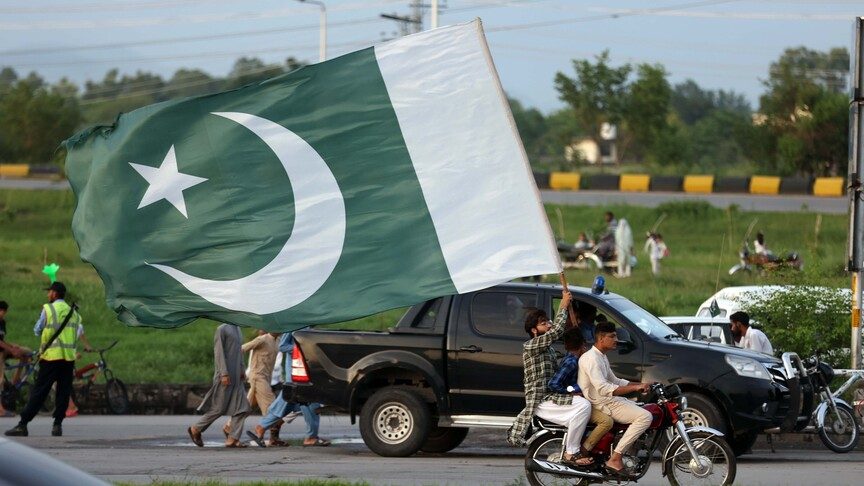
ARY News gave extensive coverage to rallies held across the country on Friday to celebrate the ceasefire and
Islamabad’s mediation role.
Daily Jang, Pakistan’s largest Urdu-language daily, warned that “conflicting explanations” of the ceasefire terms, as well as Israeli strikes on Lebanon, have posed “serious threats” to the upcoming talks.
International media
International media has also been closely tracking developments surrounding the talks.
According to a report by the UK-based Financial Times, “for weeks the Trump administration was leaning on Islamabad to convince the Iranians to agree to a pause in fighting that would reopen the Strait of Hormuz.”
“Pakistan’s crucial role, as a Muslim-majority neighbour and intermediary, was to sell it to Tehran,” it reported on Thursday.
The report added that back-channel efforts led by Pakistan’s military chief Field Marshal Gen. Asim Munir culminated in the ceasefire.