
TUNIS,Tunisia
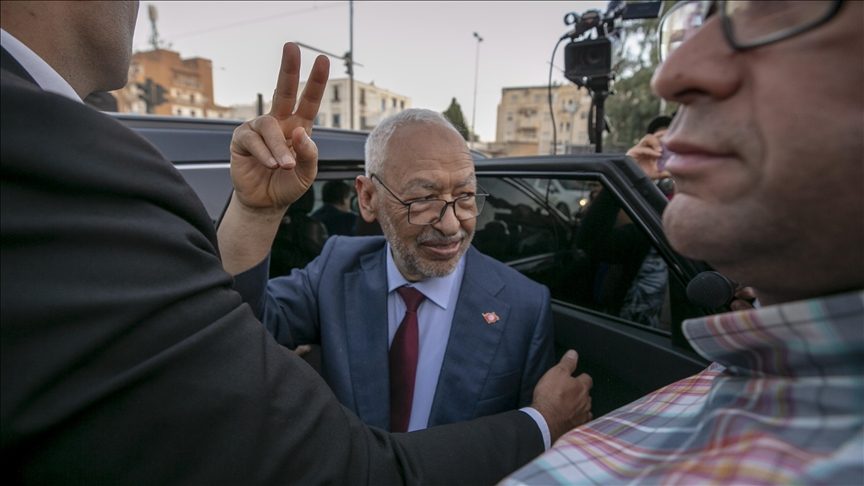
A Tunisian appeals court on Wednesday upheld a 22-year prison sentence against Rached Ghannouchi, head of the Ennahda Movement and former parliament speaker, in the high-profile Instalingo case.
The ruling confirmed earlier verdicts against 40 politicians, journalists, bloggers and businessmen, while modifying the sentence of one female defendant and ordering her release, according to judicial sources cited by state media.
On Feb. 5, a lower court handed down prison terms ranging from five to 54 years to 41 defendants, including Ghannouchi, 84, who has been in detention since April 17, 2023, following a police raid on his home. He has since received multiple prison sentences in separate cases.
An unnamed judicial source told Tunisia’s official news agency that the appeals court upheld all convictions except that of Shatha Belhaj Mubarak. Her sentence was reduced from five years to two, with the court ordering a suspension of execution.
Under the ruling, Belhaj Mubarak was released, with the two-year sentence to be enforced only if she commits another offense during the probation period.
Appeals court rulings are not final under Tunisian law. Defendants may challenge the verdicts before the Court of Cassation, though such appeals do not halt the implementation of sentences.
All defendants have denied the charges, which include conspiring against state security, seeking to alter the nature of the state, inciting Tunisians to confront one another with weapons, provoking violence and looting, and committing hostile acts against the president.
In Tunisian legal terms, the charge of committing a “hostile act against the president” refers to conduct deemed a serious assault on the person or authority of the head of state, including threats, physical attacks or actions seen as undermining state authority.
Instalingo is a digital media and communications company that operated in the eastern city of Kalaa Kebira in Sousse governorate. Authorities raided its headquarters on Sept. 10, 2021, over allegations related to state security offenses, money laundering and online defamation.
Tunisian authorities insist the defendants are being tried on criminal grounds and deny any political interference in judicial proceedings. Opposition figures, however, say the case is part of a broader campaign to target critics of President Kais Saied’s exceptional measures.
On July 25, 2021, Saied imposed extraordinary steps that included dissolving parliament, ruling by decree, adopting a new constitution through a referendum and holding early legislative elections.
Opposition forces describe these measures as a coup against the constitution and a move toward one-man rule, while supporters argue they corrected the course of Tunisia’s 2011 revolution that toppled longtime ruler Zine El Abidine Ben Ali.
Saied has repeatedly said his actions fall within the framework of the constitution and are aimed at protecting the state from imminent danger, while maintaining that rights and freedoms have not been curtailed.



