HAMILTON, Canada
The UN on Tuesday warned that South Sudan is facing escalating violence and a worsening humanitarian crisis, calling on political leaders to step back from the brink and return to dialogue.
“Since my last briefing just a month ago, major developments have taken place in South Sudan that require particular attention, given the country’s continued fragility,” Jean-Pierre Lacroix, under-secretary-general for peace operations, said virtually during a Security Council session.
Saying that “in recent weeks, we have witnessed a sharp escalation of violence, particularly in Jonglei, with clashes between government and opposition forces,” Lacroix noted that “both sides claim to be acting in self-defense, while at the same time preparing for the possibility of large-scale hostilities.”
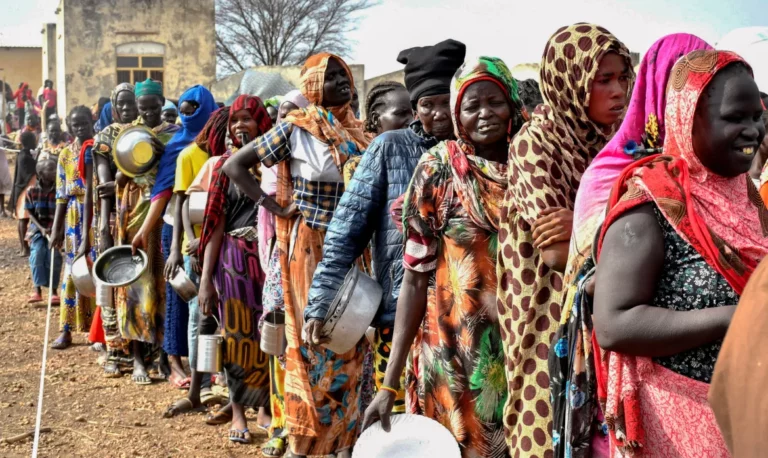
He warned that civilians are once again fleeing violence reminiscent of the country’s past conflicts.
“Communities that remember all too well the violence of 2013 and 2016 are again on the move, over 280.000 people displaced from fighting in Jonglei alone as per government sources,” he said.
Lacroix also highlighted growing dangers for aid workers, describing South Sudan as “one of the most dangerous places in the world for humanitarian workers.”
He said that “in 2025, 350 attacks on humanitarian staff and facilities were recorded, up from 255 the previous year.”
Lacroix further stated that humanitarian access remains severely restricted, particularly in opposition-held areas, despite assurances from authorities, as the country grapples with its worst cholera outbreak in years.
He said more than 98,000 cases have been reported since September 2024, with conditions worsening in Jonglei State.
Pointing to the recent attacks on humanitarian supplies, he said, “Between 30 Jan. and 1 Feb., humanitarian barges carrying vital items to assist 73,000 civilians were attacked and looted in Upper Nile State,” and warned that the humanitarian space is shrinking as more than 10 million people need assistance.
Regarding the UN Mission in South Sudan (UNMISS), Lacroix said cost reduction measures have constrained operations, even as needs grow.
“Amid these rising needs, the cost reduction measures have already resulted in significant operational capacity constraints to deliver fully on mandated tasks,” he said.
Stressing the importance of the mission, he said, “In a largely opposition-controlled area, our presence is serving as a critical deterrent; indeed, it has so far helped prevent potential aerial bombardments in and around the town.”
“The presence of UNMISS matters. It matters to the people that we protect, it matters to our humanitarian partners that we assist and it matters to the peace process that we support,” he added.
Lacroix urged international support for regional diplomatic efforts, saying political actors must “step back from this dangerous precipice, return to dialogue and seek consensus on the way forward.”