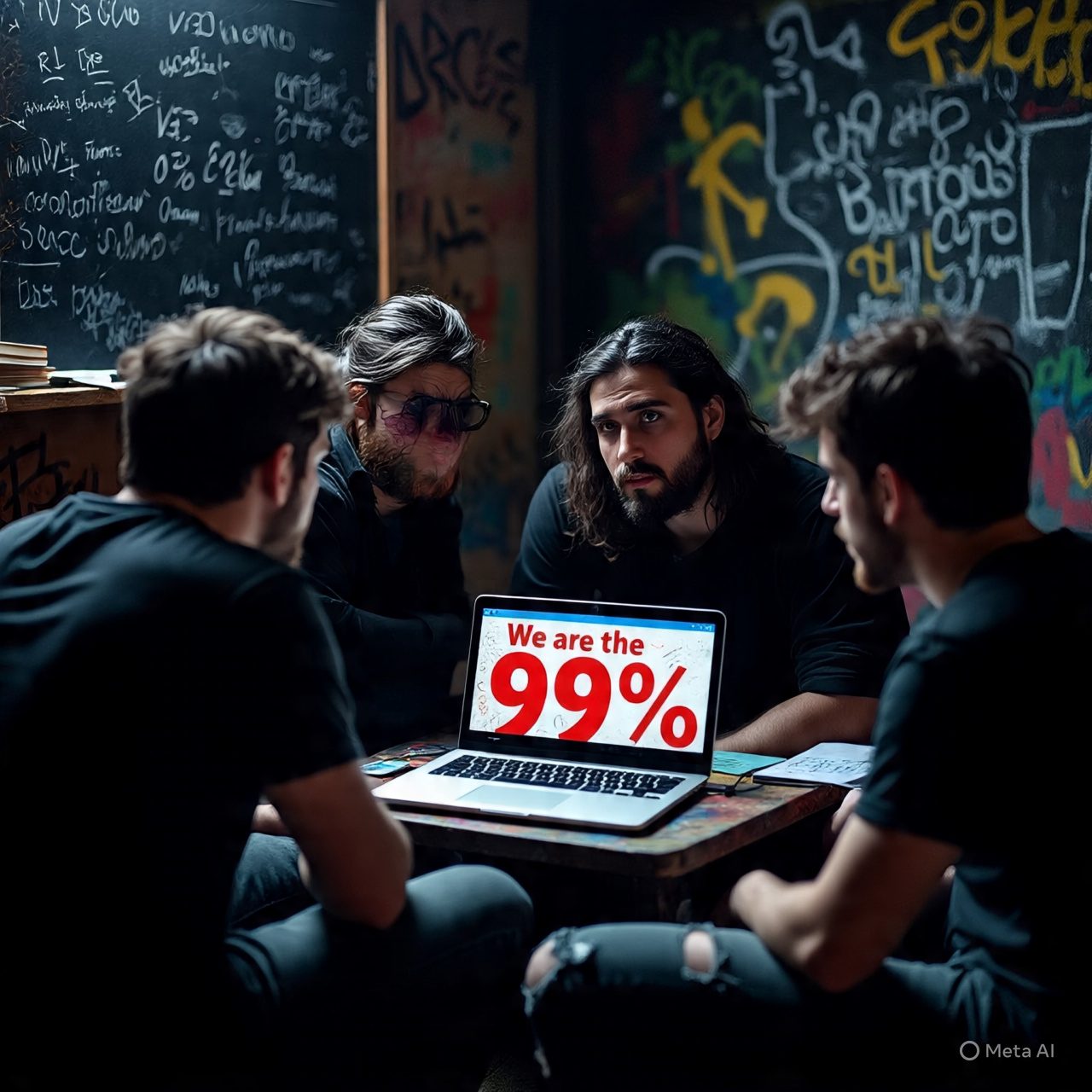
Unmasking Social Media Anarchists: Understanding the Chaos
Social media has become a breeding ground for individuals who thrive on chaos and destruction, often hiding behind anonymous profiles and fake accounts. These Social Media Anarchists spread hate, misinformation, and extremist ideologies, leaving a trail of devastation in their wake.
Premise 1: The Echo Chamber Effect
Social media platforms’ algorithms prioritize sensational and provocative content, creating an echo chamber that amplifies extremist views. This can lead to the radicalization of individuals, who become increasingly entrenched in their beliefs and more likely to engage in anarchist behavior.
Premise 2: Anonymity and Lack of Accountability
The anonymity of social media allows individuals to hide behind fake profiles, avoiding accountability for their actions. This lack of accountability emboldens Social Media Anarchists, who feel empowered to spread hate and violence without fear of consequences.
Premise 3: Psychological and Sociological Factors
Social Media Anarchists often exhibit psychological traits such as narcissism, aggression, and a desire for attention. Sociological factors, such as feelings of isolation, marginalization, and frustration, can also contribute to their behavior.
Motivations and Rewards
Social Media Anarchists are motivated by a desire for attention, power, and a sense of belonging. They often receive rewards in the form of likes, shares, and comments, which reinforce their behavior.
Psychological Frame of Mind
Social Media Anarchists often exhibit:
1. Narcissistic tendencies: a grandiose sense of self-importance and a need for admiration;
2. Aggression: a tendency to engage in hostile or violent behavior
3. Lack of empathy: an inability to understand or care about the feelings of others
Victims and Selection Process
Social Media Anarchists often target vulnerable individuals, such as:
1. Minorities: racial, ethnic, or religious groups;
2. Women: particularly those in leadership positions or advocating for women’s rights;
3. LGBTQ+ individuals: those who identify as lesbian, gay, bisexual, transgender, or queer
They select victims based on their perceived vulnerability, often using tactics such as:
1. Gaslighting: manipulating individuals into doubting their own perceptions or sanity;
2. Trolling: engaging in provocative or inflammatory behavior to elicit a reaction
Educational Levels
Research suggests that Social Media Anarchists can come from any educational background, but often exhibit:
1. Low emotional intelligence: difficulty understanding and managing their own emotions;
2. Lack of critical thinking skills: inability to evaluate information critically
Neutralizing their Message
To counter Social Media Anarchists, it’s essential to:
1. Promote media literacy: educate individuals on how to critically evaluate information online;
2. Encourage counter-speech: support individuals who speak out against hate and extremism;
3. Report and block: report anarchist behavior to social media platforms and block offenders.
Rehabilitation
Rehabilitating Social Media Anarchists requires:
1. Cognitive behavioral therapy: addressing underlying psychological issues;
2. Education and critical thinking training: promoting critical evaluation of information;
3. Social support: encouraging positive relationships and social connections
Conclusion
Social Media Anarchists pose a significant threat to individuals, communities, and society as a whole. Understanding their motivations, behaviors, and tactics is crucial to developing effective strategies for neutralizing their message and rehabilitating offenders.
More advanced research and studies is needed for the broad characterizations of Social Media Anarchists, the development of a special scale to determine their levels of danger, and the possible determination if Social Media Anarchism, is a Malady.
Dr. Elvis Enyioko is a Conference Speaker, Master Trainer and Counselor. He is available as Guest Speaker, and can be reached on: +2348077753825 (Call & WhatsApp) & jku@jkuinstitute.com.
REFERENCES
1. Echo Chamber Effect:
– Sunstein, C. R. (2018). #Republic: Divided Democracy in the Age of Social Media. Princeton University Press.
– Pariser, E. (2011). The Filter Bubble: What the Internet Is Hiding from You. Penguin Books.
2. Anonymity and Lack of Accountability:
– Suler, J. (2004). The Online Disinhibition Effect. CyberPsychology & Behavior, 7(3), 321-326.
– Christopherson, K. M. (2007). The positive and negative implications of anonymity in Internet social interactions: “On the Internet, Nobody Knows You’re a Dog”. Computers in Human Behavior, 23(6), 3038-3056.
3. Psychological and Sociological Factors:
– Baumeister, R. F., & Bushman, B. J. (2017). Social Psychology and Human Nature. Cengage Learning.
– Twenge, J. M., & Campbell, W. K. (2018). The Narcissism Epidemic: Living in the Age of Entitlement. Atria Books.
4. Motivations and Rewards:
– Deci, E. L., & Ryan, R. M. (2000). The “What” and “Why” of Goal Pursuit: Human Needs and the Self-Determination of Behavior. Psychological Inquiry, 11(4), 227-268.
– Kuss, D. J., & Griffiths, M. D. (2011). Online Social Networking and Addiction: A Review of the Psychological Literature. International Journal of Environmental Research and Public Health, 8(9), 3528-3552.
5. Psychological Frame of Mind:
– American Psychiatric Association. (2013). Diagnostic and Statistical Manual of Mental Disorders (5th ed.). Arlington, VA: American Psychiatric Publishing.
– Bushman, B. J., & Huesmann, L. R. (2006). Media Violence and Aggressive Behavior. Journal of Social Issues, 62(3), 537-555.
6. Victims and Selection Process:
– Citron, D. K. (2014). Hate Crimes in Cyberspace. Harvard University Press.
– Powell, A., & Henry, N. (2017). Sexual Violence in a Digital Age. Palgrave Macmillan.
7. Educational Levels:
– Stanovich, K. E. (2016). The Rationality Quotient: Towards a Test of Rational Thinking. MIT Press.
– Kuhn, D. (2017). The Skills of Argument. Cambridge University Press.
8. Neutralizing their Message:
– Vaidhyanathan, S. (2018). Antisocial Media: How Facebook Disconnects Us and Undermines Democracy. Oxford University Press.
– Howard, P. N. (2015). Pax Technica: How the Internet of Things May Set Us Free or Lock Us Up. Yale University Press.
9. Rehabilitation:
– Goleman, D. (2017). Emotional Intelligence: Why It Can Matter More Than IQ. Bantam Books.
– Linehan, M. M. (2015). DBT Skills Training Manual. Guilford Press.