Summary
-
US and Israel launch an attack on Iran, as President Donald Trump confirms “major combat operations” are under way and calls for a regime change
-
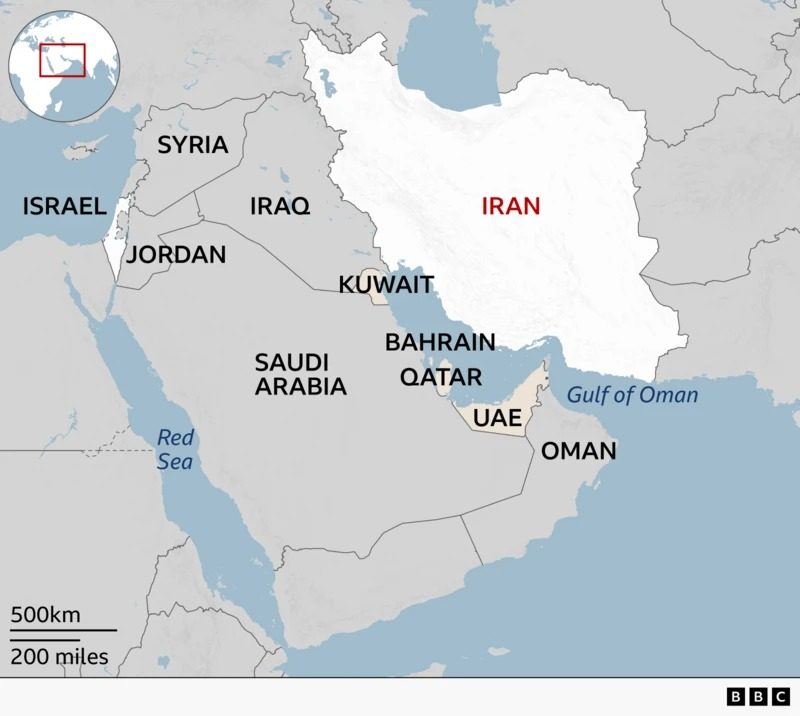
The Israel Defense Forces says retaliatory strikes have been launched by Iran towards the country – and explosions have been heard in the United Arab Emirates, Bahrain and Kuwait
-
Trump has urged Iranians to “take over” the Iranian government, saying “it will be yours to take. This will be probably your only chance for generations”
-
Washington has been ramping up the pressure on Tehran to agree to a new deal on its nuclear programme. Trump said on Friday he was “not happy” with Iran’s negotiating position during nuclear talks – our Middle East correspondent explains how we got here
-
Iran’s foreign ministry says it was aware of “intentions” for an attack but continued with nuclear negotiations anyway
-
The UK government says that it does not want to see “a wider regional conflict” in the Middle East – it is understood the UK was not involved in the attack.
How world leaders are reacting
Following US and Israel’s strikes on Iran – and Tehran’s retaliation – we’ve been hearing from world leaders:
EU Commission President Ursula von der Leyen reminds us that the European bloc has adopted “extensive sanctions” in response to Iran’s “murderous regime”. “We call on all parties to exercise maximum restraint, to protect civilians, and to fully respect international law.”
Italy’s Prime Minister Giorgia Meloni’s office expresses solidarity with Iran’s civilian population, saying it continues to demand respect for civil and political rights. The office adds that Meloni will consult allies and regional leaders to support efforts to ease tensions.
Australia’s Prime Minister Anthony Albanese says his country “stands with the brave people of Iran in their struggle against oppression” and supports the US in efforts to prevent Iran from obtaining a nuclear weapon.
Meanwhile, Russia’s foreign ministry describes the US and Israel’s actions as “reckless”, saying they violate international law. Russia calls for a return to political and diplomatic solutions.
Earlier, a UK government spokesperson said the country does “not want to see further escalation into a wider regional conflict”, adding, “we stand ready to protect our interests”.
Airlines halt flights to Middle East
All the major airlines have diverted or cancelled flights to the region, citing safety, and apologising to customers.
Virgin Atlantic said it had cancelled its VS400 service from London Heathrow to Dubai and warned that flights to the Maldives, India and Saudi Arabia might experience longer flight times due to re-routing.
British Airways has cancelled flights to Tel Aviv and Bahrain until Wednesday, and today’s service to Amman is grounded too.
The BA123 service from Heathrow to Doha, which took off on time at 8pm last night, was also ordered to turn around a third of the way into the trip. A few hours later the 200 plus passengers found themselves back on the tarmac in London.
Wizz Air confirmed that it has suspended all flights to and from Israel, Dubai, Abu Dhabi and Amman with immediate effect up until and including next Saturday. Flights to and from Saudi Arabia will be cancelled until Tuesday.
Emirates has temporarily suspended its operations. Lufthansa, Air India and Turkish Airlines are other carriers to have announced cancellations for the region.