GENEVA
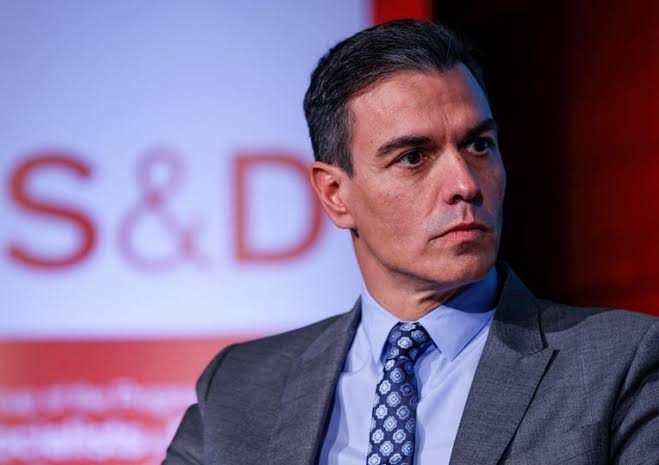
Spanish Prime Minister Pedro Sanchez said Wednesday that Madrid seeks to maintain the “best possible relations” with all countries, particularly allies such as the US, stressing that ties between the two countries have endured regardless of political leadership.
Responding to questions about renewed threats from US President Donald Trump during a press briefing on the last day of the Ankara summit, Sanchez downplayed tensions.
He said Spain would respond “with calm and patience” to the latest comments, arguing that the broader relationship between the two allies remains strong despite occasional disagreements.
“When you step back a bit from these kinds of actions, what you see is that relations between the United States and Spain are very, very positive socially, culturally, economically, and politically,” he said.
The prime minister underscored: “Spain is a country that strives to maintain the best possible relations with all countries, especially allied countries, with whom we have very consolidated ties that have transcended the ideological orientation of the administrations that have governed Spain or the United States over the decades.”
Sanchez said he had an informal conversation with Trump after the US president’s news conference, and it was conducted in a cordial atmosphere.
On reports that Washington could review its military presence in Europe, Sanchez said any decision regarding US troop deployments was solely up to the American government, as it is their “sovereign decision.”
He said military cooperation between the two countries remains “excellent,” adding: “There are absolutely no difficulties; on the contrary, there is a very positive appreciation and collaboration between the US and Spanish armed forces.”
Sanchez also announced that Spain will join NATO’s advanced ground forces mission in Finland to help protect the Arctic region, saying the move reflects the commitment of “a Mediterranean country in southern Europe” to the alliance’s 360 degree approach to security.
“This increased security effort has been possible, as you know, in part because we have consolidated the investment of 2% of our gross domestic product to which we committed last year,” he noted
Spain says it met NATO capability targets
Sanchez said NATO’s Defense Policy and Planning Committee concluded last month that Spain had met its 2026 capability targets with a level of compliance above the European average, making it the seventh highest-performing ally among NATO’s 32 members.
He said Spain had consolidated defense spending at 2% of gross domestic product, describing the country as “a reliable ally” that honors its international commitments.
Asked about NATO’s 5% defense spending target, Sanchez said the summit declaration focuses on capabilities rather than spending alone, arguing that Spain had already agreed with the alliance on the capabilities it should provide and that those commitments require defense spending equivalent to 2% of GDP.
He said Spain was the third NATO country that most increased its defense investment in 2024 and 2025, and that since 2018 its defense spending had grown five times faster than GDP.
He added that Spain’s defense budget increase includes more than €10.4 billion, with eight out of every €10 going to Spanish companies and nine out of every €10 going to the European Union as a whole.
On Iran, The prime minister said Spain had heard Trump’s remarks and wanted to avoid a return to war.
” What we want is to avoid war. Wars are always bad news, especially for civilians, particularly children and women,” he said, adding that Madrid hopes talks resume and the peace agreement is consolidated, and that Spain stands ready to contribute within its means.
Sanchez also highlighted Spain’s support for Ukraine, saying Madrid ranked eighth among NATO’s 32 allies and fifth among the European Union’s 27 member states in assistance to Kyiv in 2025.
He said Spain provided more than €1 billion in military assistance and equipment to Ukraine in 2025, has trained more than 9,000 Ukrainian troops since 2022, and has contributed nearly €3.8 billion in bilateral support since the start of Russia’s full scale invasion.