
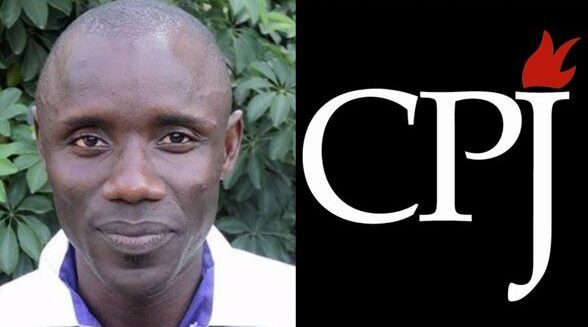
Committee to Protect Journalists has hailed the release of Senegalese journalist, René Capain Bassène, incarcerated since 2018 over allegations of complicity in the murder and attempted murder of 14 illegal loggers who died at the Bayottes forest in Casamance.
The victims were killed in January 2018, and the journalist was subsequently arrested for their murders.
“CPJ is particularly pleased by Senegalese President Bassirou Diomaye Diakhar Faye’s decision to release journalist René Capain Bassène after more than eight years of unjust detention,” Moussa Ngom, CPJ’s Francophone Africa representative, said on Wednesday. “The Senegalese president has sought to correct a grave miscarriage of justice against a journalist who has devoted his entire career to the resolution of the separatist conflict in Casamance.”
Mr Bassène was convicted and sentenced to life imprisonment, but on Wednesday, President Bassirou Diomaye Diakhar Faye granted him a pardon.
CPJ and other human rights organisations prevailed on the president to release Mr Bassène, insisting that available evidence showed the journalist could not have committed the crimes.
CPJ obtained the accounts of other co-defendants who claimed they were tortured to bear false witness against Mr Bassène. Their testimonies corroborated with Mr Bassène’s account to CPJ that he was electrocuted on his genitals to compel his confession to an offence he did not commit.
CPJ released a six-part podcast detailing findings from interviews of Mr Bassène’s co-defendants, all of whom admitted to having been severely beaten to implicate the journalist. The co-defendants were acquitted in 2022, while Mr Bassène continued to languish in prison.
The prosecution predicated its case on an argument that the journalist incited rebel leader César Atoute Badiate of the Movement of Democratic Forces of Casamance to execute the 14 individuals.
The argument lost its potency after Mr Badiatè denied Mr Bassène’s involvement and said the rebel group did not answer to the journalist.
“René Capain Bassène is neither an MFDC representative nor a leader to give me orders,” Mr Badiate wrote in a statement to CPJ. He wrote from his hideout in Guinea-Bissau.
His statement bolstered CPJ’s call for a presidential pardon, demanding that the journalist be released on the Muslim Eid Al-Adha celebration.
In light of the new evidence, the Senegalese president acceded to CPJ’s demand to pardon Mr Bassène on Wednesday.
Mr Bassène thanked the CPJ and all his supporters for securing his release.
“I still can’t find the right words to express my gratitude to everyone who has supported me, and especially to CPJ for their extraordinary efforts to secure my release,” said the journalist.



