ISTANBUL
- Deal restricts sensitive Chinese and Russian investments
- Security agreement would remain in effect even if Greenland eventually becomes independent
After months of threatening to take control of Greenland, US President Donald Trump has announced a deal that would give Washington “permanent” control over the Arctic island’s security.
The emerging security agreement among the US, Denmark and Greenland is expected to expand the American military presence, restrict rival powers from establishing bases or acquiring sensitive interests, and potentially allow Washington to construct additional facilities.
It would not, however, give the US ownership of Greenland.
Following Trump’s announcement, the Danish and Greenlandic prime ministers said in a joint statement that the agreement would preserve the Kingdom of Denmark’s sovereignty and territorial integrity and Greenlanders’ right to self-determination.
Trump nevertheless presented the arrangement as a sweeping US victory, saying Washington had obtained “permanent control over security” in Greenland and the ability “to do what is necessary” to defend it.
The text has not yet been published, with the agreement expected to be signed on the sidelines of the UN General Assembly on Tuesday.
What we know so far
A US State Department official, speaking on condition of anonymity, told BBC News that the agreement would guarantee Washington permanent access, basing and overflight rights in Greenland.
The US already enjoys extensive military rights on the island under a 1951 defense agreement with Denmark, which permits Washington to establish and operate military facilities, deploy personnel and conduct flights in designated defense areas.
The new agreement would reportedly go further by allowing the US to build additional military facilities without seeking separate approval from Denmark or Greenland. It would also remain in effect if Greenland eventually became independent.
Trump described it as an “Infinite Life Agreement,” saying “there is no end!”
The number of additional US troops, the location of possible bases and the types of facilities Washington plans to establish remain unclear.
It is also unknown whether the expanded presence would involve permanent deployments or facilities used mainly for exercises, surveillance and periods of heightened tension.
NATO welcomed the development, saying it would promote security, stability and cooperation in the region.
Danish public broadcaster DR, meanwhile, reported that Washington plans to establish two new military bases in Greenland under the agreement.
Their locations have not been confirmed, but the US has repeatedly shown interest in the airport at Narsarsuaq in southern Greenland, where American military engineers have reportedly conducted technical surveys.
Narsarsuaq previously hosted a major US military installation known as Bluie West One from 1941 to 1958. Its runway was later transferred to Denmark and converted into a civilian airport.
Danish Prime Minister Mette Frederiksen and Defense Minister Jeppe Bruus declined to confirm the report.
“We cannot comment on the matter until we have a signed agreement,” Frederiksen told DR.
What Washington gains
The agreement would reportedly prohibit non-NATO countries from establishing bases or maintaining a military presence in Greenland, according to BBC’s report.
It would also restrict sensitive investments by countries considered US adversaries, particularly Russia and China.
Trump said: “No US adversary can EVER have a base in Greenland, have a military presence in Greenland, or make sensitive investments in Greenland without our express written approval.”
What qualifies as a “sensitive investment” has not been disclosed.
Nor is it clear whether Washington would receive a formal veto or whether decisions would still be made jointly with Denmark and Greenland.
In practice, Copenhagen has already blocked projects involving Chinese interests when US security concerns were raised.
In 2016, Denmark rejected an offer by Chinese mining company General Nice Group to purchase a decommissioned naval base in southern Greenland, citing security concerns.
Tracing the dispute
Trump’s interest in Greenland is not new.
During his first presidential term in 2019, he proposed purchasing the island, an idea Denmark rejected as “absurd.”
After returning to office in 2025, Trump revived his demand for US control of the strategically important territory.
In March 2025, he openly predicted that Greenland would eventually become part of the US. Asked whether he believed annexation would happen, Trump said: “I think that will happen.”
The rhetoric intensified in January 2026. Trump said Washington would act regardless of opposition from Copenhagen and Nuuk.
“We are going to do something on Greenland, whether they like it or not, because if we don’t do it, Russia or China will take over Greenland,” he said.
Greenland’s government responded that it “cannot under any circumstances accept” a US takeover and stressed that the island remained part of the Kingdom of Denmark.
The confrontation expanded into a wider transatlantic dispute after Trump threatened tariffs against European countries opposing his Greenland plans.
EU officials warned that US tariffs and any military action against Greenland could damage transatlantic relations, benefit China and Russia, and threaten the future of NATO.
EU foreign policy chief Kaja Kallas said: “If Greenland’s security is at risk, we can address this inside NATO.”
Trump later stepped back from the prospect of force during an address at the World Economic Forum in Davos, saying: “I won’t use force.”
Diplomatic contacts continued during the following months.
In May, Greenlandic Prime Minister Jens-Frederik Nielsen told Trump’s special envoy that Greenland welcomed cooperation with Washington but that its right to self-determination “cannot be negotiated.”
Why Greenland matters
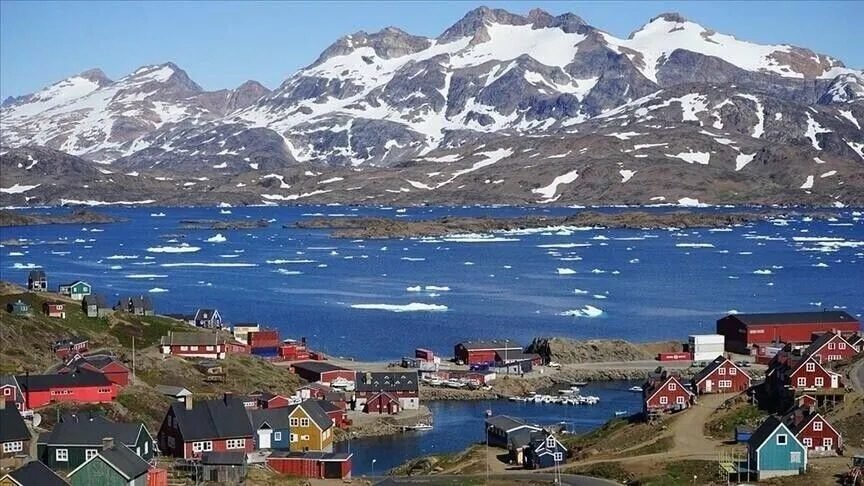
Greenland’s position between North America and Europe makes it crucial for monitoring the Arctic and North Atlantic.
Its geography provides a strategic location for detecting missile launches, tracking aircraft and vessels, conducting space surveillance, and protecting maritime routes.
During the Cold War, the US maintained 17 military installations and more than 10,000 personnel on the island. Most were subsequently closed, leaving Pituffik Space Base in northwestern Greenland as Washington’s primary military facility.
Previously known as Thule Air Base, the facility hosts more than 100 US personnel and plays a key role in missile warning, missile defense, and space surveillance.
Trump has also linked Greenland to his proposed Golden Dome missile-defense system, intended to protect the US from missile attacks.
Greenland has largely untapped deposits of rare-earth minerals used in defense technologies, electric vehicles and renewable-energy systems.
Its strategic importance is increasing as melting ice makes Arctic shipping routes and resources more accessible.
Russia has already expanded its regional military infrastructure, while China has sought a greater economic and scientific presence and describes itself as a “near-Arctic state.”