
NAIROBI, Kenya
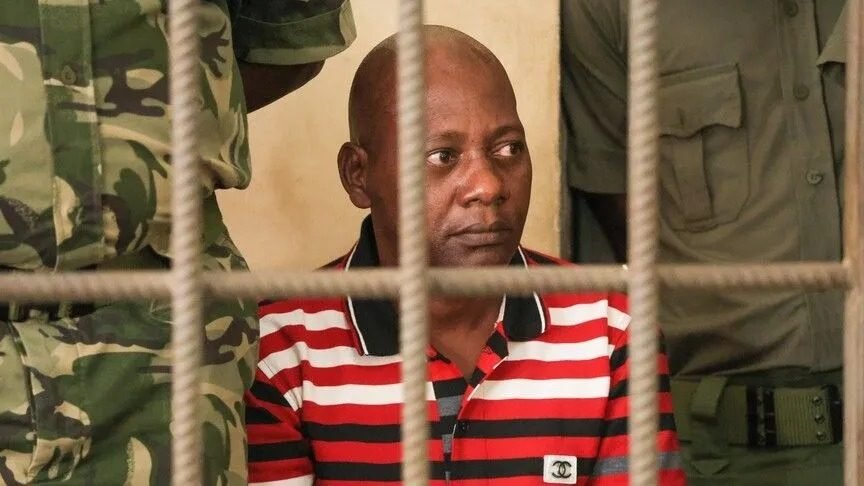
A Kenyan court on Monday convicted starvation cult leader Paul Mackenzie and 28 other defendants of murdering 190 children and one adult in the Shakahola massacre, a tragedy linked to more than 400 deaths.
“I am satisfied that the prosecution has proved the case against all the 29 accused persons for the murder of 192 and one adult, contrary to Section 203 of the Penal Code,” High Court Justice Diana Kavedza-Mochache said while delivering the verdict.
The judge rejected the defense’s argument that the victims, most of whom were children, had willingly participated in the fatal fasting.
“I reject the defense by the accused persons that the victims, who were all below the age of 16, voluntarily fasted to death,” she said.
The court found the 29 defendants guilty under Section 203 of Kenya’s Penal Code and convicted them under Section 322 of the Criminal Procedure Code.
The ruling marks a major development in a case that shocked Kenya after hundreds of bodies were discovered in shallow graves in Shakahola Forest, near the coastal town of Malindi, in 2023.
Mackenzie, the leader of the Good News International Church, was accused of encouraging his followers to undertake extreme fasting as a path to spiritual salvation.
Prosecutors argued that the deaths were not the result of voluntary religious fasting but formed part of a coordinated campaign that subjected victims, including children, to fatal deprivation.
The defendants had denied the murder charges, with the defense maintaining that the victims had chosen to fast.
Investigations into the Shakahola deaths uncovered mass graves and evidence of severe malnutrition, triggering nationwide scrutiny of religious extremism and the government’s failure to detect the group’s activities earlier.
More than 400 people died in the Shakahola tragedy, according to Kenyan authorities, making it one of the country’s deadliest cult-related disasters.
The case also prompted questions about the regulation of religious organizations, child protection and the responsibility of state institutions to intervene when vulnerable people face abuse.



