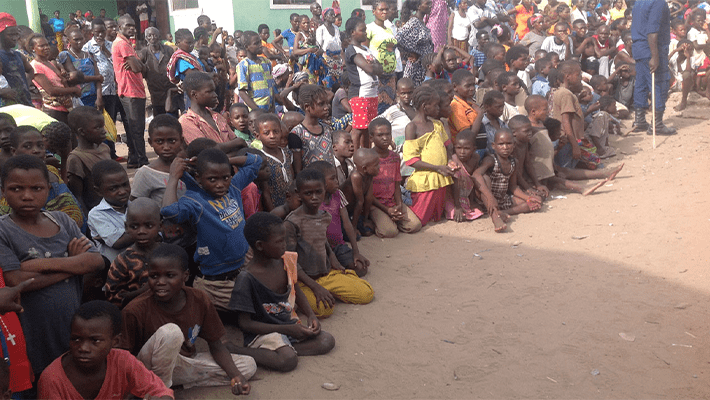
Nigeria has been ranked ninth on the Norwegian Refugee Council’s (NRC) list of the world’s most neglected displacement crises, with only 31 per cent of the required humanitarian response funding met amid persistent armed conflict and intercommunal as well as farmer–herder violence.
This is Nigeria’s sixth appearance on the list since 2016. It ranked fifth in 2016, 10th in 2017, eighth in 2019, sixth in 2020, and eighth in 2021.
The NRC’s report, published on Thursday, highlights the “negligible” media coverage of displacement crises that have affected millions of people, destroyed livelihoods, and further compounded malnutrition.
According to the report, armed groups—Boko Haram, ISWAP, and Lakurawa—killed more than 4,000 people in 2025, and 7.8 million Nigerians, including children, are in need of humanitarian assistance.
It said that violence persists even though the Nigerian government has made efforts to tackle insecurity through military operations and humanitarian corridors.
The NRC said over six million Nigerian children are predicted to face malnutrition by September 2026 and noted the destruction of farmlands by armed groups and soaring food prices, which are “catastrophic” for kids.
“With the humanitarian response only 31 per cent funded, the gap between needs and resources in 2025 was vast,” it said. “This must not continue.”
The report said that while Nigerians require more international aid, “they also need a government willing to account for its resources and the assurance that the limited funding that does arrive is invested efficiently and reaches those who need it most”.
Meanwhile, Sudan tops this year’s list of most neglected displacement crises, with over nine million internally displaced people and over four million who have fled to neighbouring countries, according to the United Nations High Commissioner for Refugees data.
The North African country has been on the list for 10 consecutive years, with 19.5 million people facing hunger.
“Just as needs in Sudan skyrocketed last year and famine kept spreading, the funding was cut,” NRC’s Secretary General Jan Egeland said, adding that displaced people receive little or no international support.
Like Sudan, the Democratic Republic of Congo—ranked second—has been on the list for the 10th year, with 21 million people in need in 2025 and 27.4 per cent of the required funding provided.
“This is a testament to the world’s failure to respond to crises that are not regarded as strategically important for rich countries,” said Mr Egeland.
Colombia was third on the list, followed by Yemen, which appeared for the third time, and Afghanistan was ranked fifth.
Honduras, a Central American country, was sixth; Ecuador, seventh; Cameroon, which has appeared eight times, ranked eighth; and Mozambique ranked 10, making its second consecutive appearance.
NRC maintained that humanitarian needs are increasing due to aid cuts and appealed to donor governments to prioritise funds based on the scale of displacement rather than geographical interests.
Thirty-five displacement crises were analysed in the report, based on media coverage, displacement scale, political attention, and the funding gap.