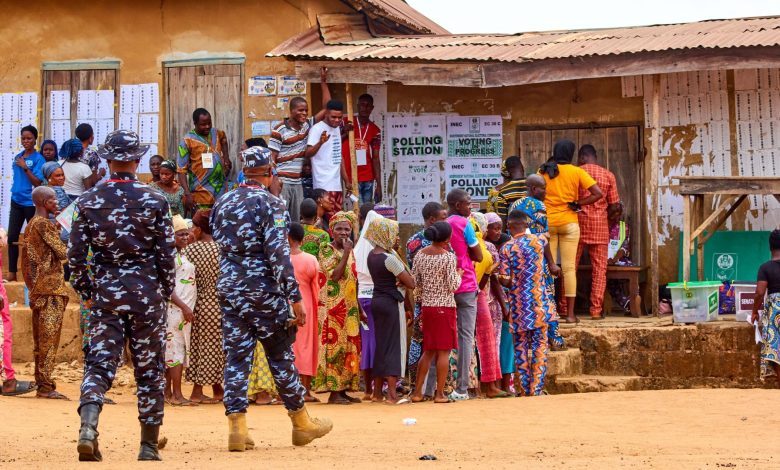
The Abuja School of Social and Political Thought and other electoral stakeholders have urged Nigerians to protect their votes during the 2027 elections.
They made the call on Wednesday in Abuja during a public hearing themed ‘2023 Presidential Election and Preparation for the 2027 General Elections.’
The school’s executive director, Sam Amadi, said credible elections are the responsibility of all stakeholders, including political parties and civil society.
Mr Amadi said citizens who voted in the last elections felt those elections were neither free nor fair, leading to scepticism and cynicism.
Mr Amadi, a former chairman of the Nigerian Electricity Regulatory Commission (NERC), said credible elections would strengthen democracy and reduce the likelihood of political instability.
He said Nigeria, as the largest democracy in West Africa, needed to lead efforts to protect democracy amid increasing military coups on the continent.
Mr Amadi said the public hearing convened electoral officials, security agencies, political parties, civil society organisations and citizens to examine challenges from the 2023 elections.
He said the initiative was necessary because the National Assembly failed to conduct a public hearing immediately after the 2023 elections to hold key actors accountable under oath.
On preparations for the 2027 polls, Mr Amadi urged citizens and CSOs to move from uncritical trust in the Independent National Electoral Commission (INEC) to proactive civic oversight.
He said citizens should audit and verify election processes rather than rely solely on institutional promises, while party agents should receive adequate training and technological support.
Mr Amadi also urged citizens to recognise that votes belong to the electorate, not political parties or electoral bodies, and to ensure their votes count.
The general secretary of the Nigerian Bar Association (NBA), Afam Okeke, said democracy could not be sustained by conducting elections alone.
Mr Okeke called for deliberate efforts by citizens and stakeholders to improve the electoral system ahead of the 2027 elections.
According to him, attention should be given to institutional integrity, meaningful citizen participation and evidence-based electoral reforms.
Mr Okeke said democracy belonged to the people, stressing that citizens must not only be encouraged to vote but must also be adequately informed, protected and given confidence that their participation mattered.
He also called for greater inclusion of women, youths, persons with disabilities and other groups facing structural barriers to participation in electoral processes.
Mr Okeke pledged that the NBA would continue contributing to discussions on electoral reform, electoral justice and strengthening institutions responsible for safeguarding the will of Nigerians.
The country director of ActionAid Nigeria, Andrew Mamedu, identified glitches experienced during the 2023 elections and voter apathy as major lessons from the polls.
Mr Mamedu said only 27 per cent of registered voters participated in the 2023 general elections, stressing the need to restore public trust in the electoral system.
Theophilus Ndubuaku of the Nigerian Labour Congress Political Commission said the 2023 elections exposed structural, technological and administrative vulnerabilities in Nigeria’s electoral system.
Mr Ndubuaku called for mandatory real-time electronic transmission of election results, operational independence of INEC, and swift prosecution of electoral offenders.
(NAN)