Backing a field of dry bushes, Abdullahi Usman, asthmatic, sat on a damaged mortar converted into a stool at his home. He spoke with excitement about the subtlety of the harmattan last January. Mr Usman told the Peoples Gazette that the near-absence of the dry, dusty and cold harmattan season meant little or no health crises for him.
For Mr Usman, a bricklayer based in Karu, Nasarawa, the harmattan season, starting from late October to early March, is a much-dreaded nightmare, a period during which he often suffers asthma crises that sometimes linger for over two weeks.
“The low harmattan this year is a blessing for me. In the harmattan season, I suffer from asthma crises a lot. If the crisis starts, I won’t be able to breathe well. The thing usually holds me down for more than two weeks,” Mr Usman told The Gazette. “I will not be able to go to work or do anything. I no dey fit breath patapata. I don’t use an inhaler. I usually take ventolin, prednisone and Franol medicine. But for almost four months—October 2025—I’ve not had any crisis because the weather is not so cold and dusty as it was in past harmattan seasons.”
Mr Usman is just one of about 15 million Nigerians battling asthma and many others whose health conditions may be worsened by harmattan.
Studies by the National Library of Medicine linked harmattan to “exacerbated” asthma attacks, other respiratory ailments and “cardiovascular diseases”. Research by the National Bureau of Economic Research in Cambridge, Massachusetts, shows that two decades of data from 12 low-income West African countries indicate dust carried by harmattan trade winds increases infant and child mortality.
Common during the harmattan season are dry, dusty winds, reduced visibility due to haze, moderate daytime temperatures, and very cold nights accompanied by strong winds. During this period, people are usually kitted out in warm clothing, and it is common to see people with dry, cracked lips and dry, white, flaky skin, while wildfires sparked by small sparks sometimes ravage markets and large fields of dry bushes or farmland.
However, this harmattan season was different. Even in December and January, the period when the harmattan cold is usually at its peak, many parts of the country experienced unusually warm conditions.
The missing coolant
Smoke from multiple traditional three-stone fire furnaces billowed into the sky as Alice Lazarus, who runs a mini restaurant serving pap and akara, bread, fried potatoes, yams, and stew along NEPA Road in Mararaba, Nasarawa, fried akara on the morning of January 12 in anticipation of customers.
Mrs Lazarus, dressed in a pink short-sleeve chiffon top and an Ankara wrapper, with a black-and-grey headscarf, told The Gazette that harmattan’s absence is affecting her business.
“There is no harmattan this year. It is a little bad for my business. It affects my business because the weather is not that cold, so people are not coming to buy hot pap and akara as during the past cold harmattan season,” Mrs Lazarus said. “I prefer when there is harmattan. If there is harmattan by now, we will be very busy attending to customers.”
In Kaduna, a poultry farmer in the Tafa council area, Annie Philip, said, “For we who are into livestock farming, the absence of harmattan is not convenient because the heat is usually intense at night. I actually miss the harmattan because it helps cool the birds at night, making it easier to keep them at a stable temperature for their proper growth. But now that the harmattan is not here, we put in a lot of effort to control the heat at night. If you don’t put more effort into regulating heat at night for the birds, one could record mortalities.”
Austine Ogbebor, an electrician based in Abuja, said, “Harmattan is a natural cooling agent to both animate and inanimate things. As an electrician, the conductors that we use in transmission, substations, and transformers will become overheated without harmattan. Harmattan helps a lot.”
“We had cases of sunburn on plants. We started experiencing that from December till now, but we are still managing it,” Dabon Gyang, a greenhouse farmer in Plateau, told The Gazette. “The presence of the harmattan is not pronounced as it used to be in the previous years.”
Mr Gyang explained that both the sun and the haramttan cold affect plants. What the greenhouse needs is a balance of weather conditions for photosynthesis to proceed properly.
“So when you have a lot of sunlight and less cold, windy weather, it affects the plants. It causes sunburn. Also, when there’s too much cold and not enough sun, it affects the plants. But we are managing the situation,” Mr Gyang explained.
Ugorchukwu Ene, a beans and yams seller in Mararaba, Nasarawa State, said she would have been kitted out and dressed in warm clothing if there had been a harmattan.
She said that, due to the extreme heat, the cooked beans she sells are easily “spoiled”.
“The lack of harmattan affects a lot of things. You know beans yield well in the harmattan. Without harmattan, beans cannot do well,” Ms Ene told The Gazette. “Even some fruits will be affected because there is no harmattan this year. So we need it. We pray God will bring harmattan.”
Farmers, farm and famine
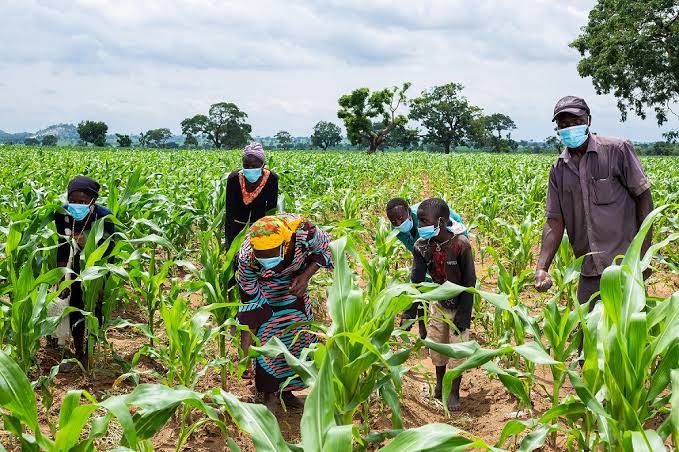
Patience Koku, a farmer with farms in Niger and Abuja, said the absence of harmattan is not an isolated case but a “severe effect of climate change”, which has disrupted weather patterns and caused farmers losses.
“It is a severe effect of climate change we are seeing. The weather patterns have totally changed. What we have noticed from the 2025 weather is that the rains came late and there were many dry spells. In Mokwa, at some point, we had almost 40 days of a dry spell. So the low harmattan for us is a continuation of the erratic weather we experienced last year,” Mrs Koku said.
Explaining how the absence of harmattan would disrupt the farming calendar and impact potential crop yield. Mrs Koku said that in dry-season farming, many factors are considered.
“Like us, we want to plant before the cold, but no one is sure if the cold is coming. Because if you plant and the cold sets in, what you plant will not germinate well. Because you need the warm moisture in the earth for the seeds planted,” Mrs Koku stated. “Knowing when the harmattan is coming lets you plan your planting to beat the cold. But when harmattan has not come in by now—mid January—it is an issue.”
According to the farmer, harmattan usually helps reduce stress on crops and provides some protection from direct sunlight before the hotter season and the rains that follow.
Climate scientists and agricultural experts have attributed the significantly reduced level of harmattan across Nigeria to global warming, a phenomenon affecting countries worldwide. According to the United Nations, climate change refers to long-term shifts in temperatures and weather patterns. Such shifts can be natural due to changes in the sun’s activity or large volcanic eruptions, but since the 1800s, human activities have been the main driver, primarily through the burning of fossil fuels such as coal, oil and gas.
Per a regional risk overview (lean season 2026), the Cadre Harmonisé analysis identifies several hunger hotspots in Nigeria. In the North-West, Zamfara, Sokoto, and Katsina are projected to be the most affected, with over five million people at risk. In the North-East, the BAY states (Borno, Adamawa, and Yobe) account for roughly 4.6 million food-insecure people. The North-Central states, such as Benue, Plateau, and Niger, are increasingly vulnerable due to a combination of climate extremes and conflict.
Ibrahim Wasiu, deputy general manager for public weather services at the Nigerian Meteorological Agency, told The Gazette, “It is not that we don’t have harmattan this year, but the intensity of the harmattan, or what we could call the dust concentration, has not been as strong. It has not been what it used to be during December to January, the peak period of harmattan that we know. The main cause is what I can explain as a shift in long-term temperature and weather patterns, which we call climate change or climate variability.”
Mr Wasiu noted that global atmospheric circulation patterns influence weather systems across regions.
“Additionally, by this time of the year, the Inter Tropical Discontinuity line, supposed to be the lowest around 6. But it is still in the middle, around 9.5-10. What this means is that the high-pressure system over the Sahara, which is supposed to intensify, push this ITD down, and, by implication, bring dust and bloom from the Sahara desert, has not been particularly active. So it is as a result of global circulation,” the weather expert said.
Professor Ishaya Sunday of the Department of Meteorology and Climate Science at the University of Abuja pointed out that the shift in weather patterns is a strong indicator of climate change.
“For harmattan not to have occurred between November and December last year, it is a major signature of climate change,” he said.
Across major coffee origins, rising temperatures, irregular rainfall, and more extreme weather events are reshaping where coffee can be grown, how reliably it can be delivered, and what varieties can be grown. The result is a more fragile supply chain: volatile harvests for farmers, uncertainty in raw material availability for manufacturers, and higher prices (along with reduced consistency) for consumers.
For hot coffee manufacturers, ready-to-drink brands, and café chains, climate disruption is now a procurement and operations challenge, not just a farming issue, according to GlobalData, an intelligence and productivity platform, in a presser on Monday.
It noted that coffee yields are increasingly threatened by warming conditions, especially for arabica, which accounts for more than half of global coffee production and dominates many specialty and premium products. Arabica grows best within a relatively narrow climate range, with ideal mean annual temperatures between 15°C and 24°C (59°F–75°F), often found at higher elevations where conditions are cooler and more stable.
As temperatures rise, areas that once produced high-quality beans are becoming less suitable, and farmers are seeing more days of extreme heat that stress trees, reduce flowering, and limit cherry development. Climate Central estimates that the leading coffee-growing countries, which account for 75 per cent of the world’s coffee supply, now experience an average of 57 additional coffee-harming heat days each year due to the climate crisis, with El Salvador among the most affected, recording 99 additional days of harmful heat annually.
Industry projections suggest the threat is not temporary. Rabobank forecasts that around 20 per cent of current worldwide Arabica-growing areas could become unsuitable for cultivation by 2050, potentially shifting production geographically and concentrating it in fewer viable zones. This not only threatens total output but also increases the risk of disruption when extreme weather hits the remaining suitable regions.
Katamaneni Greeshma Kasturi, consumer analyst at GlobalData, pointed out that if suitable growing zones shrink and production concentrates in fewer regions, supply shocks become more likely, and the ripple effects on pricing and availability can be amplified.
“Quality is also at risk,” Mr Kasturi added. “Higher temperatures can accelerate ripening, giving beans less time to develop sugars and aromatic complexity. Excess rain during harvest increases the likelihood of fermentation defects and mould, while sudden changes in humidity complicate drying and storage, raising defect rates and quality variation. In practical terms, climate change is affecting not just how much coffee is produced, but also how predictable and repeatable its flavour and performance are.”
When harvests fall unexpectedly, exporters may limit sales, contracts become harder to fulfil, and manufacturers may be forced to find alternative origins or grades at short notice, according to GlobalData. Even when supply is available, beans can be more expensive or have a different quality profile than what brands have built their products around, driving changes in blending, reformulation, and roasting. In many cases, manufacturers may lean more on robusta, which is generally more heat-tolerant than arabica but has different flavour characteristics and can alter the sensory profile of finished products.
Consumers feel the impact most clearly through price as the Food and Agriculture Organisation reported a nearly 40 per cent price surge in 2024, driven largely by supply-side disruptions linked to unfavourable weather. However, consumers also pay in other ways, GlobalData noted, including reduced choice when certain origins or grades become harder to secure, fewer limited releases, discontinued premium lines, and occasional stock-outs—particularly for niche coffees. Over time, as brands adjust sourcing and blends, the “baseline” taste of mainstream coffee may gradually shift.
Mr Kasturi mentioned that “adaptation is possible”. However, the expert stated that “it requires investment”.
“Farmers are experimenting with shade-grown systems and agroforestry to cool microclimates, conserve moisture, and buffer temperature extremes. Meanwhile, research institutions and industry groups are also developing hybrids and varieties that can better tolerate heat and drought, resist pests, and still deliver strong cup quality,” Mr Kasturi explained. “Yet these solutions take time to scale, and smallholder farmers—who produce much of the world’s coffee—often lack access to finance, technology, and training, making targeted support essential.”
For manufacturers, resilience increasingly means diversifying sourcing, strengthening long-term relationships with producers, investing in traceability and climate-risk monitoring, and planning for volatility as a standard operating condition rather than an exception. The future stability of coffee will depend not only on climate trends but also on how quickly the industry adapts to maintain quality and reduce disruption to global markets.
“Climate change is steadily transforming coffee production by shrinking suitable growing areas, increasing weather-driven yield volatility, and undermining quality consistency—especially for arabica. These pressures cascade through the supply chain, raising costs for manufacturers and consumers while reducing availability and choice,” added Mr Kasturi. “Although adaptation strategies exist and are already being tested, the pace and scale of investment—particularly for smallholder farmers—will determine whether the industry can maintain a reliable supply and preserve the quality profiles that consumers and manufacturers depend on.”
Climate Change: Global perspective
Citing the impact of climate change across Africa, the UN World Meteorological Organisation said, “Extreme weather and climate change impacts are hitting every single aspect of socio-economic development in Africa and exacerbating hunger, insecurity and displacement.”
Professor John Roy Porter of the University of Greenwich said climate change could threaten global food security in the coming decades if urgent action is not taken.
“Negative effects of climate change include the continued rise of global temperatures, changes in precipitation patterns, an increased frequency of droughts and heatwaves, sea-level rise, melting of sea ice and a higher risk of more intense natural disasters,” he said.
According to the World Health Organisation, climate change is already affecting human health in many ways.
“Between 2030 and 2050, climate change is expected to cause approximately 250,000 additional deaths per year from malnutrition, malaria, diarrhoea and heat stress alone,” the organisation said.
To mitigate the possible impact of the low harmattan experienced in Nigeria, agribusiness consultant Alao Eric recommended that policymakers should provide incentives for farmers to adopt climate-resilient practices and technologies.
He said authorities should also improve climate information services to support farmers in making informed decisions, promote agricultural insurance products to protect farmers from climate-related risks, and invest in irrigation infrastructure to support dry-season farming and reduce dependence on rainfall.
Mr Eric said, “For now, no one can tell whether this will become a recurrence; therefore, there is a need for research to produce high-humidity-tolerant crops. The major challenge farmers face now is how to dry or preserve their produce. For those who can afford it, using solar or mechanical dryers is recommended.”
Last October, the Nigerian government, in collaboration with FAO and Food Security Sector partners, released the latest Cadre Harmonisé report, revealing a critical food and nutrition crisis across the country. The findings show that 30.6 million people in 26 states and the Federal Capital Territory are projected to face acute food and nutrition insecurity at Crisis (CH Phase 3) or worse during the June–August 2025 lean season.
While this figure marks a slight improvement from last year’s 33.1 million, stakeholders note that limited access to data has impacted the analysis. Nigeria continues to face the highest number of food-insecure people globally, with very high levels of acute malnutrition, underscoring the urgency of sustained and coordinated action.
SOURCE: PEOPLES GAZETTE