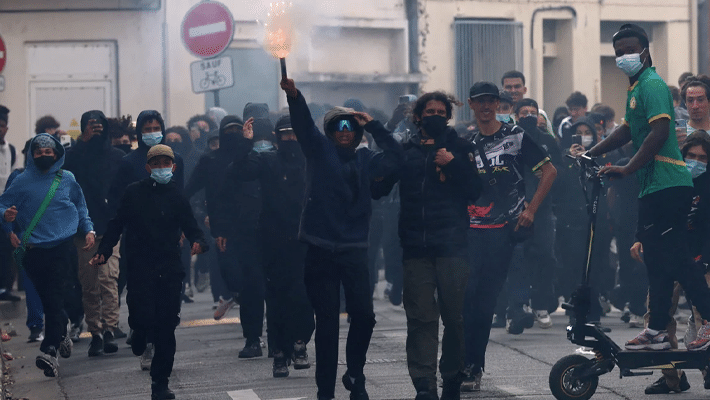
Thousands of students across more than 25 European countries on Friday staged coordinated youth-led protests over rising costs of living, increased tuition fees, underfunded educational institutions and the ongoing war in Gaza.
The demonstrations, organised as an international youth day of action, saw students in some countries such as Britain, France, Spain, Italy, and Germany walk out of schools, colleges and universities to demand better living conditions, improved educational funding and a shift in government social services.
In Germany, up to 10,000 students were expected to participate in demonstrations in the western city of Cologne. Thousands had already taken to the streets in several Italian cities, including Rome, Bologna, Genoa and Milan, according to reports by CNN affiliates RTL Germany and Sky TG24.
According to Socialist Students, students from more than 350 schools, colleges and universities were expected to participate in the walkout in Britain.
Pictures from the protest showed protesters carrying placards highlighting their concerns over underfunded Schools, public services, culture, healthcare, rising living expenses, and compulsory military service.
The protesters further criticised increased military spending and what they described as European leaders’ complicity in Israel’s war in Gaza, calling for governments to prioritise public services over military expenditure.
“Young people will not sit quietly while our schools, colleges and universities are cut and billions are found for war,” Adam Powell-Davies, national chair of Socialist Students, said in a statement.
“Fight for our future, not their wars,” he added.
In Rome, protesters chanted slogans including “Money for schools, not war” and “We want to live life without the high cost of living,” Sky TG24 reported.
The coordinated protests highlighted European students’ concerns about unemployment, the climate crisis, and the impact of artificial intelligence, amid growing dissatisfaction with governments’ responses to challenges affecting young people.