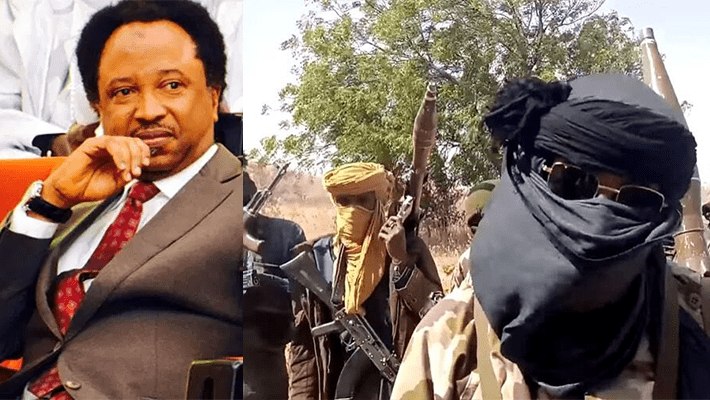
Former Kaduna Central Senator Shehu Sani has alleged that armed terrorists unleashing terror in different parts of the country, especially the North-East and the North-West, are Muslim northerners and Fulani, respectively.
In a viral video seen by Peoples Gazette on Friday, Mr Sani dismissed the claim that the terrorists are from countries other than Nigeria.
“The terrorists killing people in the north-eastern part of Nigeria are not from Congo; not from Malawi, but northerners, and they are Muslims,” the politician said. “The bandits in the north-western parts of Nigeria are not from Senegal, not from Morocco or Guinea Bissau; they are Fulanis from the north-western part of Nigeria.”
Mr Sani said terrorists abducting innocent Nigerians and sacking communities are not more than five thousand, stressing the need for urgent actions to address the killings and kidnappings.
“The whole bandits and terrorists are not more than five thousand. It is for us to solve the problem. It is not for anybody to solve the problem. They are not speaking Chinese; they are speaking Fulani.
“They are not speaking Spanish; they are speaking Hausa. When will the north sit down and address this problem?“ the politician stated.
Mr Sani’s claim came amid wanton killings and kidnappings in the northern parts of the country, especially Kwara, Kebbi, Niger and others, forcing some governments to close down schools to ensure the safety of students.
The statement also followed President Donald Trump’s redesignation of Nigeria as a country of particular concern and threat to invade the country over alleged killings of Christians by Islamist terrorists.
Meanwhile, President Bola Tinubu, on Wednesday, declared a nationwide security emergency and ordered fresh recruitment into the Armed Forces to reinforce ongoing operations across the country.
“My fellow Nigerians, this is a national emergency, and we are responding by deploying more boots on the ground, especially in security-challenged areas,” Mr Tinubu said. “Those who want to test our resolve should never mistake our restraint for weakness.”