
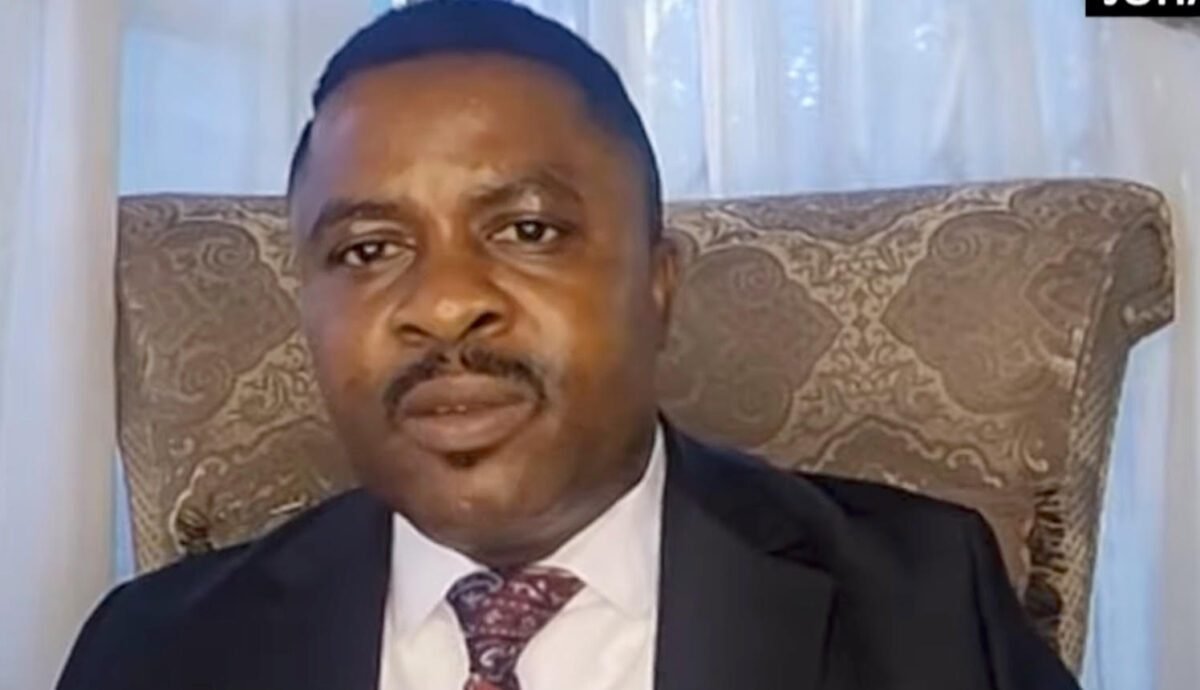
The president of the Nigerian Union in South Africa, Smart Nwobi, says two Nigerians have been killed in South Africa ahead of the June 30 xenophobic protest.
Mr Nwobi, who disclosed this in an interview aired on ARISE TV on Monday, decried xenophobic attacks targeting Black foreign nationals in South Africa.
He stated, “I could conclude that the two deaths that occurred—one yesterday- were a result of the authorities, metro officers, who hacked a Nigerian person to death. We received this news yesterday. The other death was a Nigerian national in Witbank who sells gold and diamonds. He has a shop, and he was shot down in front of his shop by locals after he opened his shop.”
The development came amid the June 30 deadline set by several anti-immigration groups for undocumented foreigners to leave South Africa or face dire consequences.
Mr Nwobi bemoaned the plight of Nigerians awaiting evacuation from the country, disclosing that more than 1,000 Nigerians had been stranded and homeless, displaced by the delayed evacuation process.
“The challenges that many Nigerians face currently are issues of displacement. Most of them are sleeping on the street. As you know, more than a thousand have been screened and are currently stranded. In fact, they are being made worse off as a result of the delay of this evacuation,” he explained.
According to him, the union recently protested at the Nigerian High Commission in Pretoria due to failures in collaboration and communication.
Mr Nwobi, however, said the union had been informed that two flights would be deployed to evacuate stranded Nigerians, stressing the need for timely communication from Nigerian authorities.
He added, “I was informed yesterday that a flight will be made available this morning to evacuate our people. In fact, two flights will be made available. What we are seeking is timely communication and timely engagement with union members, so that our people who are stranded can at least know where to go and how they should prepare to be evacuated.”
Citing Johannesburg, Durban, East London and Bloemfontein as hotspots of xenophobic attacks, Mr Nwobi faulted the poor response of South African authorities, especially the police, to the situation despite early warnings.
“The issue here is that the South African Police Services, on different occasions, have told our people that they cannot really control this issue because of the number of South African locals that are part of these anti-xenophobic sentiments.
“Then the issue is whether the South African government has done enough to nip this in the bud at the beginning. Have they tried anything? They left it until it grew to a greater number before they started putting measures in place, whereas things have grown to a stage where lives have been lost in some instances,” he added.
The Nigerian High Commission could not be immediately reached for comment. Spokesperson for the foreign affairs ministry, Kimiebi Ebienfa, did not return a request for comment on the situation.
Meanwhile, South Africa’s President Cyril Ramaphosa, in a statement on Monday, appealed to South Africans planning anti-immigration protests on Tuesday not to act violently against foreign Black nationals in the country.



