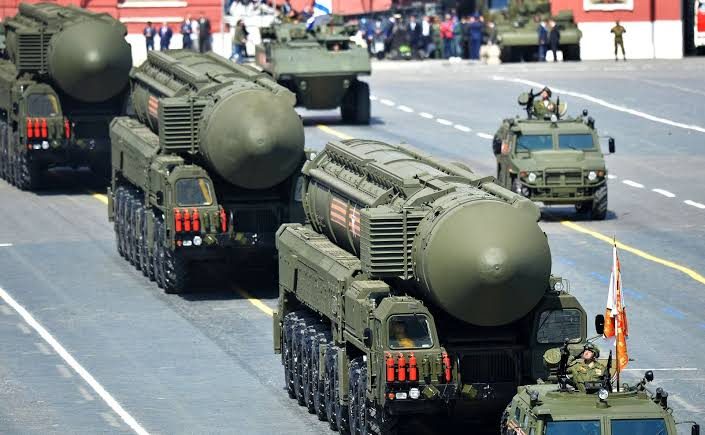
The 11th Review Conference of the Nuclear Non-Proliferation Treaty (NPT) concluded without adopting a final document. Efforts to advance nuclear disarmament under the treaty were met with fierce resistance by the nuclear-armed states and those who support the use of nuclear weapons in their security strategies. The vast majority of states, however, engaged vigorously throughout the month, calling for urgent action to reduce nuclear risks.
The negotiations that have taken place in New York demonstrate that the global majority of countries reject nuclear weapons and want to see urgent action towards their elimination. Despite efforts to engage with the nuclear-armed states constructively throughout the month-long conference, the majority of countries that have consistently upheld their NPT obligations were met with intransigence by the nuclear-armed and their allies.
Consequences of nuclear weapons use
Overwhelmingly, the majority of states spoke about the catastrophic harm that nuclear weapons cause, the scientific evidence of their impact, and the inability to provide humanitarian assistance in the case of any use of nuclear weapons. Nuclear-weapon states and their allies, however, fought diligently to prevent the conference from adopting previously agreed language acknowledging the humanitarian consequences of nuclear weapons. Some went so far to suggest there was no scientific agreement that such harms exist, ignoring decades of conferences and reports, including from the International Committee of the Red Cross and the World Health Organisation on these issues.
Many NPT states parties supported the establishment of a UN Scientific Panel on ‘Nuclear war effects and scientific research’, which is currently working to update global understanding of the impacts, but even a reference to their efforts was too much for the countries eager to maintain their nuclear arsenals indefinitely.
The International Campaign to Abolish Nuclear Weapons (ICAN) Director of Programmes, Susi Snyder, said, “There is a reason why the countries that claim protection from nuclear weapons are afraid of discussion of what these weapons actually do to people and the environment. They simply don’t want people to know the true extent of the horror and cruelty nuclear weapons wreak, because acknowledging these harms will eliminate any credible legitimacy for retaining nuclear weapons.”
Nuclear testing norms under threat
During the Review Conference, some states questioned whether a norm against nuclear testing exists. They were unable to agree to call for ratification of the Comprehensive Test Ban Treaty from the remaining countries needed for that instrument to enter into force. They failed to collectively recognise the harms caused by the legacy of nuclear weapons testing at this meeting.
During the period under review by this conference, the UN General Assembly has recognised this legacy of harm, adopting resolutions since 2023 on the issue and ways and means to address it. The inability of the Review Conference participants to continue this work, and even try to walk back previous agreements, is both an affront to international law and norms, as well as to the tens of thousands of people around the world who continue to live with the effects of earlier tests which have harmed their health, traumatised their communities and contaminated their environment.
It is also a potential pretext for restarting nuclear testing.
None of the NPT’s nuclear-weapon states has carried out an explosive nuclear test for the past thirty years, but US leaders have spoken about resuming tests, while Russia has said it will follow suit if the US does.
Proliferation concerns
The initial drafters of the NPT did so at a time of incredible geopolitical tension. They found, through negotiations, a way to reduce nuclear risks and start building a plan for the elimination of nuclear arsenals. Now, decades later, proliferation risks are on the rise once again.
The Review Conference raised concerns about North Korea and urged it to return to the treaty as a non-nuclear-weapon state. Heated debates also took place about Iran, with only some countries expressing dismay about the attacks by the US and Israel, including on nuclear facilities under IAEA safeguards.
Meanwhile, states were unable to agree to condemn, or even express concern over, potential expansion of nuclear sharing and so-called “extended deterrence,” and the advent of “forward deterrence”, despite the obvious risks that these behaviours will result in more nuclear weapons in more states. This issue, including recent proposals by French President Macron, was raised by a number of countries as a point of concern, requiring more clarification at the least. Efforts to embody that request for clarification in any outcome, however, were thwarted in negotiations behind closed doors.
Acknowledging the Treaty on the Prohibition of Nuclear Weapons
The majority of NPT member states have also joined the Treaty on the Prohibition of Nuclear Weapons (TPNW). The TPNW complements the NPT, especially by furthering the NPT Article VI obligation to conclude negotiations leading to nuclear disarmament. It also provides a pathway under international law to a verifiable framework for nuclear disarmament. Yet, nuclear-armed states (and some of their pro-nuclear weapons allies) vehemently opposed including even a simple, factual reference to this international legal instrument in the concluding text.
In the last weeks of the conference, when Russian and US diplomats at the UN were insisting they are committed to the NPT as the cornerstone of non-proliferation and disarmament, their governments’ deeds spoke louder than their words. Both countries indulged in nuclear signalling, that could also be described as tacit threats. Russia tested its new Sarmat ICBM and the US tested a Minuteman ICBM, while Russia carried out large-scale nuclear exercises with its ally, Belarus, and on its own territory.
Looking ahead, Melissa Parke, ICAN’s Executive Director, said it is incumbent on the global majority who oppose nuclear weapons to keep up the pressure: “The disappointing outcome to this NPT meeting, at a time when nuclear threats are being made and tensions are sky high, has to be a wake-up call for everyone. The countries meeting at the UN this past month demonstrated one thing clearly – the world overwhelmingly does not want nuclear weapons. The majority of states are leaving this NPT conference with their eyes set on how to make that happen at the General Assembly and the Treaty on the Prohibition of Nuclear Weapons Review Conference later this year. We all need to approach these upcoming meetings with determination to get rid of nuclear weapons before it’s too late.”
The NPT as a treaty regime does not end with the outcome of this meeting. States will meet for the first preparatory session of the next review cycle in Vienna in July 2028.