
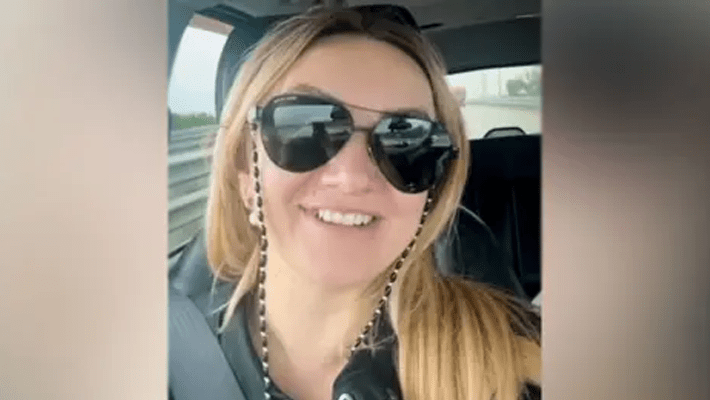
The UK government has sanctioned a Russian woman, Alexandrovna Polina Azarnykh, who is accused of running a human trafficking network that recruited Nigerians and other foreign nationals to fight for Moscow in the ongoing war in Ukraine.
Mrs Azarnykh was sanctioned on 5 May after the government determined that her activities fell within the scope of the Global Irregular Migration and Trafficking in Persons Sanctions Regulations 2025.
London said the Russian woman named on the UK sanctions list facilitated the movement of foreign nationals to Ukraine through Russia as part of efforts to “destabilise” the country.
“Backed by the government of Russia, Azarnykh facilitates the travel of individuals from countries like Egypt, Iraq, the Ivory Coast, Nigeria, Morocco, Syria, and Yemen to Ukraine via Russia for the purpose of destabilising Ukraine, as the individuals are deployed to fight for Russia in its war of aggression in Ukraine,” it said.
Mrs Azarnykh, born on March 29, 1985, was sanctioned with a travel ban, an asset freeze, and a director disqualification.
Azarnykh’s ‘relevant activity’ in Russia’s efforts to ‘destabilise’ Ukraine
A BBC report published in January detailed how Mrs Azarnykh allegedly operated a Telegram channel with more than 21,000 subscribers to recruit young men from Nigeria and other countries into Russia’s military.
The report said that more than 500 cases were unearthed in which Mrs Azarnykh, a former teacher, sent invitation letters to men mainly from Syria, Egypt, and Yemen, enabling them to enter Russia and join the military after providing their passport details.
However, some recruits and their relatives said they were misled into believing they would avoid combat and were not informed that they could not withdraw after signing a one-year contract.
They claimed she threatened recruits who challenged her, but Mrs Azarnykh denied the accusation, according to the BBC.
“We were tricked… this woman is a con artist and a liar,” said Omar, a 26-year-old construction worker from Syria, who first met Mrs Azarnykh in March 2024 when he and 14 others were stranded at Moscow airport.
Mr Omar told the BBC that she took them to a recruitment centre, where they were offered a $2,500 monthly salary and a $5,000 signing bonus.
He added that she also promised them Russian citizenship and non-combat roles if they each gave her $3,000.
“Dead bodies everywhere… I’ve stepped on dead bodies, God forgive me,” Mr Omar said after 10 days of training in 2024, adding that deceased people were “put in a rubbish bag and thrown next to a tree.”
The BBC said it spoke with eight foreign fighters Mrs Azarnykh allegedly recruited, as well as families of 12 men who said they were either dead or missing.
Yousef (not real name) from Egypt said his brother, who struggled with paying tuition at a Russian school, was recruited with a promise of housing, citizenship, and monthly pay, adding, “Suddenly, he was sent to Ukraine. He found himself fighting.”
Mrs Azarnykh previously ran a Facebook page to help Arabs study in Russia before opening the Telegram channel, the report said.
Other details uncovered by the BBC included Mrs Azarnykh’s conversations with recruits’ families and an October 2024 video in which she said the recruits would participate in “hostilities”.
Russia’s ‘large-scale predatory recruitment’
A recent finding by the International Federation for Human Rights (FIDH), Truth Hounds, and the Kazakhstan International Bureau for Human Rights and Rule of Law (KIBHR) showed that Russia has engaged 27,000 foreign nationals in its “large-scale predatory” recruitment since 2022.
The April 29, 2026, report indicated that the foreign nationals were engaged from 130 countries and were mostly undocumented migrants, detainees, and students. They were mostly nationals of Kazakhstan, sub-Saharan Africa, Nepal, Cuba, and Yemen.
It said that even though some recruits were aware of what they would likely face, others were “deceived or coerced”.
“But in all cases, it is a state that has instrumentalised them as part of its war machine and sent them to the most dangerous positions on the front line,” FIDH president Alexis Deswaef said.
The report added that the foreigners “might have become victims of human trafficking, warranting the consideration of overlapping legal regimes of international humanitarian law, transnational criminal law and international human rights law.”
In 2022, Russian President Vladimir Putin supported recruiting foreigners from the Middle East, saying, “There are people who want to come voluntarily, especially not for money, and provide assistance to people.”
The UK’s largest spy agency reported last month that more than 500,000 Russian military personnel had been killed since Moscow’s invasion of Ukraine.



