WASHINGTON
Nearly 3.8 million Afghan girls are out of school, 3.7 million children face acute malnutrition, and women continue to face growing restrictions under Taliban rule, UN officials said on Monday.
Afghanistan continues to face a deepening humanitarian crisis and growing restrictions on women and girls despite signs of economic stabilization, senior UN officials told the Security Council on Monday.
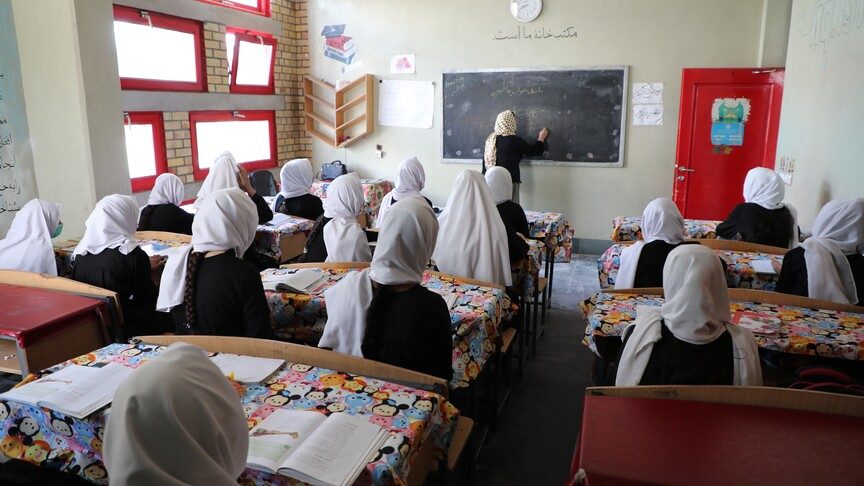
Georgette Gagnon, the UN deputy special representative for Afghanistan and acting head of the UN Assistance Mission in Afghanistan (UNAMA), said an estimated 3.8 million girls between the ages of 7 and 18 are not in school, including more than 2.6 million adolescent girls.
“Each year, approximately 250,000 more girls are permanently excluded from secondary education pathways, creating a lost generation of talent and potential,” she said.
She also said the country has recorded positive economic growth, maintained fiscal stability, and improved revenue collection despite sanctions but cautioned that the gains remain fragile.
“Up to 2.8 million Afghans are projected to return this year—many with limited assets and few livelihood prospects,” Gagnon said.
“Afghans are returning to communities and an economy that cannot fully reintegrate them,” she added.
She noted that Afghanistan remains one of the world’s largest humanitarian crises, with 21.9 million people, or about 45% of the population, requiring assistance in 2026.
Edem Wosornu, director of the UN Office for the Coordination of Humanitarian Affairs’ Crisis Response Division, warned that 4.7 million people are at risk of severe food insecurity, a 50% increase from the same period last year, while 3.7 million children face acute malnutrition.
“The response is being severely constrained by underfunding,” she said, noting that only 15% of the $1.71 billion humanitarian appeal for 2026 has been funded so far.
Without additional support, aid operations and famine-prevention programs for millions of vulnerable Afghans could be scaled back, she added.