
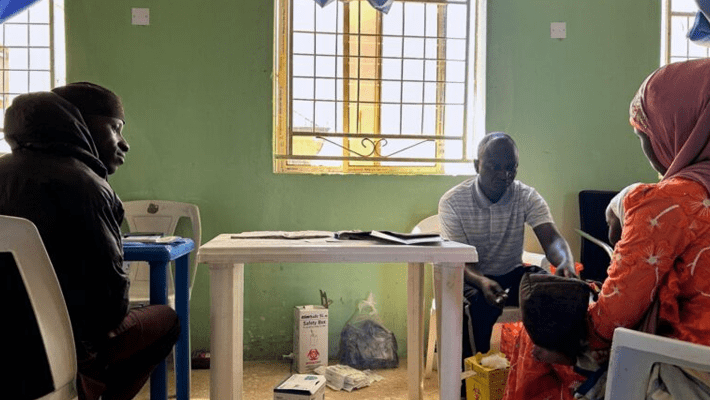
For Patience Joy, taking her three-month-old child for routine immunisation matters, but getting to the health facility can be a challenge.
“Sometimes I can wake up, and I don’t have anything, and it is my baby’s day of immunisation,” she said.
Ms Joy, like many nursing mothers, stated that the economic downturn and high cost of care for family and newborns could force mothers to skip immunisation shots, especially on days when finances are tight. For families living on limited incomes, such seemingly small expenses can become a barrier to completing routine childhood vaccination schedules.
Ms Joy, who lives nine miles from the nearest health facility, says trekking down three hours and another three hours back in the scorching sun is not ideal for her or the baby, as she tends to postpartum challenges.
This challenge, however, has since changed after the intervention of New Incentives’ All Babies Are Equal (NI-ABAE) programme. Gathering data from different health facilities in underserved and hard-to-reach communities, NI-ABAE identified a key barrier to immunisation uptake: limited access to facilities and a lack of funds for transportation.
The programme offers N1,000 after vaccination as an incentive to cushion the economic effects and encourage participation, preventing income or transport-fare excuses for not getting immunised.
Ms Joy said the N1,000 incentive through the NI-ABAE programme helped her meet transport costs and encouraged her to keep bringing her child for vaccination.
“That money is such a blessing and relief. We use it to come to the hospital. Now I don’t have to worry on days when I lack. I know I’ll have something to cover my expenses,” she said.
She also noted that some mothers who previously avoided immunisation began attending after learning about the incentive. The incentive, she said, also helped some caregivers stay committed to immunisation despite concerns about post-vaccination reactions and other household expenses.
New Incentives, a non-governmental organisation, said the NI-ABAE programme aims to address gaps by combining financial incentives with community mobilisation and support for routine immunisation.
Beyond vaccine availability, medical experts note other gaps in immunisation uptake, hence the need for collaborations like the one with NI-ABAE to accelerate immunisation uptake.
Challenge beyond access to vaccine
Nigeria continues to face a major challenge in reaching children who have received zero routine vaccines.
Garba Rufai, the director of disease control and immunisation at the National Primary Healthcare Development Agency (NPHCDA), said the problem is multifaceted, ranging from geographical and socioeconomic barriers to
insecurity, vaccine hesitancy and weaknesses within the health
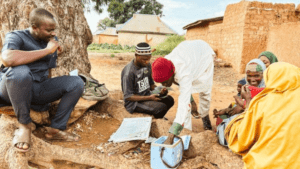
He said some children live in hard-to-reach communities where distance, insecurity, poor roads and inadequate infrastructure make it difficult for vaccination teams to reach them. According to him, hesitancy and misinformation also contribute to children missing routine immunisation.
Mr Rufai said the agency was using traditional and religious leaders, women’s groups, community structures, radio programmes and other channels to improve public understanding and demand for vaccination.
He said the government was also identifying and tracking zero-dose children to enable health workers to locate and vaccinate them.
Zero-dose children are those who have not received the first dose of the pentavalent vaccine by the age at which they should have begun routine immunisation.
Mr Rufai described the group as particularly vulnerable to vaccine-preventable diseases and said reaching them remained one of the country’s major immunisation priorities.
Muhammad Awwal, the programme lead in Kaduna for Chigari Foundation, said routine immunisation faced both demand-side and supply-side challenges. He identified remote settlements, insecurity, poverty, misinformation, cultural and traditional beliefs, inadequate infrastructure, and occasional health worker behaviour as factors affecting uptake.
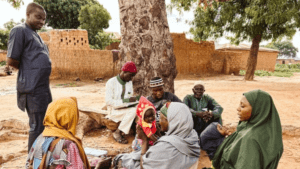
He said the foundation worked with traditional and religious leaders, community influencers and government health structures to improve access and demand for routine immunisation.
Mr Awwal said community leaders were particularly important because they could influence attitudes towards vaccination and help health workers engage communities where trust was weak. He, however, said the N1,000 incentive had become a useful mobilising factor for some families, particularly those who struggled with transport costs.
“Some also see it as a support system,” he said, explaining that caregivers could use the money to meet transport costs when household finances were limited.
Where the incentive fits
Mubarak Bawa, the operations director at New Incentives, said the organisation began working around childhood immunisation after identifying practical barriers that prevented caregivers from completing vaccination schedules. He said these included transport costs, time spent travelling to health facilities, lost income, and limited awareness of vaccination schedules, alongside misconceptions about vaccines.
Mr Bawa said the organisation chose financial incentives because evidence showed that small incentives could help increase uptake of preventive health services.
“The NI-ABAE programme provides N1,000 to eligible caregivers at vaccination visits, while the organisation’s current programme information also includes a N5,000 livelihood grant upon completion of all routine visits,” he explained.
The programme, which began in 2021, has expanded to 11 states in 2026. They are Sokoto, Kebbi, Zamfara, Katsina, Kano, Kaduna, Jigawa, Yobe, Gombe, Bauchi and Niger.
“As of June 2026, we have expanded to more than 7,000 clinics with more than 7.1 million infants enrolled, more than 7,200 government clinics involved, and more than N45 billion disbursed.
“From our statistics, more than 110 million vaccinations had been encouraged. An independent randomised controlled trial found that the programme doubled full vaccination rates in the communities studied,” Mr Bawa stated.
He explained that the programme does not rely solely on cash, but combines incentives with awareness activities, community engagement and collaboration with government health agencies and health workers.
Mr Bawa acknowledged that the long-term objective was for caregivers to continue seeking vaccination even if financial incentives were eventually withdrawn, saying, “Sustainable success means caregivers consistently seek routine immunisation because they understand it as an essential child health behaviour, not because of incentives alone.”
Mr Bawa said that in Sokoto, where the programme began in 2021, follow-up survey data from the fourth quarter of 2025 showed increases in BCG, Penta1 and MCV1 vaccination compared with data collected before programme implementation. He said the organisation had also recorded a reduction in zero-dose children across its areas of operation in the state.
Challenges that persist
With New Incentives’ household surveys showing improved vaccination uptake in its operational areas, some experts caution against viewing incentives as a standalone solution to Nigeria’s immunisation challenges.
Mr Rufai described initiatives such as financial incentives as a stop-gap intervention but stressed the need to strengthen the health system itself. According to him, sustainable immunisation coverage requires adequate health workers, reliable vaccine supply, functional cold-chain systems, funding, transportation and proper community-level planning.
He said communities must also be involved in deciding when and how vaccination services are delivered.
Furthermore, caregivers’ experiences suggest that the N1,000 may remove an immediate obstacle, particularly transport costs; a N5,000 livelihood grant upon completion of all routine visits may motivate completion, but they also point to a more complicated reality.
Some parents are willing to vaccinate their children but live several kilometres from a health facility, where N1,000 cannot cover their transport fare.
Others live in communities that are difficult for health workers to access. Others have access to health facilities, but face misinformation or resistance from family members. All these show that improving immunisation coverage requires more than persuading parents to attend clinics.
It requires bringing services closer to communities, strengthening trust, improving health-worker engagement and ensuring vaccines remain available when caregivers arrive.
(NAN)



