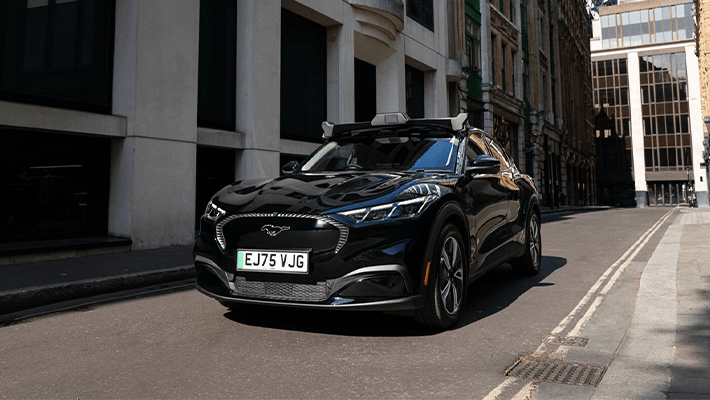
American transportation company Uber has launched the first-ever autonomous ride-hailing service in the United Kingdom, just a day after laying off thousands of workers in a major restructuring.
The company announced the development in a statement on Thursday, saying customers booking rides in London may be assigned to Wayve AI Driver-equipped electric vehicles from Mustang.
“London calling! Uber and Wayve today launched supervised autonomous rides in London, marking the first time autonomous trips are available to the public in the United Kingdom.
“Starting today, riders across London requesting UberX, Uber Electric, or Uber Comfort may be matched with an all-electric Ford Mustang Mach-E equipped with the Wayve AI Driver—at no extra cost,” Uber said.
The company, however, noted that customers would still be able to choose between riding with an autonomous or non-autonomous vehicle before the car they requested arrived.
Additionally, Uber said a trained private driver would continue to accompany the autonomous vehicles to supervise every trip during the initial rollout phase.
“If you’re matched with a Wayve vehicle, riders will always have the option to accept or switch to a non-AV ride before the car arrives,” the company stated. “The initial launch phase features supervised autonomous rides, meaning a trained and TfL licensed private hire driver is onboard to oversee the trip.”
The announcement came just 24 hours after Uber confirmed on Wednesday that it was reducing its workforce by 10 per cent, which amounted to cutting over 3,000 jobs.
“Today, we’re making a number of significant organisational changes across Uber. We are removing layers, simplifying team structures, refining our global location strategy, and focusing our people and investments against the biggest opportunities ahead of us.
“As a result, we will be reducing the size of our team by about 10%. Everyone whose role has been affected has already been notified, except in countries where we will follow the required local process,” the company said in a statement.