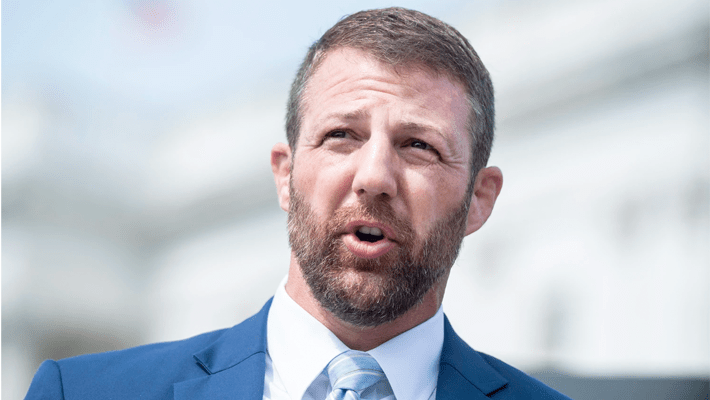
U.S. Homeland Security Secretary Markwayne Mullin has told migrants in the United States with temporary protected status to seek permanent residence or return to their home countries.
The remark follows the Supreme Court’s decision that allowed the administration to strip thousands of Haitian and Syrian immigrants of a humanitarian status that protects them from deportation to home countries plagued by conflict and destitution.
“Either try to fill out the paperwork and be here underneath a permanent status, or we’ll help you get back to your country,” Mr Mullin said.
“We’ll actually give you a plane ticket, plus roughly $2,100 million to help you re-establish when you get there, but temporary protective status, according to the courts and in its name itself, is not permanent status,” he added.
Federal law allows the administration to grant temporary legal residency in the United States to people fleeing war, disaster or other adverse conditions.
The status had previously been renewed successively and, despite the move to end these protections, the State Department currently warns against travelling to either Haiti or Syria, citing widespread violence, crime, terrorism and kidnapping.
The United States first provided TPS to Haitians after a devastating earthquake in 2010, and to Syrians after their country descended into civil war in 2012.
The prospect of large-scale deportations faces opposition, even among some Republicans.
However, Ohio Governor Mike DeWine said it was not safe for Haitians to return and that removing diligent workers would hurt the Ohio economy and leave the healthcare industry short-staffed.
During the 2024 election, President Donald Trump falsely accused Haitians living in Ohio of eating others’ household pets. The Supreme Court’s conservative majority found, however, that Haitians suing the administration were unlikely to succeed in their argument that the administration’s actions were racially biased.
The presence of Haitians in the state has helped spur economic revival in some Ohio areas that had fallen into post-industrial decline, boosting wages and job creation, Reuters reported.
“It’s Haitians who many times are taking care of your mom or your dad who has Alzheimer’s, taking care of family members who might be in a nursing home,” said Mr DeWine.
“And to say we’re going to pull all those out, it’s just not in our own self-interest.’’
(Reuters/NAN)