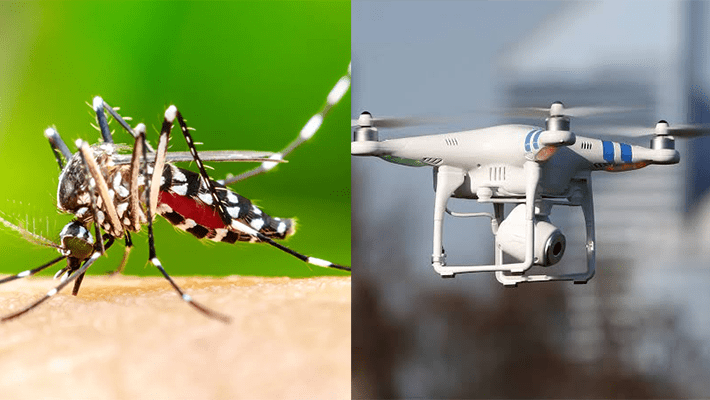
Sri Lankan authorities have deployed military drones to scan rooftops to detect mosquito breeding grounds and destroy them, as the South Asian country battles its worst dengue outbreak in years.
Nearly 50,000 cases have been reported this year, with 29 deaths, although that is still far below the 2017 peak, when 186,000 patients and 440 deaths were reported.
Dengue virus is transmitted to humans by two species of mosquitoes (Aedes aegypti and, less commonly, Aedes albopictus), prompting the decision to deploy military hardware to combat the insects’ habitat.
The head of the National Dengue Control Unit, Kapila Kannangara, stated that a cyclone left behind garbage and breeding sites for mosquitoes in many places across Sri Lanka.
The reported cyclone caused more than 1,000 landslides, as local government officials face challenging recovery efforts.
“There was a lot of garbage and breeding sites in the environment after the cyclone, and it took the local government authorities a lot of time to clear them out,” Mr Kannangara said. “If cases continue to rise, we’ll have a problem with beds.”
The use of a drone is part of a three-day nationwide dengue prevention campaign aimed at eliminating Aedes mosquitoes’ breeding grounds.